Plan IT Packaging
Related News & Blogs
News & Views from the Packaging Automation Experts


News & Views from the Packaging Automation Experts
May 14, 2026
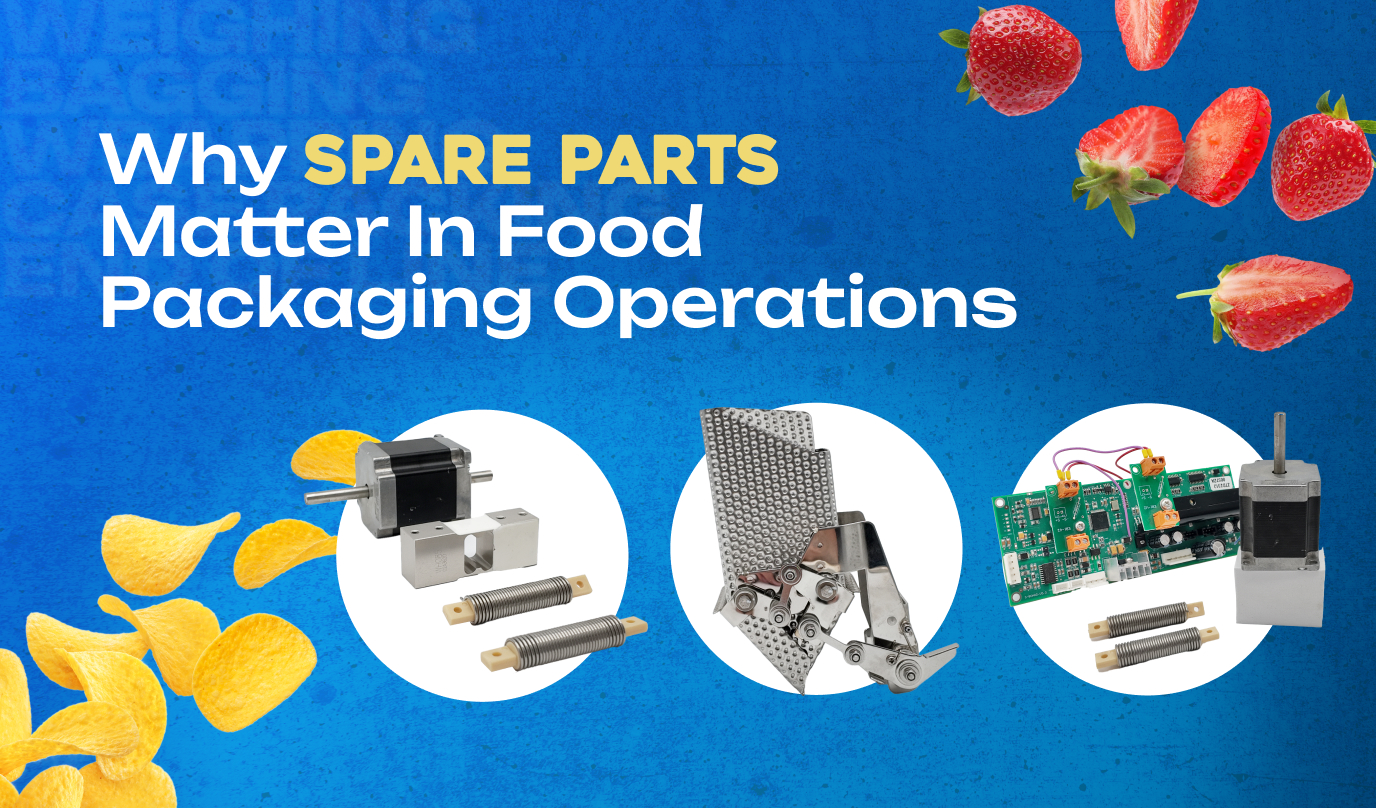
In food manufacturing, production challenges are often discussed in terms of labor, scheduling, supply chain delays, sanitation, communication, and yield loss. While these issues may not always begin with the machine itself, packaging equipment plays a major role in how well a facility responds when those challenges appear.
In food manufacturing, production challenges are often discussed in terms of labor, scheduling, supply chain delays, sanitation, communication, and yield loss. While these issues may not always begin with the machine itself, packaging equipment plays a major role in how well a facility responds when those challenges appear.
That is where spare parts become more than a maintenance item. They become a planning tool, a risk-reduction strategy, and a way to keep production moving when every hour of downtime matters.
For food processors and packaging teams, keeping the right spare parts on hand can help reduce emergency repairs, protect uptime, improve maintenance response, and create a stronger return on investment over time.
Unplanned downtime is rarely just one simple expense. It can impact labor, product waste, missed shipments, overtime, customer commitments, sanitation schedules, and the overall production plan.
When a packaging line stops because of one missing component, the cost is not only the part itself. The real cost includes the time spent diagnosing the issue, sourcing the replacement, waiting for shipment, rescheduling production, and restarting the line.
That is why the idea of “we’ll order it when it breaks” can quickly become an expensive strategy. Emergency parts, rushed shipping, delayed production, and lost efficiency often cost far more than maintaining a planned inventory of critical spare parts.
A smart spare parts program helps manufacturers shift from reaction to preparation.
Every operation has to manage costs carefully. No one wants to overstock shelves with parts that may not be needed for years. At the same time, carrying too little inventory can leave a production team exposed when a critical component fails.
The goal is balance.
A strong spare parts strategy helps identify which parts are critical, which parts are commonly replaced, and which components have longer lead times. This allows maintenance and operations teams to stock what matters most without overloading inventory.
Critical parts may include items such as belts, blades, sensors, sealing components, wear parts, contact parts, bearings, rollers, switches, electrical components, or machine-specific assemblies that are essential to keeping the line running.
The question is not simply, “How many parts should we keep?”
The better question is, “Which missing parts would stop production if we did not have them?”
Labor shortages and skill gaps continue to affect food manufacturers across North America. New operators, temporary labor, and smaller maintenance teams can make troubleshooting more difficult, especially when a worn component begins affecting machine performance.
Having the right parts available helps reduce uncertainty.
Instead of losing valuable time identifying, ordering, and waiting for replacement parts, technicians can respond quickly and get the line back into operation. Spare parts do not replace training, but they do make it easier for teams to solve problems with confidence.
For facilities managing turnover or limited technical support, organized spare parts inventory can make maintenance response faster, cleaner, and more consistent.
High SKU variety is common in food manufacturing. Facilities may switch between package sizes, films, cartons, labels, formats, recipes, or product types throughout the week.
Every changeover matters.
When parts are worn, missing, or not ready, changeovers take longer. Operators may spend extra time adjusting the machine, troubleshooting seal quality, replacing small components, or trying to work around an issue that should have been handled before production began.
Keeping changeover-related and wear parts on hand helps reduce these delays. Fresh sealing components, knives, belts, guides, forming parts, rollers, and sensors can help teams move from one run to the next with fewer interruptions.
The more prepared the line is before a changeover begins, the less time is lost once production is ready to restart.
Most downtime events do not feel large at first. One belt wears out. One sensor fails. One blade dulls. One seal component begins causing inconsistent packages.
But one missing part can create a chain reaction.
A small issue can lead to stopped production, delayed shipments, overtime labor, increased waste, missed sanitation windows, and pressure on every department involved in the production schedule.
This is why spare parts planning is not just a maintenance concern. It is an operational risk strategy.
The line may be ready. The team may be ready. The product and packaging materials may be ready. But if one critical part is missing, the entire system can slow down or stop.
Food manufacturing has unique requirements that naturally interrupt production. Sanitation cycles, inspections, QA checks, documentation, and compliance steps are part of the process.
Reliable equipment helps those required interruptions go smoother.
Worn belts, damaged seals, cracked guards, loose fittings, or aging contact parts can create additional delays during inspection or startup. Having replacement parts on site helps maintenance teams address these issues before they become food safety concerns or production interruptions.
Spare parts also support preventative maintenance planning. Instead of waiting for a component to fail, teams can replace high-wear parts during scheduled downtime, sanitation windows, or planned service intervals.
That means fewer surprises during live production.
Not every issue shuts down the line immediately. Some problems quietly reduce performance over time.
Worn parts can contribute to poor seals, inconsistent cuts, misalignment, overfill, underfill, packaging defects, product waste, or rework. The machine may still be running, but the operation is losing efficiency with every imperfect package.
Replacing worn components at the right time helps protect package quality and production consistency.
In food manufacturing, small inconsistencies can become expensive quickly. A strong spare parts plan helps protect yield, reduce waste, and support a more stable finished package.
A spare parts strategy does not need to be complicated. It simply needs to be intentional.
Maintenance teams should review each machine and identify:
1. Which parts are critical to uptime?
2. Which parts wear most often?
3. Which parts have long lead times?
4. Which parts are needed for changeovers?
5. Which parts support sanitation and food safety?
6. Which parts are shared across multiple machines?
7. Which parts should be reordered once used?
This helps create a practical spare parts checklist for each line. It also helps avoid two common mistakes: stocking too much of what is rarely needed and not stocking enough of what can stop production.
Digital or organized manual tracking can also help teams monitor inventory levels, reorder points, usage history, and part numbers. The faster a team can find the right part, the faster they can recover.
For many maintenance teams, the challenge is not understanding the value of spare parts. It is justifying the investment internally.
The business case is simple: stocked critical parts reduce risk.
Leadership teams should consider the cost of one hour of downtime, one missed shipment, one emergency repair, one rushed shipment, or one extended production delay. In many cases, the cost of a small spare parts inventory is far less than the cost of waiting until something breaks.
Spare parts are not about expecting failure. They are about protecting production.
Spare parts are not just about fixing something after it breaks. They are about preparation, control, and confidence.
For food manufacturers managing labor challenges, changeovers, supply disruptions, sanitation requirements, planning gaps, and yield pressure, having the right parts on hand can make a measurable difference.
A well-planned spare parts inventory helps reduce avoidable downtime, support maintenance teams, protect product quality, and keep packaging lines ready for what comes next.
At PLAN IT Packaging, we believe spare parts are part of a stronger production strategy. Because when your line is prepared, your team can focus less on reacting to problems and more on keeping production moving.
May 12, 2026
See how PLAN IT Packaging helped Ganong Bros. achieve 2.5x packaging output with high-speed VFFS automation and independent packaging lines designed for scalability and reliability.
For more than 150 years, Ganong Bros. has been part of Canada’s confectionery story. From iconic products like Chicken Bones and Pal-o-Mine to modern co-manufacturing partnerships across North America, the company has continued to evolve while staying rooted in quality, tradition, and innovation.
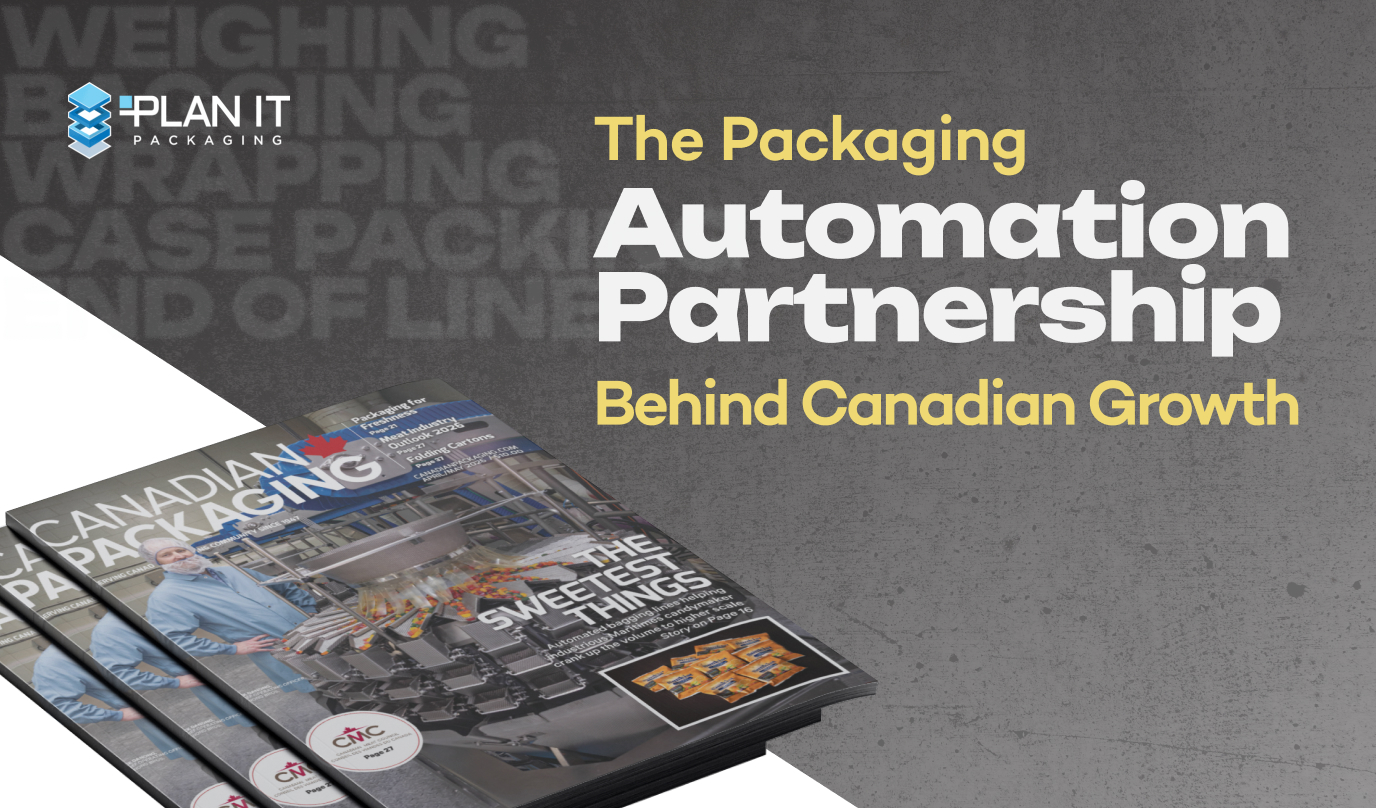
Today, we are proud to share that PLAN IT Packaging has been featured alongside Ganong Bros. in the April/May issue of Canadian Packaging magazine, highlighting a recent automation project designed to help support Ganong’s growing production demands.
.jpg)
As demand for Ganong’s confectionery and co-manufacturing services continued to grow, the company identified an opportunity to expand its packaging capacity while improving operational efficiency and redundancy.
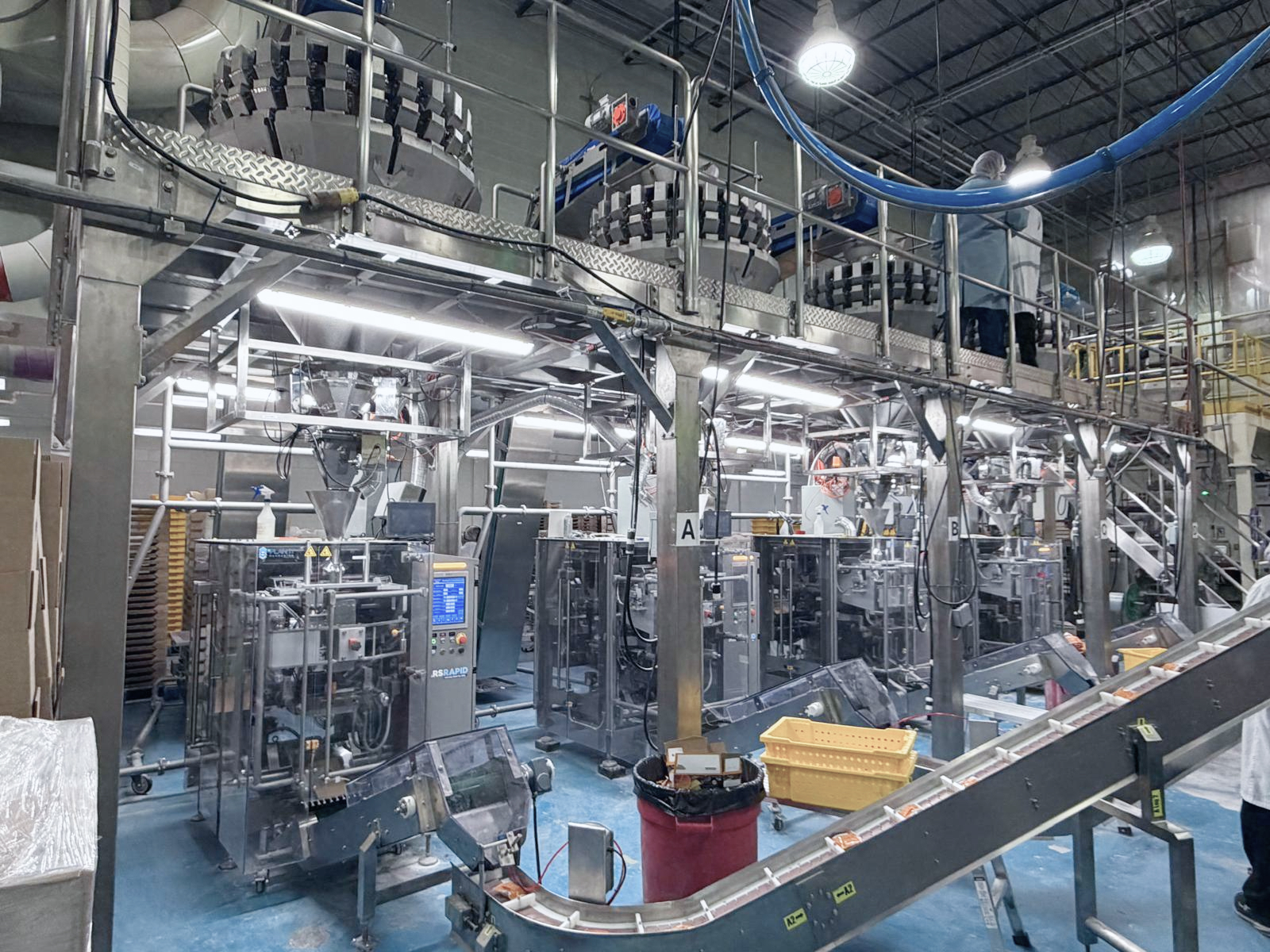
To support this initiative, PLAN IT Packaging supplied and integrated:
The result was a packaging solution designed to improve throughput, flexibility, sanitation, and uptime while helping Ganong continue scaling production efficiently.
One of the key goals of the project was to avoid relying on a single high-output packaging system.
Instead, PLAN IT Packaging recommended four completely independent bagging lines. This approach provided Ganong with:
As highlighted in the article, this configuration allowed Ganong to exceed its original throughput expectations while maintaining continuous production capabilities if one line required servicing or maintenance.
“If one line does go down for any reason, at least you still have other lines up and running.”
— Sal Choudhary, Sales Manager, PLAN IT Packaging
The installed Mars Rapid VFFS baggers were designed to support high-speed pouch production while maintaining sanitation and accessibility for operators.
Key system features included:
The ELITEWEIGH 24H multihead weighers also provided Ganong with increased weighing accuracy and versatility for handling a variety of candy and snack products.
According to the article, the new system helped Ganong achieve approximately 2.5 times the output of its previous packaging process.
One of the most important themes discussed throughout the feature was the role automation plays in supporting employees, not replacing them.
Ganong emphasized that automation investments are helping the company grow production while creating opportunities to upskill staff and improve engagement by reducing repetitive manual tasks.
This philosophy strongly aligns with PLAN IT Packaging’s approach to automation: implementing systems that help manufacturers improve efficiency, consistency, food safety, and operational reliability while empowering their teams for long-term success.
This project represents more than the installation of packaging equipment. It reflects the value of collaborative partnerships, thoughtful system design, and scalable automation strategies tailored to each manufacturer’s goals.
We are grateful to the Ganong Bros. team for the opportunity to support this exciting phase of growth and proud to see the project featured in Canadian Packaging magazine.
.jpg)
The full story dives deeper into Ganong’s incredible history, their approach to modernization, and the collaborative packaging automation project completed with PLAN IT Packaging.
Read the Full Canadian Packaging Article Here
PLAN IT Packaging delivers turnkey automation solutions for manufacturers across food, confectionery, snack, pet food, and consumer packaged goods industries.
From weighing and bagging to case packing, robotics, and palletizing, our systems are designed to help manufacturers scale with confidence.
Let's PLAN IT Together! Give us a call or tell us more about your packaging needs here.
June 8, 2026
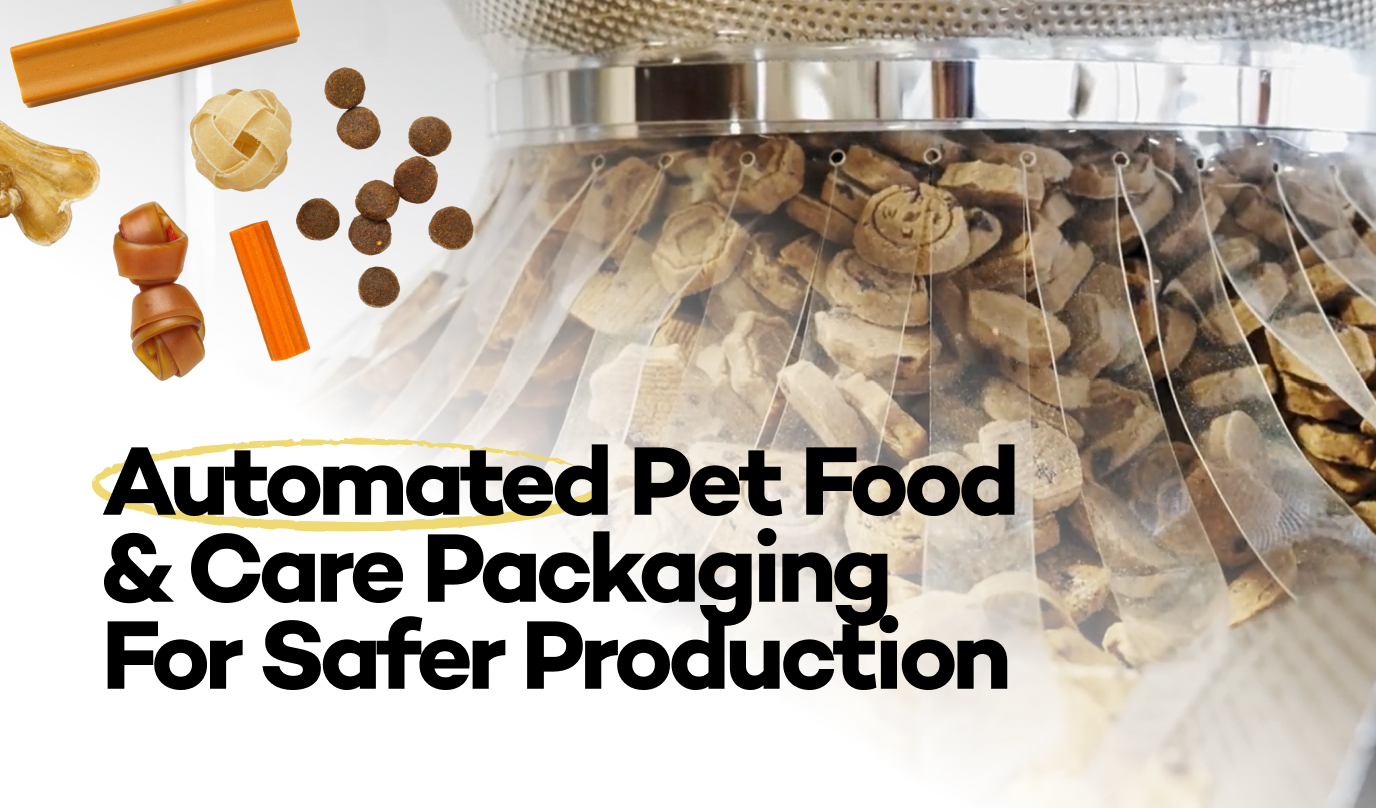
Improve pet food and care packaging with automation that enhances sanitation, seal integrity, and consistent product protection.
At PLAN IT Packaging, packaging is about more than presentation. It is about protection, responsibility, and trust. The right packaging system and materials do much more than preserve a product on the shelf. They help support sanitation, improve safety in production, and in many cases, play an important role in protecting consumers at home, including the pets that are part of the family.
As more products are formulated with enticing aromas and flavors such as chicken, beef, bacon, peanut butter, and other familiar scents, packaging takes on an even greater responsibility. For pet-related products, supplements, and even certain flavored medicines, the packaging itself becomes part of the safety solution.
Not all packaging materials perform the same way. The structure, seal integrity, barrier properties, and durability of a package all impact how well a product is protected throughout its lifecycle.
High-quality packaging materials can help:
This last point is especially important for products that may smell appealing to dogs. Animals experience scent at a much more heightened level than humans. A package that seems secure enough to a person may still release enough aroma to attract a curious pet. That is why scent control and reliable sealing should never be treated as an afterthought.
Automation is a key part of creating safer and more sanitary packaging processes. By reducing unnecessary human contact with products and packaging materials, automated systems help support cleaner production environments and more consistent results.
Automated packaging systems can help manufacturers:
In environments where cleanliness and consistency are critical, automation helps remove variability from the packaging process. Reliable automation also ensures that packaging materials are applied properly, seals are formed correctly, and each package leaves the line with the intended level of protection.
For companies producing products with strong scents or flavored formulations, this consistency is especially valuable. A poorly sealed pouch or improperly formed package may allow aroma to escape, increasing the risk that a dog could be drawn to it.
Many modern products are intentionally made more palatable. Flavored medicines, supplements, chews, and specialty products may use savory or meat-like profiles to improve acceptance. While this can benefit the intended user, it can also create a serious risk if a pet mistakes the product for a treat.
Dogs are naturally driven by scent. If medicine or a supplement smells like chicken, beef, or another desirable flavor, a dog may scratch at it, chew through outer packaging, or attempt to consume it if it is left within reach. That makes scent-lock packaging an important first layer of defense.
Effective packaging materials and strong seals can help:
This is not just a packaging issue. It is a safety issue. Packaging that better controls aroma can help reduce temptation and support safer storage practices for households with pets.
When manufacturers think about packaging, it is easy to focus only on branding, convenience, and production speed. Those factors matter, but true packaging performance goes further. Responsible packaging design considers the full journey of the product — from production and distribution to the moment it enters someone’s home.
That means asking important questions:
When these questions are addressed early, the result is a better package and a safer product experience.
At PLAN IT Packaging, we believe great packaging solutions should support the real-world needs of the people who use them. That includes the families, homes, and pets around them. Packaging is one of the quietest but most important parts of product safety. It helps protect quality, improve sanitation, and create a stronger barrier between enticing products and curious animals.
For products with strong or savory aromas, packaging materials and automation work hand in hand. The right materials help contain scent. The right automation helps apply those materials with precision and consistency. Together, they create a packaging solution that does more than perform well on a production line — it helps protect what matters most after the product leaves the facility.
Because in the end, better packaging is not just about efficiency. It is about care, responsibility, and building safer products for every home they enter. Learn more about pet food and care packaging here.
May 22, 2026
Our time at the Sweets & Snacks Expo 2026 in Las Vegas was both exciting and inspiring. Held at the Las Vegas Convention Center from May 19–21, 2026, with the Supplier Showcase taking place May 18–19, the event brought together brands, buyers, brokers, suppliers, and industry leaders from across the sweets and snacks market.
Our time at the Sweets & Snacks Expo 2026 in Las Vegas was both exciting and inspiring. Held at the Las Vegas Convention Center from May 19–21, 2026, with the Supplier Showcase taking place May 18–19, the event brought together brands, buyers, brokers, suppliers, and industry leaders from across the sweets and snacks market.
.png)
One of the best parts of the week was seeing the incredible variety of new candy and snack products on display. Everywhere we walked, there was something fresh to discover, new flavors, creative concepts, thoughtful packaging, and brands finding new ways to connect with consumers. The main show floor had a real sense of momentum, not just because of the products themselves, but because of the care and excitement behind them. That energy is part of what makes this event such an important gathering for the industry.
The Supplier Showcase added another valuable layer to the experience. It created a space where suppliers, equipment partners, and manufacturers could connect before the main expo opened, making it easier to have focused conversations around the systems, ingredients, services, and support that help great products reach the shelf. It was a strong reminder that every successful snack or candy brand is backed by a much larger network of people and companies working hard behind the scenes.
What stood out most, though, was the people. From emerging brands to long-established companies, the show was full of talented teams committed to making products that people know, trust, and enjoy. There is something special about an industry centered around creating small moments of happiness for consumers, and that came through clearly in Las Vegas. Behind every new item, every classic favorite, and every display on the floor were people passionate about quality, innovation, and giving customers something worth coming back for.
Walking the main show made it clear that the sweets and snacks industry continues to evolve in exciting ways. New ideas are coming to market quickly, but the companies making the biggest impact are doing more than chasing trends. They are building trusted brands, developing products with purpose, and creating experiences that bring joy to everyday life.
We are grateful for the conversations, the new connections, and the opportunity to see so many great companies doing meaningful work. Sweets & Snacks Expo 2026 was a great experience, and we are proud to have been part of it.
.jpeg)
At PLAN IT Packaging, we are always encouraged by the brands and people moving this industry forward. If your company is looking for packaging automation solutions to support growth, efficiency, and long-term success, we would love to connect and learn more about your goals.
.jpg)
April 27, 2026
PLAN IT Packaging's expansion aims to boost capacity, improve efficiency, and support growing demand for packaging automation across North America.
PLAN IT Packaging is proud to announce the expansion of its Toronto/Mississauga operations with the acquisition of an additional 40,000 square feet of production space. This marks another major milestone in the company's rapid growth across North America.
This expansion strengthens PLAN IT Packaging's ability to support customers with greater speed, efficiency, and production capacity as demand for automation continues to rise. The new facility enhances internal workflows across assembly, fabrication, shipping, and overall project execution, enabling faster turnaround times and improved delivery performance. The added space also increases capacity for storing parts, supplies, and in‑stock systems, improving readiness for both new equipment builds and aftermarket support.
As client demand accelerates, this expansion ensures PLAN IT Packaging can continue meeting the evolving needs of manufacturers across multiple industries. PLAN IT Packaging specializes in weighing, bagging, flow wrapping, case packing, end‑of‑line robotics, and palletizing solutions, delivering fully integrated systems designed for modern, high‑performance production environments. The expanded facility will further support these core competencies by enabling larger builds, more parallel projects, and enhanced engineering collaboration.
The company now operates three facilities across North America:
Together, these locations reinforce PLAN IT Packaging's long‑term investment in infrastructure, customer support, and scalable operations as it continues its trajectory toward becoming the premier North American leader in packaging automation and robotics.
The expansion also significantly grows PLAN IT Packaging's Customer Experience Center, providing more room for equipment demonstrations, live product testing, and hands‑on evaluations of the latest packaging innovations. This environment allows customers to validate solutions in real time and collaborate directly with the PLAN IT team to optimize their production goals.
"Expanding our Toronto/Mississauga facility is another important step in our commitment to building a stronger, faster, and more capable organization for our clients," said Jonathan Ballard, Vice President of Business Development. "This growth allows us to improve how we build, support, and demonstrate solutions while continuing to invest in the customer experience. Combined with our Tampa expansion and our dedicated R&D facility, it reflects our mission to become the premier North American supplier in packaging automation and robotics."
With this latest expansion, PLAN IT Packaging continues to invest in the people, processes, and facilities required to support the future of modern manufacturing.
April 30, 2026
At PLAN IT Packaging, we believe preventative maintenance should be more than a routine service call. It should be a strategic investment in the performance, longevity, and reliability of your equipment.
At PLAN IT Packaging, we believe preventative maintenance should be more than a routine service call. It should be a strategic investment in the performance, longevity, and reliability of your equipment.
That is why our Comprehensive Preventative Maintenance Plans are not built around a generic checklist. They are designed around your specific machinery, your operating environment, your product applications, and your team’s needs. Every visit is structured to make the best possible use of your time, helping you reduce downtime, improve performance, and keep your production moving with confidence.
Whether you are running snack foods, bakery, produce, coffee, frozen products, confectionery, or other packaged goods, our service team works with you to deliver maintenance support that is practical, productive, and tailored to your operation.
A traditional PM program often focuses on the basics and stops there. At PLAN IT Packaging, we take a more comprehensive approach.
Our preventative maintenance plans can include a combination of services such as:
This means your PM visit is not just about checking components. It is about identifying opportunities to improve reliability, strengthen operator confidence, and prevent avoidable issues before they impact production.
No two facilities operate the same way. No two machines are used the same way. And no two production teams need the exact same type of support.
Some customers may need a detailed inspection focused on wear items, lubrication, and electrical systems. Others may benefit more from ongoing operator training, process review, or support organizing manuals and technical documentation so their teams can work more effectively between service visits.
Our PM plans are designed to meet your operation where it is today while helping prepare it for where it needs to go tomorrow.
That means we focus on what is most valuable for your business, including:
The result is a maintenance plan that works harder for you because it is built specifically for your operation.
Scheduled downtime is valuable.
Our goal is to help you use it wisely.
When your team sets aside time for preventative maintenance, we make sure that time is used in the most effective way possible. Instead of applying the same formula to every customer, we prioritize the work that will have the greatest impact on your line’s performance and your team’s success.
That could mean:
It is a smarter, more useful approach to preventative maintenance—one designed to protect uptime and support long-term equipment health.
When packaging systems are properly maintained, businesses benefit from more than just fewer breakdowns.
A strong preventative maintenance program can help:
Simply put, a well-executed PM plan helps your equipment perform the way it was designed to perform—consistently, efficiently, and with fewer surprises.
Our preventative maintenance plans are designed to support your operation beyond the service visit itself.
That is why we also look for ways to provide additional value through:
Because the best maintenance programs do not just react to equipment issues. They help your team stay ahead of them.
At PLAN IT Packaging, service should be useful, not generic.
Our preventative maintenance plans are built to deliver real value where your business needs it most.
Whether your operation needs inspection support, training, documentation review, machine health checks, or all of the above, our team is here to help you protect your investment and keep your packaging systems running at their best.
To learn more about our Comprehensive Preventative Maintenance Plans and how we can tailor a program to your equipment and operation call 1-866-339-3407.
.jpg)
April 17, 2026
Packaging fresh produce and produce-adjacent products requires more than just a standard bagging machine.
Choosing the Right VFFS Solution for Fresh Produce: What to Ask Your Manufacturer
Packaging fresh produce and produce-adjacent products requires more than just a standard bagging machine. Moisture, sanitation, product variability, and production demands all play a role in determining what system will truly perform long-term. Asking the right questions early in the process helps ensure you invest in a vertical form fill and seal (VFFS) solution that protects your product, supports your environment, and grows with your operation.
One of the first things to clarify is whether the machine is truly built for washdown conditions. Fresh produce environments often involve frequent cleaning, moisture, and debris. Stainless steel construction, sealed components, and hygienic design features are critical for maintaining sanitation and extending equipment life. A system designed for clean operation will make daily maintenance easier while supporting food safety standards.
It’s also important to understand what level of automation fits your current needs and future goals. Some operations benefit from compact, all-in-one entry systems that integrate filling and bagging in a smaller footprint. Others require higher-speed, continuous motion platforms to keep up with larger production volumes. A flexible platform that can scale over time helps avoid the need to replace equipment as your business grows.
Product handling should be another key discussion point. Fresh produce varies in size, shape, density, and moisture content, which directly affects how it should be filled and sealed. Ask what filling systems are best suited for your application, whether that’s a multihead weigher, auger, or cup filler, and how the equipment will maintain accuracy without damaging the product.
Sealing performance is equally important, especially in moist environments. Consistent temperature control, stable film tracking, and proper jaw pressure all contribute to strong, reliable seals that protect freshness and presentation. A system designed to perform under these conditions can help reduce waste and improve package quality.
Changeover flexibility also matters for operations running multiple SKUs, seasonal items, or private label products. Features like recipe storage, operator-friendly controls, and toolless forming tube changes can significantly reduce downtime and improve efficiency between runs.
Finally, consider how the VFFS system will integrate with the rest of your line. Most operations rely on a combination of weighers, conveyors, platforms, and inspection equipment. A strong manufacturer will look at the full process and help ensure each component works together smoothly.
.jpg)
The right packaging solution should be built around your product and your environment, not the other way around. From entry-level systems to fully customized, washdown-ready high-speed platforms, today’s VFFS technology offers a wide range of configurations. By asking the right questions, fresh produce packers can invest in a system that supports sanitation, maintains product quality, and scales confidently with production.
March 30, 2026
When it comes to packaging fresh products, the priorities are very different from dry goods or shelf-stable items.
Flow Wrapping for Fresh Products: Built for Gentle Handling, Clean Sealing, and Shelf-Ready Results
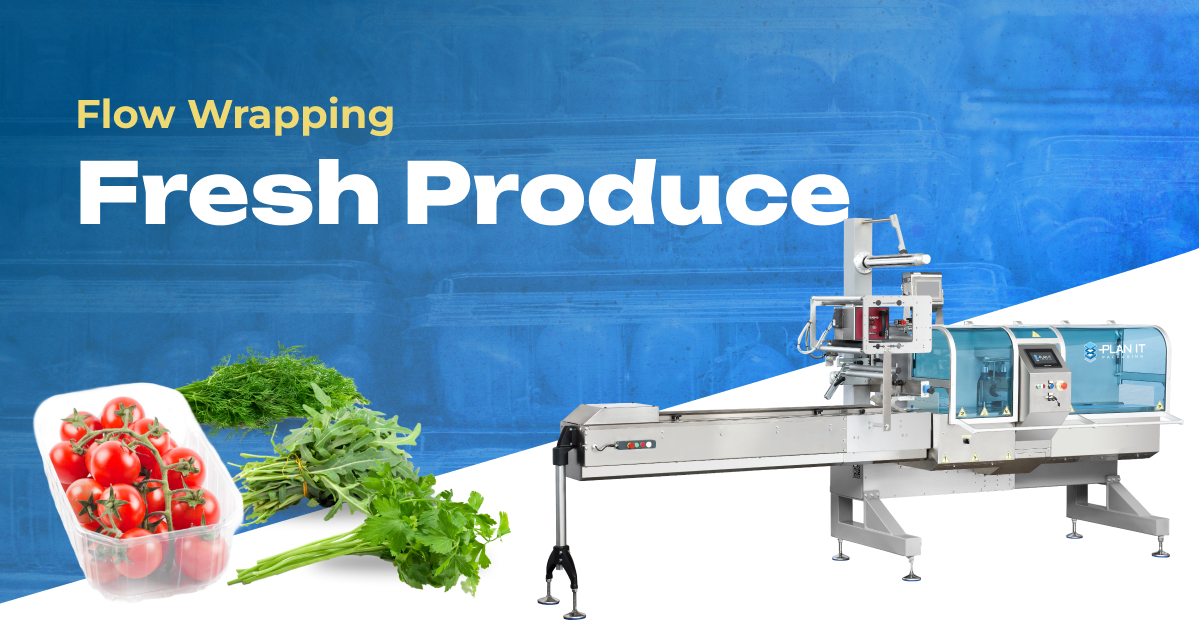
When it comes to packaging fresh products, the priorities are very different from dry goods or shelf-stable items. Fresh produce, baked goods, and temperature-sensitive products require a delicate balance of protection, presentation, and speed. The right flow wrapper configuration doesn’t just package the product — it preserves quality, maintains freshness, and ensures consistency from production to shelf.
At PLAN IT Packaging, our flow wrapper systems are designed with specialized configurations that support the unique challenges of fresh and perishable products. From cooling plates to smart feeding systems and precision sealing technologies, each element plays a role in protecting product integrity while maximizing line efficiency.
One of the most important components in fresh product flow wrapping is temperature control. Cooling plates are a critical addition for products that are warm, soft, or recently processed. These plates help stabilize the product before it enters the sealing area, reducing the risk of deformation, sticking, or seal contamination. For items like freshly baked goods, produce that has been lightly washed, or warm prepared foods, cooling plates create a more controlled transition from production to packaging, helping ensure clean, consistent seals and a more uniform finished package.
Product handling is another key factor. Fresh items are often delicate, irregularly shaped, or prone to shifting during transport. Long-draw configurations provide additional space and time for proper product loading, allowing operators or upstream automation to place items onto the infeed in a controlled and organized manner. This extended loading zone is especially helpful for fresh produce, where alignment and spacing can vary. By giving the product more time to settle before reaching the forming box, long-draw systems help prevent jams, overlaps, and damaged goods.
To further improve consistency, smart belt feeders play a major role in stabilizing and spacing fresh products as they move toward the wrapper. These feeders are designed to gently guide products into position, maintaining consistent gaps and orientation without aggressive handling. For operations working with mixed sizes, softer items, or higher throughput demands, a smart feeding system reduces manual intervention and ensures a smoother transition into the sealing process.
Sealing itself requires special consideration when working with fresh items. Moisture, temperature, and product texture can all impact seal integrity. Multiple jaw configurations provide the flexibility needed to adapt to these variables. With the ability to fine-tune pressure, dwell time, and sealing consistency, multi-jaw setups help ensure that each package is properly sealed without crushing or overheating the product. This is especially valuable for fresh produce and bakery applications where maintaining package integrity directly affects shelf life and presentation.
Combined, these configurations create a packaging environment that is designed around the product rather than forcing the product to conform to the machine. Cooling plates protect temperature-sensitive items. Long-draw loading zones improve product placement. Smart belt feeders maintain spacing and flow. Multiple jaw sealing systems ensure consistent, high-quality closures.
The result is a flow wrapping solution that supports freshness from start to finish, reducing waste, improving package quality, and allowing producers to scale operations with confidence.
At PLAN IT Packaging, we understand that fresh products demand thoughtful automation. Our flow wrapper systems are built to adapt to the realities of perishable goods, providing the flexibility and control needed to keep products looking great, sealed properly, and ready for market.
March 27, 2026
When it comes to powder and granular products, precision matters from every stick pack to every gram inside it.
When it comes to powder and granular products, precision matters from every stick pack to every gram inside it.
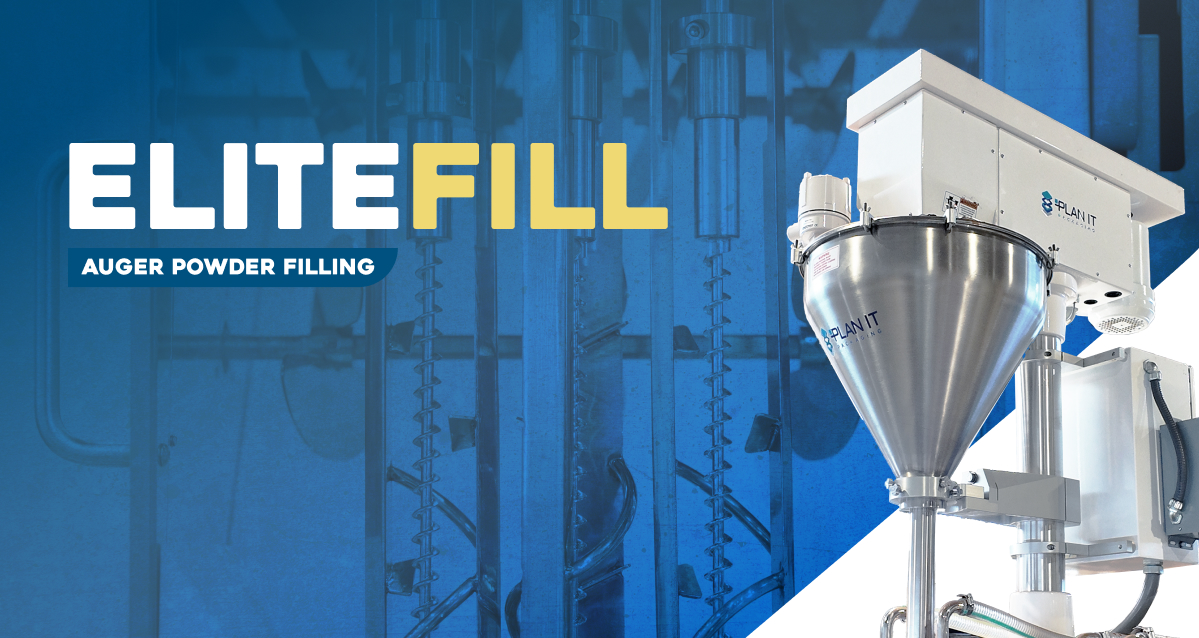
At PLAN IT Packaging, our Stick Pack Machines combined with the EliteFill Auger Filling System deliver a powerful solution for packaging powders and granules with accuracy, efficiency, and versatility. Whether you’re running seasonings, drink mixes, protein powders, spice blends, powdered supplements, or granular food ingredients, this pairing is engineered to meet your production goals while maintaining product integrity.
Stick packs offer convenience, portion control, and premium shelf appeal, but they require precise filling technology. Small errors in powder delivery can lead to underfills, overfills, and inconsistent products that impact customer trust and brand reputation. That’s where the combination of stick packaging and EliteFill shines.
The EliteFill Auger Filler is designed specifically for powder and granular products. Its advanced auger design ensures controlled, repeatable dosing that minimizes giveaway and maximizes accuracy, even with difficult or variable product flows. With robust construction and sanitary design, EliteFill supports everything from fine powders to coarser granules.
Our stick pack machines are ideal for single-serve portioned packaging, delivering consistent fills, clean seals, and great presentation for retail, foodservice, e-commerce, and on-the-go markets. When integrated with EliteFill, stick pack lines can handle a broad range of products with quick changeovers and minimal downtime.
This combination supports scale without compromise:
1. Accurate fills and reduced giveaway
2. Consistent pack quality
3. Flexibility across products and stick sizes
4. Efficient operation with quick product changeover
From formulation to final pack, powder and granule packaging shouldn’t rely on guesswork. It requires engineered systems that deliver precision, consistency, and control. Portion accuracy starts here.
.avif)
March 4, 2026
From candy and chocolates to vitamins, supplements, and pharmaceutical products, accurate counting plays a vital role in product quality, regulatory compliance, and consumer trust.
From candy and chocolates to vitamins, supplements, and pharmaceutical products, accurate counting plays a vital role in product quality, regulatory compliance, and consumer trust. A single miscount can lead to customer dissatisfaction, compliance issues, or costly rework. That’s why manufacturers across food and regulated industries are turning to advanced, vision-based counting technology.
At PLAN IT Packaging, the EliteCount system is designed to deliver precise, repeatable counts using high-resolution vision systems and intelligent detection software.
Unlike traditional mechanical counters that rely on weight measurements or basic sensors, vision-based counting allows each individual piece to be identified, tracked, and verified in real time.
This technology moves beyond estimation, it provides visual confirmation of every product that passes through the system.
Vision systems “see” each product as it moves through the counter, enabling:
Accuracy is especially critical for pharmaceuticals, vitamins, nutraceuticals, and other regulated products where correct counts are required to meet labeling, dosing, and compliance expectations. When compliance matters, precision isn’t optional, it’s mandatory.
EliteCount is designed to handle a wide range of products, including:
The system adapts easily to different SKUs without lengthy changeovers. With recipe-driven controls and intuitive interfaces, operators can switch between products quickly while maintaining consistent performance and output.
That flexibility supports high-mix production environments and fast-paced manufacturing lines.
Accurate counting protects more than just the package — it protects:
By eliminating overfills, underfills, and manual counting errors, EliteCount helps manufacturers reduce waste, improve throughput, and maintain confidence in every unit that leaves the line.
In today’s advanced packaging environments, visibility equals reliability. Vision-based counting makes the difference because seeing is counting. If precision, compliance, and efficiency are priorities for your production line, intelligent vision technology is the solution that keeps your operation moving forward.

March 2, 2026
International Women’s Day is a time to celebrate progress and recognize the opportunity ahead especially in manufacturing and automation.
International Women’s Day is a time to celebrate progress and recognize the opportunity ahead especially in manufacturing and automation.
Women make up roughly 28–30% of the manufacturing workforce in North America, yet representation in engineering, robotics, and industrial automation roles is often closer to 15–20%. As packaging lines become more advanced, driven by robotics, AI, and data, the need for diverse technical talent continues to grow.
At the same time, research from McKinsey & Company shows that companies in the top quartile for gender diversity are 25% more likely to achieve above-average profitability. In automation, where performance and innovation are everything, diverse teams are a competitive advantage.
Modern packaging environments rely less on physical labor and more on:
As automation reshapes the production floor, it also creates space for broader participation and leadership.
At PLAN IT Packaging, we see firsthand how collaboration, technical expertise, and diverse perspectives strengthen our projects from system design to commissioning and long-term support.
We are proud of the women across our organization who contribute to engineering, marketing, operations, project coordination, and customer success. As automation continues to evolve, we remain committed to fostering growth, opportunity, and leadership within our team and the industry as a whole.
The future of automated packaging is not just about smarter machines. It is about stronger, more inclusive teams building them. Learn more about PLAN IT Packaging here.

February 20, 2026
Pack Expo East 2026 in Philadelphia delivered exactly what we come to these shows for: meaningful conversations with manufacturers who are serious about improving throughput, reducing labor strain, and building packaging lines that scale.
Real Conversations. Real Automation. Real Momentum.
Pack Expo East 2026 in Philadelphia delivered exactly what we come to these shows for: meaningful conversations with manufacturers who are serious about improving throughput, reducing labor strain, and building packaging lines that scale.
From the moment the doors opened, our booth stayed active with operators, engineers, managers, and leadership teams looking for practical automation solutions, not buzzwords. The common thread across nearly every discussion was clear: production demands are rising, labor is tight, and consistency is non-negotiable. The good news? The right equipment choices and line layouts can make a measurable impact fast.
Across food, snack, bakery, nutraceutical, and general CPG applications, manufacturers shared similar pain points:
Our team spent the show doing what we love: breaking down these challenges and mapping out the most efficient automation path, whether that means starting with a single packaging station or building toward a complete end-to-end line.
This year, we brought a full range of packaging and automation systems so attendees could see how the pieces fit together in a real production environment.
Automation at the end of the line was one of the biggest topics of the show. Many teams are ready to reduce repetitive manual tasks and improve consistency, especially in case handling and palletizing conversations. Our Cobot System and RoboPacker sparked strong interest as flexible, scalable options for operations looking to take the next step.
Bagging and portion packaging were constant conversation drivers, especially for operations balancing speed with accuracy. Systems like the RotoBagger, EcoBagger + Auger Filler, and 2 Lane Stick Pack were central to discussions around efficiency, dosing accuracy, and clean, repeatable packaging results.
When accuracy and consistency matter, weighing systems become the heartbeat of a packaging line. We spent a lot of time talking through product behavior, ideal hopper sizes, and how the right scale configuration impacts speed and cost control. The 14 Head Scale and EliteWeigh Weigher 24H 0.5L generated strong interest for teams wanting dependable performance across different product types.
For teams focused on throughput and uptime, our VFFS and packaging platforms were a key draw. The MarsRapid VFFS, ComboPack Case Former & Bag Inserter, and Pack500 flow wrapper drove great conversations around film handling, seal integrity, changeover simplicity, and building a platform that supports growth.
To everyone who visited our booth, thank you. If we didn’t get enough time together on the show floor, we’d love to continue the conversation with a quick line review call. Whether you’re upgrading a single component or planning a full automation roadmap, our team can help you:
If you’re ready, reach out and we’ll schedule a follow-up. Contact us today.
Let’s keep the momentum going.
February 2, 2026
If you’re heading to Pack Expo East 2026, we’d love to see you. This year, we’re bringing a serious equipment lineup built for real production floors designed to help manufacturers increase throughput, reduce labor strain, improve consistency, and scale with confidence.
If you're heading to Pack Expo East 2026, we'd love to see you. This year, we're bringing a serious equipment lineup built for real production floors designed to help manufacturers increase throughput, reduce labor strain, improve consistency, and scale with confidence.
Whether you're upgrading a single station or mapping a full end-to-end line, our team will be onsite to walk through formats, speeds, product handling, and the smartest automation path for your operation.
.jpg)
PackMaster, Cobot Palletizer is a flexible, cost-effective solution that simplifies palletizing for a wide range of products and case sizes. Capable of handling one or two pallets and medium to heavy loads of up to 60 kg, it adapts easily to varying production needs. Its intuitive HMI system allows for quick programming, testing, and setup, helping save time and boost productivity all within a much smaller footprint than traditional palletizer systems.
RoboPacker, Robotic Case Packer is a 3-in-1 solution that combines picking, case erecting, and packing within a single compact footprint. Equipped with a vision system for product orientation, an Omron PLC, and a 4-axis robot, it delivers precision and efficiency for a variety of product types. Designed for fast changeovers and seamless integration, this robust system ensures reliable, high-performance operation. Its user-friendly interface and versatile layout allow it to handle multiple product sizes and formats, making it an ideal choice for modern, high-output packaging lines.
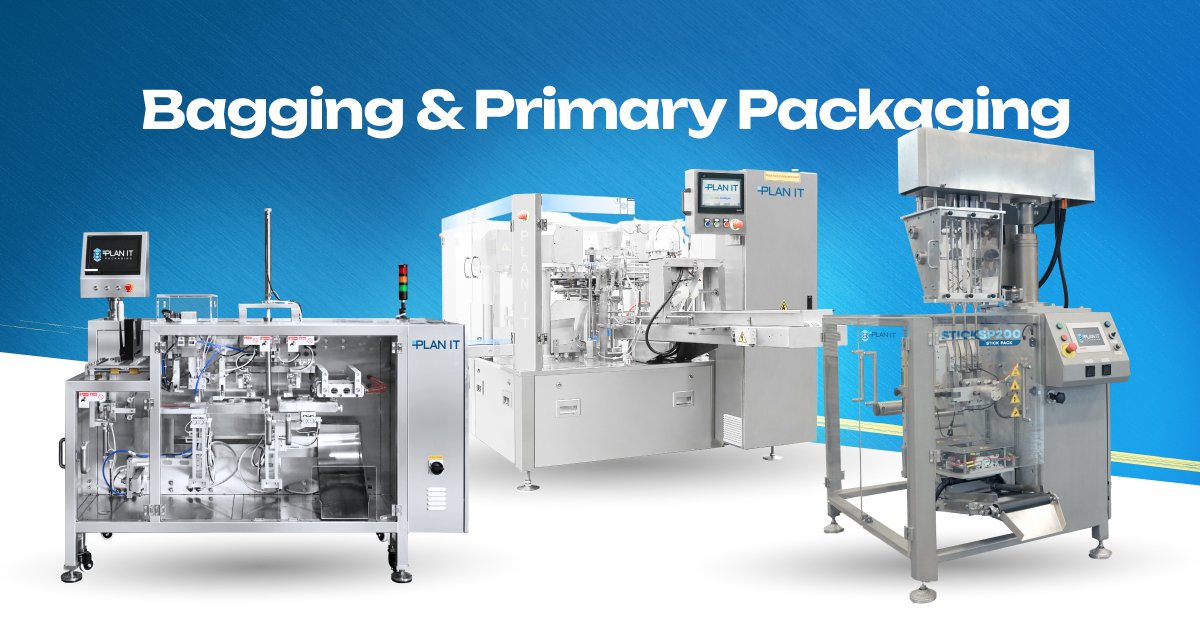
RotoBagger, Rotary Premade Pouch Machine is ideal for mid-to high-speed production in demanding 24/7 environments. Specifically designed for premade pouching applications, this machine delivers packaging speeds of 40–90 bags per minute (BPM), with Duplex and higher-speed models available to meet increased throughput needs.
EcoBagger Mini, Linear Premade Pouch Machine + EliteFill, Auger Filler is a compact, servo-driven pre-made pouch machine built for powders and granular products needing accurate dosing and clean fills. Engineered for efficiency and reliability, this durable system delivers consistent performance with quick changeovers. Its intuitive, user-friendly design makes operation simple while providing the flexibility to package products in multiple sizes and formats.
SP200, 2 Lane Stick Pack is a compact, entry-level stick pack machine designed for small to mid-sized production environments. It can be configured with auger, granular, or liquid fillers to handle both solid and liquid products. With up to 5 lanes and a maximum film web width of 8" (210mm), it's ideal for tight spaces thanks to its minimal footprint, even in height.
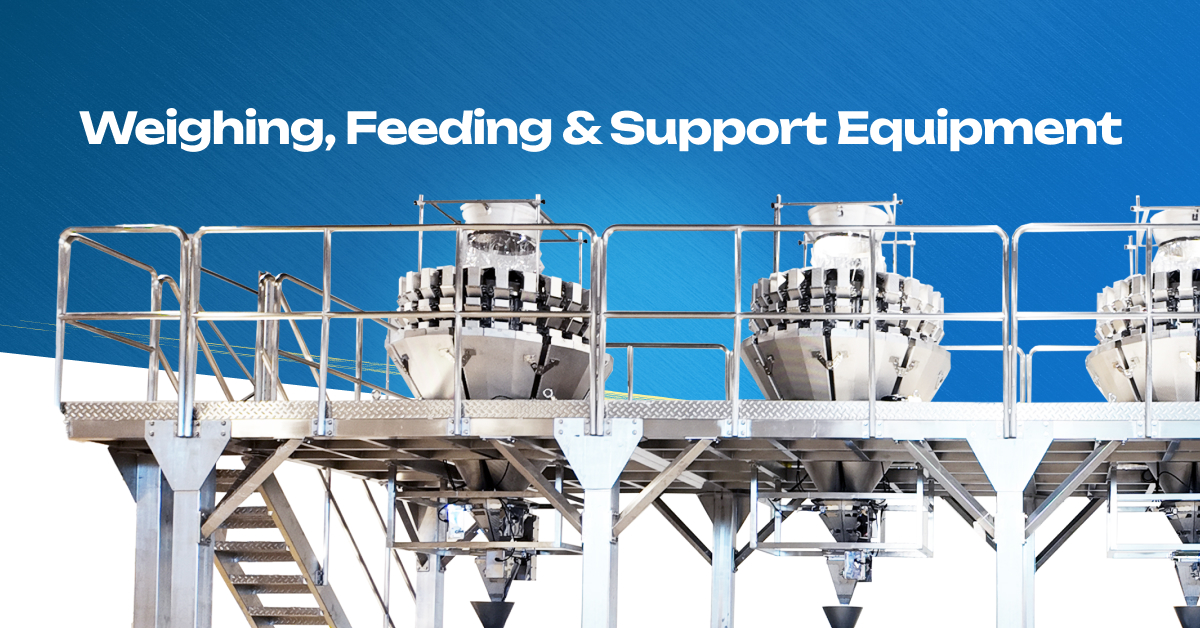
EliteWeigh, 14H Multihead Weigher delivers exceptional accuracy and speed with robust stainless steel construction. Featuring precision german load cells, tool-free maintenance, and versatile integration with various packaging machines, it's ideal for precise weighing and packaging of diverse products from granules to fragile items.
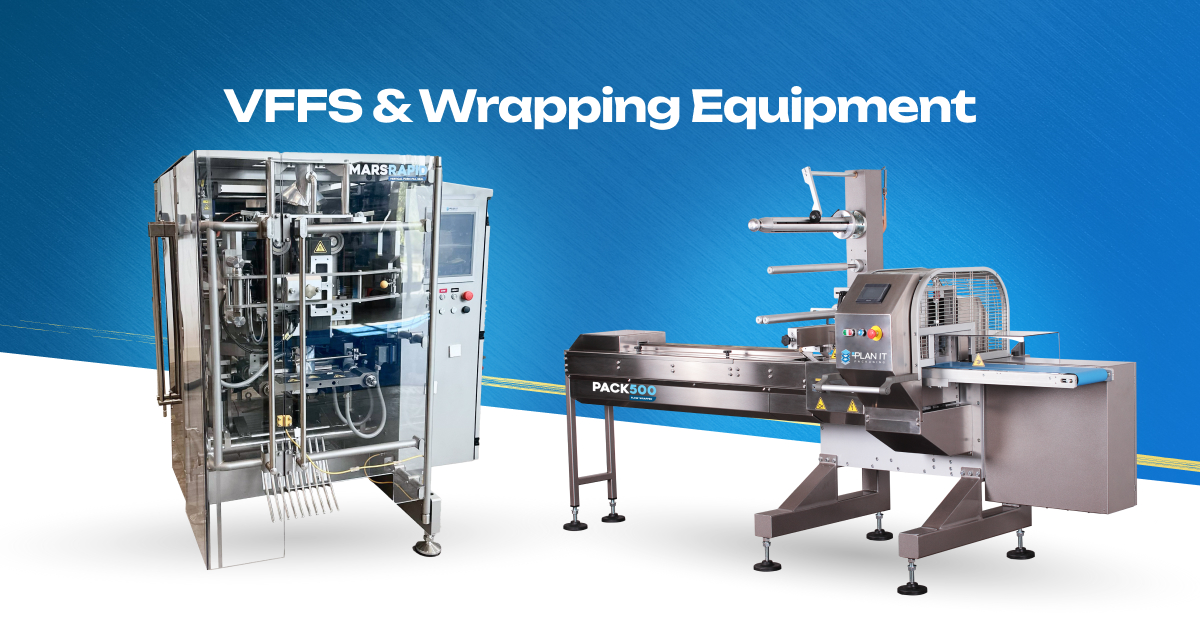
MarsRapid, VFFS is a continuous motion, ultra-high-speed vertical form fill seal machine engineered for large-volume packaging. Designed to achieve up to 200 cycles per minute, it delivers exceptional throughput without compromising reliability or consistency. Built for efficiency, the Mars Rapid integrates seamlessly with weighers and fillers, ensuring smooth operation across a variety of applications. Its user-friendly interface and quick-changeover design provide the flexibility to handle multiple product sizes and formats, making it the ideal solution for high-output packaging environments.
MarsCompak, VFFS is a compact vertical form fill seal machine designed for pillow, stand-up, zippered, and gusset pouches. Capable of producing up to 80 bags per minute, it offers a versatile solution for both food and non-food applications. Engineered for reliability and efficiency, this robust system ensures consistent performance while keeping operations streamlined. With its user-friendly controls and rapid changeover design, the MarsCompak integrates seamlessly with filling systems and provides the flexibility to package a wide range of product sizes and formats.
Pack500, Flow Wrapper is a large-format flow wrapper supporting products up to 20" wide. Designed for high-speed lines and large products. Specifically designed for optimal performance, this robust system ensures reliability and efficiency. Featuring user-friendly operation, it facilitates seamless integration and rapid changeovers, providing versatility for various product sizes and formats.
Bring your product, your bag format, and your target speed we'll help you map the best system configuration and show what it looks like in the real world. 📞 Give us a call toll-free at 1-866-339-3407 or tell us a little more about your goals here. We look forward to getting started and building the future of packaging automation together.
📍Visit PLAN IT PACKAGING at Booth 1739

January 21, 2026
To support this growth, Royal Food Products partnered with PLAN IT Packaging Systems to modernize their packaging operations. Their most recent investment, a MarsCompak vertical form-fill-seal (VFFS) line with an integrated ELITEWEIGH multihead scale, replaced a labor-intensive manual process and delivered immediate results.
Royal Food Products, a third-generation family business based in Edmonton, has grown into one of Canada’s leading manufacturers of frozen savory pastries, producing more than three million kilograms annually. With demand for their signature sausage rolls continuing to surge, the company turned to automation to increase throughput while maintaining the quality their customers expect.
To support this growth, Royal Food Products partnered with PLAN IT Packaging Systems to modernize their packaging operations. Their most recent investment, a MarsCompak vertical form-fill-seal (VFFS) line with an integrated ELITEWEIGH multihead scale, replaced a labor-intensive manual process and delivered immediate results.
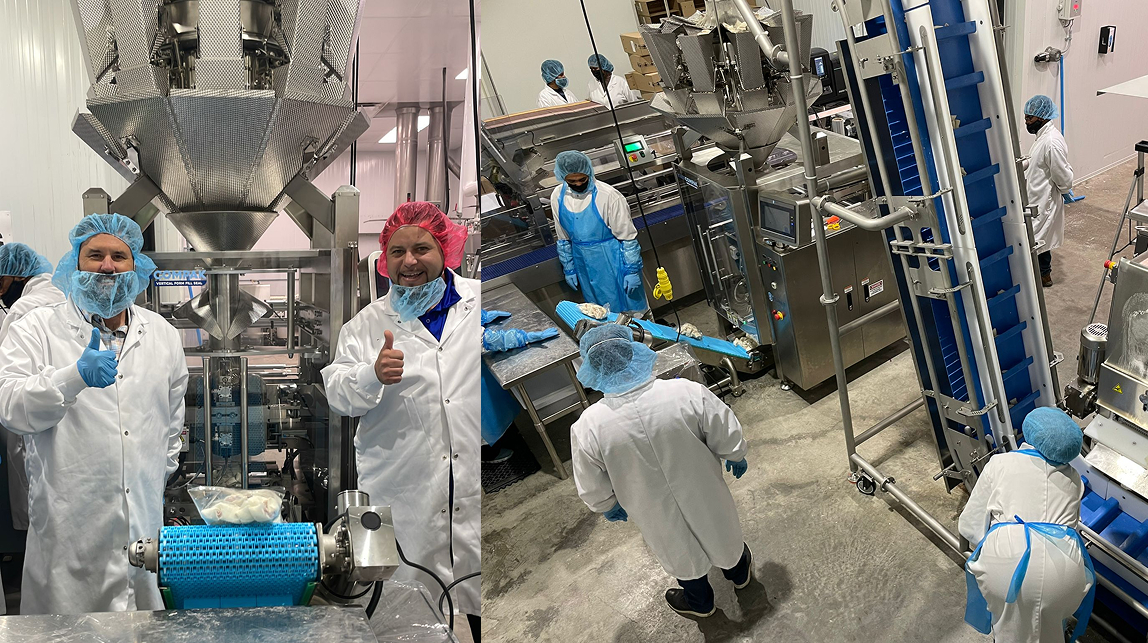
“The equipment we recently purchased has significantly increased our throughput and is helping us maintain our profit margins,” says Paul Meyer, President of Royal Food Products. “It also allows us to reinvest in our employees and future equipment.”
Since startup, the new system has delivered major productivity gains.
“The day we turned it on, we saw a 24% increase in productivity,” Meyer shares. “Depending on the product, we’ve seen a 56–80% increase in output. It’s surpassed our expectations—an amazing asset.”
Beyond performance improvements, the automated solution also enhanced accuracy and reduced waste.
“Since implementing the new machine, we have better finished weights, less waste, more accurate counts, and easier labor requirements,” Meyer explains.
PLAN IT’s team provided hands-on training and ongoing support throughout the project.
“PLAN IT has been excellent to work with from start to finish,” Meyer adds. “They have a responsive support network, and I’d be happy to work with them again.”
This partnership has helped Royal Food Products remove production bottlenecks, improve efficiency, and unlock new growth opportunities demonstrating the real-world impact of smart, scalable automation.
Ready to elevate your packaging line? Connect with our team today for a free consultation and discover how smart automation can transform your operation.
.avif)

January 12, 2026
At Plan It Packaging, our bulk packaging solutions are engineered to simplify and automate the packaging process for fresh produce, proteins, and temperature-sensitive foods, from leafy greens and fruits to vegetables, poultry, meats, and more.
At Plan It Packaging, our bulk packaging solutions are engineered to simplify and automate the packaging process for fresh produce, proteins, and temperature-sensitive foods, from leafy greens and fruits to vegetables, poultry, meats, and more. Designed as a fully integrated system, this solution reduces manual handling, improves hygiene, and delivers consistent, production-ready cases at scale.
Here’s how a complete Bag-in-Box line comes together:
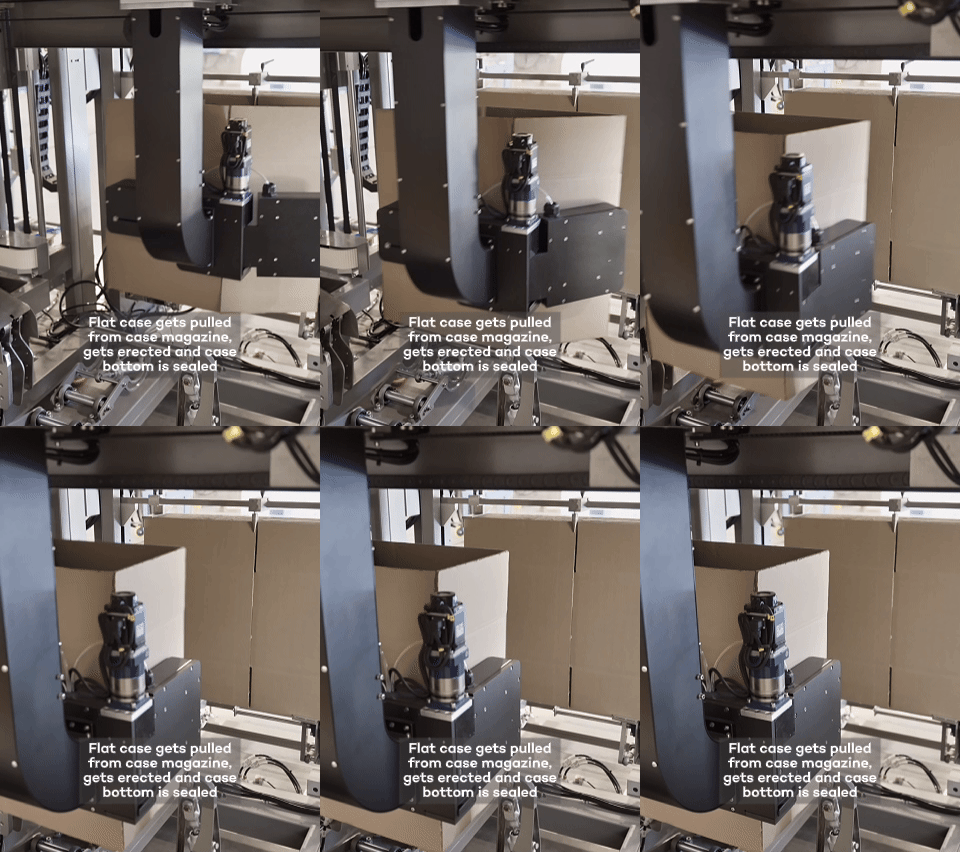
The process begins by forming corrugated cases quickly and consistently—removing labor-intensive setup and keeping your line moving at a steady pace.
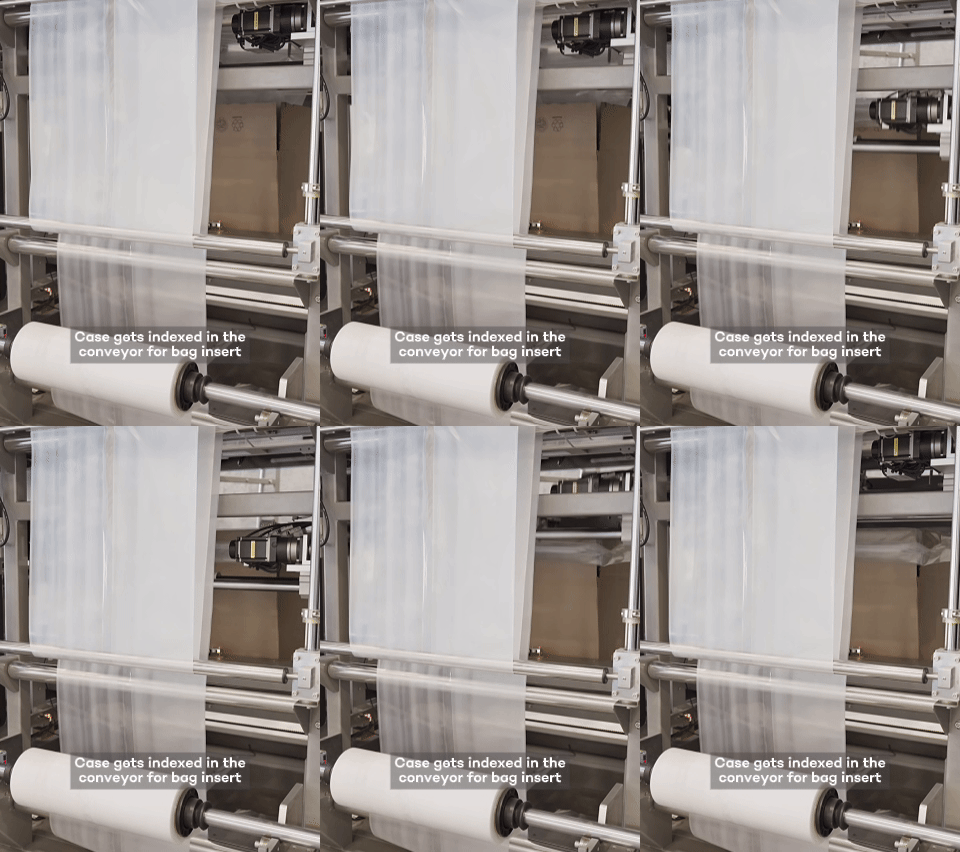
A liner is automatically placed inside each case, squared and ready for filling. Proper liner placement is critical when handling fresh, wet, or raw products, helping protect product quality and support food-safety best practices.
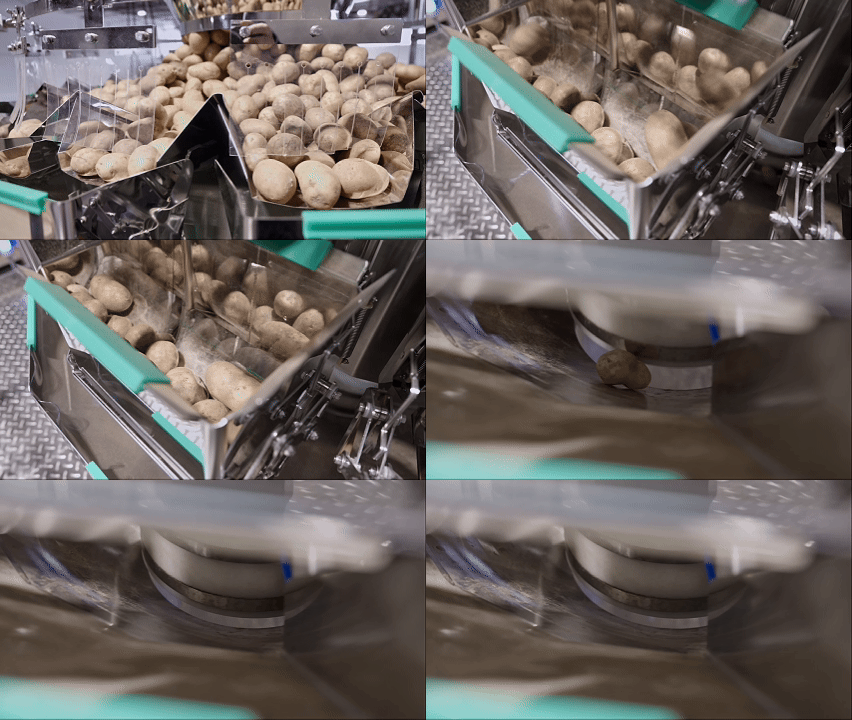
Depending on the product, Plan It Packaging integrates the right filling technology:
• EliteWeigh Multihead Weighers for fresh produce, frozen vegetables, cut fruits, meats, and poultry, delivering fast, accurate fills with gentle product handling.
• EliteFill Auger Systems for dry or blended ingredients, ensuring controlled and repeatable dosing.
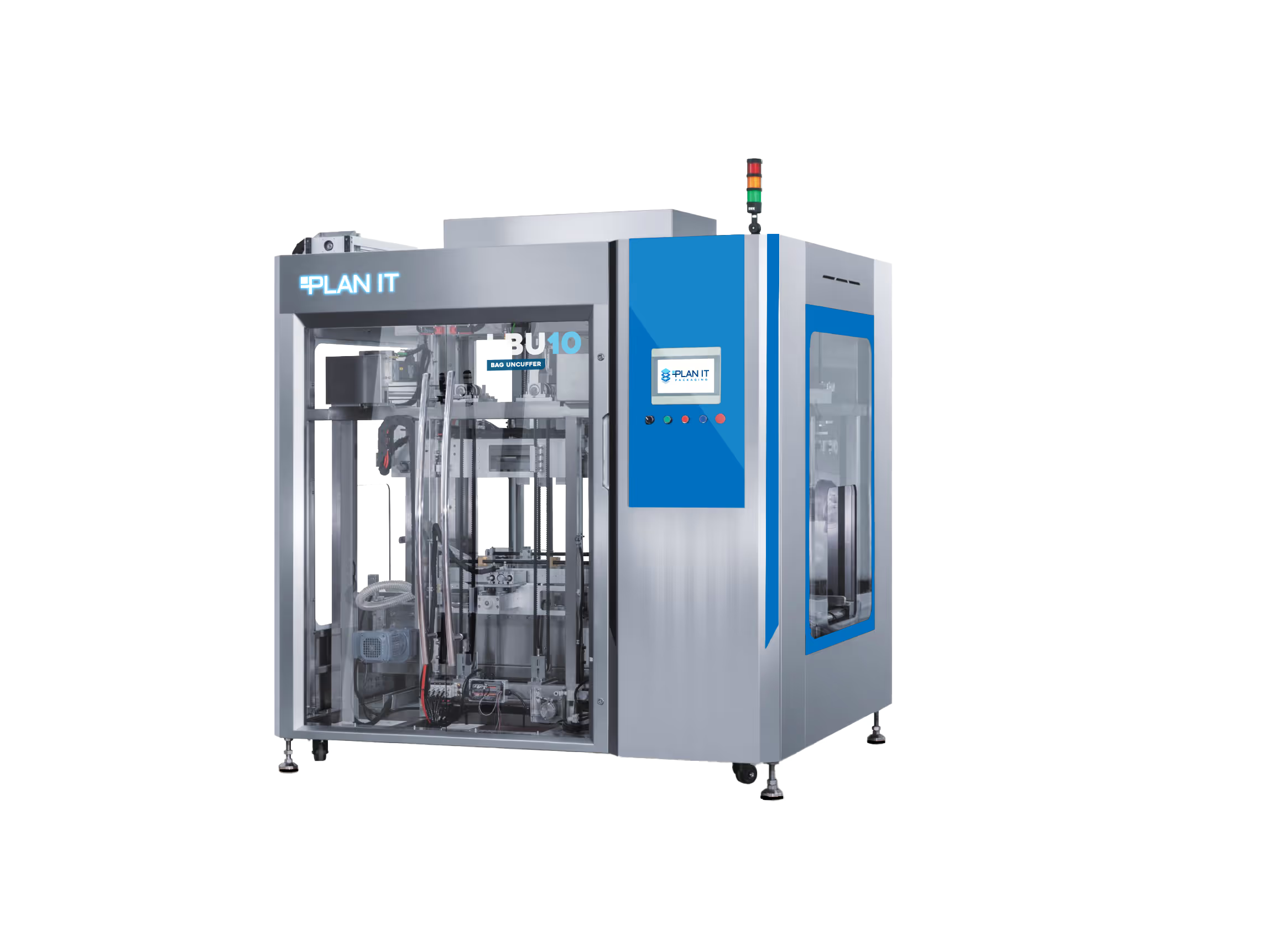
After filling, the uncuffer neatly removes excess liner material and folds the bag cleanly over the product—preparing the case for secure closure without mess or rework.
The line finishes with automated closing and sealing, producing a clean, consistent, and ship-ready case—ideal for cold storage, distribution, or foodservice fulfillment.
This end-to-end Bag-in-Box approach is ideal for processors handling bulk vegetables, fruits, leafy greens, proteins, and mixed food products, where hygiene, consistency, and throughput matter most. Fewer touchpoints, better repeatability, and a line designed to scale as demand grows.
.avif)
We offer various configurations of our bulk packaging machines that not only fits your facility footprint, but optimizes your packaging line. Share what your current layout and packaging process is, and our experts will match you with the equipment that best suits your production line. Learn more about our inserting & uncuffing offerings here.
📞 Give us a call toll-free at 1-866-339-3407 or tell us a little more about your goals here. We look forward to getting started and building the future of packaging automation together.

December 31, 2025
As we step confidently into 2026, we’re taking a moment to reflect on an incredible year behind us. 2025 was a defining year for Plan It Packaging—one filled with growth, innovation, customer collaboration, and major milestones across North America.
As we step confidently into 2026, we’re taking a moment to reflect on an incredible year behind us. 2025 was a defining year for Plan It Packaging, one filled with growth, innovation, customer collaboration, and major milestones across North America. None of it would have been possible without the trust of our partners, customers, and team members who continue to push packaging automation forward.
From launching next-generation equipment to expanding our footprint and connecting face-to-face with manufacturers across the continent, 2025 reinforced our mission: to engineer reliable automated packaging solutions that drive efficiency, productivity, and long-term growth.
And we’re just getting started.
In 2025, we continued to grow our teams across the United States from Tampa to Las Vegas strengthening our ability to support customers wherever their operations are located in North America.
This expansion allows us to:
Every step of our process is designed to empower our customers, and that commitment won’t slow down in 2026. Our growing team ensures that when you invest in automation, you’re backed by people who understand your goals and your production challenges.
Automation and robotics were front and center in 2025, highlighted by the launch of our second-generation PackMaster™ Cobot Palletizer.
This solution quickly gained traction with:
With its small footprint design, PackMaster™ proved to be a game-changer for facilities with limited or evolving floor space making it one of the most competitive palletizing solutions on the market. For manufacturers exploring automation for the first time, we make the journey approachable and transparent. For more information on what it’s like to automate with us as a first-time buyer, take a look at what you can expect.
In March, our team headed to Pack Expo Southeast in Atlanta, showcasing a powerful lineup of automation solutions, including:
Meeting new and familiar faces made this show a memorable one and set the tone for a busy year ahead.
Custom projects were a major highlight this year and a true testament to what’s possible with the right automation partner.
One standout project featured customers packaging a variety of gummy candies at speeds up to 500 PPM using a complete line of MarsRapid VFFS machines paired with 24H EliteWeigh Multi-Head Weighers.
Another favorite was a Fully Automated Robotic Case Packer / Tray Packer for Clamshells, running dates at 70 PPM with precision and consistency.
In May, we brought automation to the Sweets & Snacks Expo Supplier Showcase in Indianapolis, connecting with snack manufacturers and sweets enthusiasts while showcasing our flow wrapper machine.
These conversations continue to fuel new ideas, new partnerships, and new solutions tailored to the evolving snack market.
With more Factory Acceptance Tests (FATs) running out of our Tampa facility, we strengthened in-person collaboration with customers during the build and testing phases.
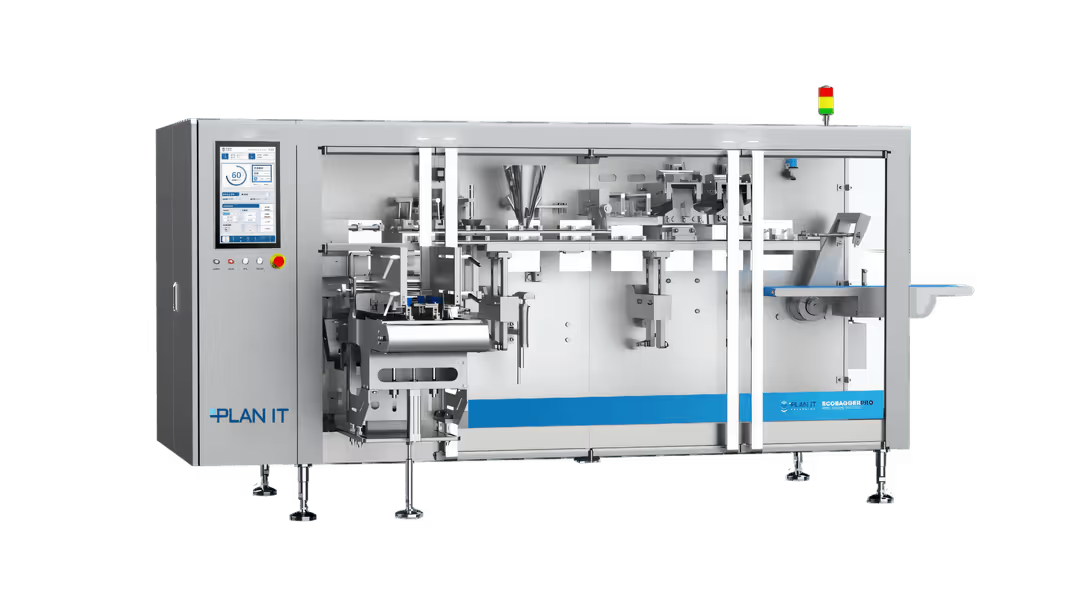
One great example: customers moving away from hand-counting gummies and embracing the EcoBagger Mini + EliteCount system. A food-grade conveyor smoothly guides gummies into the lightning-fast EliteCount counter, allowing exact portions of 1, 10, 20, or 40 pieces, all while packaging at up to 20 PPM.
This is automation that delivers speed, accuracy, and confidence.
In September, we connected with the bakery industry at the International Baking Exposition (IBIE) in Las Vegas, bringing:
Just weeks later, we returned to Las Vegas for Pack Expo, showcasing one of our most comprehensive lineups ever:
With many projects starting right on the show floor, it was an incredible way to close out the year and build momentum heading into 2026.
As new projects take off at the end of 2025 and into early 2026, we’re excited to partner with manufacturers ready to invest in automation with purpose backed by industry knowledge, superior solutions, and exceptional customer support.
Here’s to a bright, productive, and prosperous New Year.
📞 Give us a call toll-free at 1-866-339-3407 or tell us a little more about your goals here. We look forward to getting started and building the future of packaging automation together.
December 9, 2025
At PlanIT Packaging, we’ve watched how pouch machines empower businesses in the baked goods and snack industry to scale production without losing the artisanal touch that makes their products special.
From artisan cookies and granola clusters to gourmet jerky and dried fruit, consumers expect freshness, convenience and attractive presentation. For small and mid‑sized producers, meeting those expectations while keeping costs in check requires automation that balances flexibility with consistency. This is where pre‑made pouch bagging machines shine. At PlanIT Packaging, we’ve watched how pouch machines empower businesses in the baked goods and snack industry to scale production without losing the artisanal touch that makes their products special.
Flexibility. Unlike form‑fill‑seal equipment that forms pouches from roll stock, pre‑made pouch baggers use pre‑constructed bags—stand‑up, gusseted, flat bottom or zippered. Operators can quickly change bag sizes and styles so that you can switch from 50 g cookie bags to 250 g granola pouches in minutes. This agility is critical for seasonal flavours and limited‑edition runs.
Gentle product handling. Baked goods crumble easily, and snack mixes contain delicate inclusions like nuts and chocolate chips. Pre‑made pouch systems incorporate precision multi‑head weighers and soft‑drop funnels that minimize breakage. Servo‑driven jaws seal bags securely without crushing contents, preserving texture and appearance.
Waste reduction. Advanced weighing heads ensure accurate fills to within a fraction of a gram, so you’re not giving away product or disappointing customers with underfilled packages. Precise dosing also reduces the need for overfill, which directly improves margins.
Premium presentation. Today’s consumers buy with their eyes. Pre‑made pouches offer ample billboard space for vibrant branding, resealable closures that preserve freshness, and film structures with excellent barrier properties. When paired with clear windows or metallic finishes, your snacks stand out on the shelf.
PlanIT Packaging offers a range of pre‑made pouch baggers, from compact semi‑automatic units for startup bakeries to fully automatic systems capable of 60 bags per minute. Regardless of scale, each machine includes:
Our equipment integrates seamlessly with upstream mixers, ovens and depositors, and downstream metal detectors and case packers. As your snack line grows, we can upgrade your machine with features like nitrogen flushing for extended shelf life or zipper and spout applicators for ready‑to‑drink smoothies and sauces.
When evaluating a bagging system, consider your daily throughput, the variety of bag sizes you need and whether you’ll be adding new products soon. For artisanal bakeries producing 2,000–5,000 bags or more per day will benefit from fully automatic systems with integrated conveyors and in‑line quality control.
PlaniIT Packaging works closely with each client to map the ideal equipment to their production goals. Our consultation process assesses your existing workflow, facility constraints and plans. We then recommend solutions that deliver efficiency without compromising the small‑batch authenticity that makes your snacks unique.
Consumer appetite for better‑for‑you snacks is growing, and packaging must evolve to support that. Expect to see:
By investing in automation today, snack producers are positioned to ride these trends rather than react to them.
Contact us today to discuss premade pouch baggers and what they can do for your business.
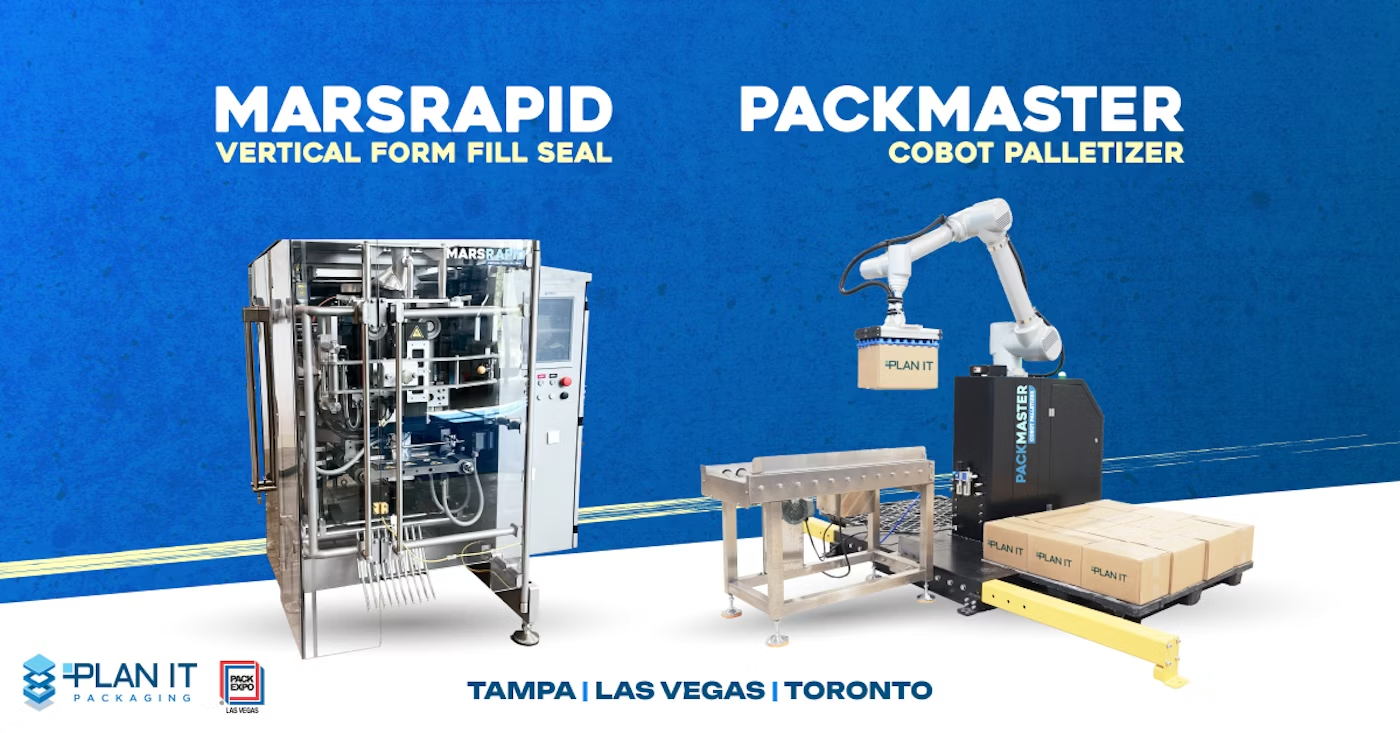
See the Mars Rapid, a high-speed, continuous motion VFFS machine, and the PackMaster, a smart, compact, and operator-friendly cobot palletizer, in action at Booth SL-15074!
Plan It Packaging, a provider of tailored packaging automation solutions, is proud to announce its participation at this year’s PACK EXPO Las Vegas, where it will unveil two groundbreaking technologies poised to transform the packaging landscape: the Mars Rapid vertical form fill and seal (VFFS) series and the PackMaster™ collaborative robot palletizer.
Designed with speed, precision, and adaptability in mind, the Mars Rapid VFFS represents the future of vertical bagging. Engineered for continuous motion and equipped with high-speed servo and PLC controls, the Mars Rapid delivers unmatched throughput across both food and non-food vertical packaging sectors. From snacks and powders to sticky candies and granular goods, Mars Rapid ensures clean seals, consistent fills, and washdown-ready construction for effortless sanitation in demanding production environments.
On the end-of-line side, Plan It Packaging will also debut the PackMaster™ Cobot Palletizer, the ultimate solution for facilities looking to optimize labor, reduce repetitive strain, and gain flexibility without sacrificing safety. PackMaster™ combines advanced vision systems, AI-driven stacking algorithms, and a compact footprint that integrates easily into existing lines all while remaining fully collaborative and operator-friendly. It’s the perfect intersection of performance and simplicity.
"PACK EXPO International is the stage for packaging innovation, and we’re thrilled to show attendees how the Mars Rapid and PackMaster™ are raising the bar," said Mark Evangelista, CEO of Plan It Packaging. "These systems reflect our commitment to delivering scalable, efficient, and intelligent automation for manufacturers of all sizes."
Attendees can experience live demos of both the Mars Rapid and PackMaster™ systems at Booth SL-15074, where Plan It Packaging’s team of engineers and automation experts will be on hand to discuss customization, ROI strategies, and integration support across a variety of industries.
Plan It Packaging continues to lead the way with complete, turnkey automation from weighing, bagging, wrapping, case packing, and now, to the pallet.
For more information or to schedule a demo at the show, call us at (866) 339-3407 visit www.planitpackaging.com or contact sales@planitpackaging.com.

October 19, 2024
So, you've heard all the buzz about automation and how it's revolutionizing the packaging industry. But why bother? Who needs ...
So, you've heard all the buzz about automation and how it's revolutionizing the packaging industry. But why bother? Who needs efficiency, cost savings, or staying ahead of the competition anyway? Sit back, relax, and let's explore why you absolutely shouldn't automate—unless you're ready to win.
Why step out of your cozy comfort zone when the status quo feels so...comfortable? Manual packaging has been the trusty old horse you've ridden for years. Sure, it's slower and more expensive, but who's counting?
You might think, "Automation requires an initial investment, and that's money I could spend elsewhere." Fair point. Manual processes give you that hands-on control—literally. Plus, you're keeping your employees in their current roles, doing the same repetitive tasks they've always done. Change is overrated, right?
But let's peel back the curtain a bit. While you enjoy the familiarity of manual packaging, hidden costs quietly nibble away at your profits.
If you're not automating, guess who is? That's right—your competitors. They're embracing automation to produce faster, better, and cheaper. By clinging to manual processes, you're effectively handing them the baton in this race.
"Choosing not to automate isn't just standing still—it's moving backward. Automation is the key to unlocking your business's potential and staying competitive in a rapidly evolving market." — Sal Choudhary, Territory Sales Manager at PLAN IT Packaging.
Sal's not just saying that because he loves automation (though he does). He's seen firsthand how businesses transform when they embrace new technology.
So, you're starting to think that automation isn't the enemy. Great! But where do you start?
Sticking to manual packaging might feel safe, but it's a risky gamble in today's market. You risk inefficiencies and higher costs—you risk your place in the industry.
It worked for WG Pro, and it will work for you - learn more about our real-world success stories here:
Why take the next step if you're intrigued (and we hope you are)?

July 20, 2023
Manufacturers use weighing equipment to measure the weight of raw materials and finished food products. Due to its purpose in ...
Manufacturers use weighing equipment to measure the weight of raw materials and finished food products. Due to its purpose in food packaging, you must choose the proper weighing machine for your business.
It would help to choose a weighing scale made of quality materials. For example, a corrosion-resistant machine prevents contamination of food items. You must also consider its speed to determine if it meets your production requirements. Moreover, your business may benefit from a digital weighing scale since it can automatically compute load measurements.
In this article, you'll learn the top five reasons to consider a weighing scale for your food manufacturing business.

Weigh machine uniformity is essential in the food business because customers expect to receive the same quality and quantity. Suppose two customers bought juice boxes from the same company. However, the juice boxes have varying weights, different from those on their labels.
The situation will create a bad reputation for the company since the consumers may realize they did not get their money's worth. Hence, food manufacturers must set proper benchmarks throughout their production, including packaging. It involves having a reliable weighing machine to have consistent products.
A proper weighing scale also makes a food manufacturer stand out against its competitors. Accurate and consistent food products can retain customers, who can recommend the items to their families and friends. Due to the positive impression that the products may leave to the shoppers, your food manufacturing business can have a loyal customer base.
A food weighing machine can help reduce waste. For example, the weighing scale's consistency avoids scenarios where your staff puts away items that do not meet the proper weight requirements. It also reduces the amount of cleaning required.
Although getting the equipment can initially cost you significantly, you can save time and money in the long run. It eliminates the time-consuming activity of manually weighing hundreds of food products. Moreover, it ensures timely shipping, preventing unexpected payment for delayed deliveries.
There are different types of weighing machines, and you must know the right one for your packaging needs.
A multi head weighing machine's safety is crucial in every industry, but more so in food manufacturing. Inaccurate measurements of raw materials and ingredients directly affect an individual's health. Even excessive use of one component can send a person to a hospital. As a business owner, you wouldn't want your company to be involved in such an incident.
Reliable machines, such as multi-head weighers, can contribute to a safe packaging process in your warehouse. They fill containers according to a predetermined weight to avoid further contamination. In effect, they can reduce possible health risks in the food industry. People value safety, so they will likely choose a safer item than one that has unintended side effects.
Hence, your products' accurate measurements can create a reputable image for your company. The public can consume your products without worrying about their health. Returning customers can attest to your company's products, sustaining your business. Moreover, new customers may be more than willing to try your food items.
A food weighing machine and scale can bring convenience to your business. If the indicated weight on the label and the actual product weight don't match, customers may file complaints against you. As a result, you may face sanctions and fines by regulatory agencies. You may also pay refunds or enter into settlements with the aggrieved consumers.
You would want to avoid such incidents due to the time and money they entail. You will need legal counsel in case of complaints, and the proceedings may take several weeks or months. You could have used the period to grow your food manufacturing business with the right weighing machines.
Your customers can also experience convenience when buying a correctly-weighted product. Filing a complaint and following up on it takes considerable time. Consumers also need to present evidence, such as receipts, to prove that they bought the inaccurately-weighed food item. It affects your business's reputation, which you need to rebuild.
Using weighing machines, you can gather accurate data for an efficient management program. As a result, you can track business productivity and introduce changes when necessary. The program also allows you to utilize resources like time and raw materials to reduce costs and generate more sales.
A proper management plan can also help you follow federal regulations. You can observe each step of food production, including the packaging process. If regulatory agencies request a report on your food production process, you can quickly provide them with complete documentation.
Lastly, an accurate food weighing machine can help you establish the quality of your food products. It helps ensure that you only produce safe and delightful food products so that you can enjoy long-term returns.
Weighing is essential to food packaging because it ensures product consistency, reducing waste and possible health risks. It also brings convenience to businesses and consumers. Moreover, a dependable weighing scale helps a company develop a proper management program to track productivity.
Contact Plan IT Packaging if you want to incorporate a weighing machine into your packaging line or upgrade an old one. Our team can conduct an on-site consultation, so we can better guide you in optimizing your production line.

April 12, 2023
Fresh morning coffee — is there anything better? When your customers pick up a bag of beans or ground, they ...

Fresh morning coffee — is there anything better? When your customers pick up a bag of beans or ground, they expect the freshest cup of coffee possible. No matter the quality of your beans or how methodical your roasting technique is, it's not good if it's not fresh.
That's where the correct coffee packaging comes in.
Here's the thing — from the moment you roast the beans, they're losing freshness. If you grind your beans, you've only sped up the process. Sealing in that signature freshness is as much an art as the roasting process. Don't worry; we're revealing the secrets to the best packaging of coffee that will maintain the impressive quality of your product and extend its shelf life.
Let's get started!
Doing it right is crucial for maintaining the quality and freshness of your coffee. You'll lock in the flavor your customers desire with the suitable material and packaging.
Not convinced?
Here are the main reasons why choosing the right coffee packaging is so important:
In truth, oxidation, and degradation begins the moment the beans are roasted. However, it can take a little longer until even the most seasoned coffee drinker can tell the difference. There's also a big difference between whole beans and ground coffee. Whole beans typically have a longer shelf life than ground, as less surface area is exposed to the air, slowing down the oxidation process.
Whole coffee beans last up to six months if stored in a cool, dry place away from direct sunlight, heat, and moisture, and of course, using the right coffee bean packaging. However, some coffee enthusiasts swear that you must brew freshly roasted coffee beans within two to three weeks of the roast date to ensure optimal flavor and aroma.
Ground coffee, on the other hand, has a shorter shelf life because it has more surface area exposed to air, which speeds up the oxidation process. Nevertheless, ground coffee can last up to two weeks if stored properly in an airtight container in a cool, dry place.
It's essential to understand the science behind the freshness of coffee to preserve its quality and flavor. Coffee freshness is crucial to the overall coffee-drinking experience. When coffee loses its freshness, it can become stale, flat, and bitter, with a muted aroma and flavor.
Four main factors affect coffee freshness: space, oxygen, temperature, and time. Let's take a closer look at each one:
Too much space leaves a greater ratio of coffee to air. The more air present, the faster the oxidation process. The best packaging bags for coffee leave as little air as possible, sealing in the freshness.
Oxygen is one of the main culprits behind coffee's degradation. Exposure to oxygen causes the coffee to oxidize, leading to the loss of flavor and aroma. Therefore, packaging coffee should be as airtight as possible to prevent oxygen infiltration.
Coffee degradation is a chemical reaction. Higher temperatures naturally speed up this reaction (and promote mold and bacterial growth), causing coffee to lose its flavor and aroma faster. Coffee should, therefore, be stored in a cool, dry place away from direct sunlight, heat, and moisture. Moreover, packaging coffee bags should work to keep coffee as cool and dry as possible.
Time is another critical factor in coffee freshness. As time passes, coffee naturally loses its freshness and flavor. Therefore, coffee should be consumed as soon as possible after roasting or purchasing to ensure optimal flavor and aroma.
In addition, four aroma compounds play a crucial role in coffee freshness. These compounds are methanethiol, propanol, 2,3-butanedione, and methylpyrazine. This flavorsome foursome is responsible for coffee's signature aroma and taste – these compounds degrade or react over time.
Choosing the right bags to store coffee is critical for preserving coffee's quality, freshness, and aroma. Here are a handful of factors to consider when selecting the best one:
Coffee bags should be airtight to prevent oxygen from getting in. Look for bags with one-way valves that allow carbon dioxide to escape while preventing oxygen from getting in.
Common packaging materials include paper, plastic, and foil. Each has its pros and cons – depending on whether you value shelf life, coffee flavor, or environmental impact. For example, foil bags minimize oxygen and light penetration but aren't as biodegradable or environmentally friendly as their paper counterparts.
The size of the bags for coffee packaging should be appropriate for the amount of coffee you will store. Too much empty space results in too much air being present (as mentioned), leading to coffee losing its freshness more quickly.
The design of the coffee bags should also be considered, as it can impact the overall coffee-drinking experience. For example, bags with a resealable zip lock or a tear notch for easy opening can be convenient for consumers, while bags with a flat bottom can help the bag stand upright and be more stable during storage.
At PLAN IT Packaging, our high-quality machinery helps you seal in your coffee's distinct flavor and freshness. Our machines handle various bag styles and sizes and are easy to use and efficient, ensuring your coffee stays as delicious and delectable as the day it was bagged.
Schedule a free consultation to talk through your requirements with our expert team. We'll help you determine the right packaging solution to meet your needs. We're dedicated to the most excellent coffee-drinking experience possible. So, don't let your flavor drift away after all your dedication to the perfect roast and bean. Contact us today and find out more about the right coffee packaging solutions.

September 15, 2023
One critical aspect of packaging often overlooked is its ability to protect products from various environmental factors, including dust, moisture, ...
One critical aspect of packaging often overlooked is its ability to protect products from various environmental factors, including dust, moisture, and liquid. Packaging plays a crucial role in safeguarding products during storage, transportation, and handling. This part is where the IP rating comes into play.
This rating denotes the degree of safeguarding offered by a device against the ingress of both solid and liquid substances. Typically comprising two numbers, the rating’s initial digit signifies the level of protection against solids, while the subsequent digit indicates the degree of safeguarding against liquids.
Though occasionally, a third letter may be included to convey additional details, it is frequently omitted.

IP stands for Ingress Protection or International Protection, depending on the context. This rating is a standardized system used to classify and rate the level of protection provided by an enclosure or packaging against intrusion from solids and liquids.
It was established by the International Electrotechnical Commission (IEC) to provide clear and consistent information about an enclosure's ability to protect its contents from environmental factors.
This rating consists of two digits, such as IP67 or IP54. Each digit represents a specific level of packaging equipment protection against different types of intrusions. Let's break down what each digit signifies:
6: Complete protection against dust and contact
5: Limited protection against dust and contact
4: Protects against solid objects larger than 1mm
3: Protects against solid objects larger than 2.5mm
2: Protects against solid objects larger than 12.5mm
1: Protects against solid objects larger than 50mm
0: No protection offered against solids
8: Protects against continuous immersion in water
7: Protects against temporary immersion in water
6: Per IP ratings chart, this number means it protects against high-pressure jets of water
5: Protects against low-pressure jets of water from any direction.
4: Protects against splashing water from any direction.
3: Protects against spraying water (rain) at an angle of up to 60 degrees from the vertical.
2: Protects against water droplets at an angle of up to 15 degrees from the vertical.
1: Protects against vertically falling droplets
0: No protection offered against liquids
Now that we understand what these ratings entail, let's delve into why they are crucial in packaging:
Depending on the product's nature, exposure to moisture or liquids can lead to damage, degradation, or malfunction. This rating on packaging ensures that the product inside is shielded from such threats.
Dust and particles can be abrasive or corrosive, potentially harming the product's surface or components. An appropriate IP rating prevents these intrusions.
During transportation, products insecurely packed by food packaging equipment can be exposed to various weather conditions. Rain, splashes, and even immersion incidents can occur. An IP-rated package ensures that the product remains unharmed, even in adverse weather.
In storage facilities or warehouses, dust and moisture are common challenges. An IP-rated package can safeguard the product until it reaches its final destination.
Many industries have specific regulations and standards regarding the packaging of certain products. Adhering to these standards, which often include IP ratings, is essential to ensuring product safety and compliance.
Customers expect products to be delivered in pristine condition. Packaging with the appropriate rating demonstrates a commitment to quality and customer satisfaction.
Packaging that protects products effectively can enhance a brand's reputation. It shows that the brand cares about its products and customers.
Adequate packaging with the right rating can prevent costly damage during transit or storage. It translates into cost savings by reducing product returns and replacements.
Products are often used in various environments. An adaptable packaging equipment and solution with an appropriate rating ensures that the product can be used in diverse settings without concern for its safety.
Selecting the correct rating for your packaging depends on the nature of your product and the environments it will encounter. Here are some steps to help you choose the right rating:
Consider where your product will be stored, transported, and used. Assess the potential risks of exposure to moisture, dust, and liquids.
Understand the vulnerabilities of your product, especially if not packed using automated packaging equipment. Some products may be more sensitive to moisture or dust than others.
If your product falls under a specific industry, research the standards and regulations regarding packaging requirements. These standards often include ratings.
Packaging experts and manufacturers can provide valuable insights into the right rating for your specific needs.
These ratings are a critical aspect of packaging that ensures the protection of products from environmental factors. They are essential for maintaining product quality, complying with industry standards, and meeting customer expectations.
Choosing the appropriate IP rating for your packaging can lead to cost savings, enhanced brand reputation, and customer satisfaction. So, the next time you consider packaging for your products, remember the importance of IP ratings in safeguarding what's inside.
Ready to protect your products and enhance your brand with the right packaging? Plan IT Packaging is a name you can trust. Contact us today to discuss your packaging needs and get started!

July 18, 2023
The packaging industry has evolved and undergone significant advancements throughout the years. It transformed the way products are packaged and ...
The packaging industry has evolved and undergone significant advancements throughout the years. It transformed the way products are packaged and delivered to consumers. One of its advancements is the introduction of the stick pack machine.
Manufacturers have adapted to the rapid pace of technological innovations and the market's ever-changing needs. They took measures to enhance packaging sustainability, efficiency, and convenience.
As such, various automated packaging systems have been available on the market. They accommodate bagged products in all sizes, shapes, consistencies, and viscosities. It can be solids, semi-solids, gels, liquids, creams, and powders.

Different factors come into play when deciding if a particular piece of equipment will produce the best possible outcome for your business. It includes the type of product your manufacture, regulations, and the market you service.
Choosing which equipment works best for your company can be a little overwhelming, depending on your requirements and preferences. This article will discuss one such innovation — stick pack machines. We will explore their functionality, advantages, and best uses in various industries.
Various packaging machineries, like pouch bagging and shrink-wrapping machines, are available. However, a stick pack equipment can produce tube-like packages ideal for single-dose products like sugar, honey, coffee, and medicine.
These packs are slim, elongated pouches usually sealed on both ends and open along the top for mess-free product dispensing. With a specialized machine, it can automate the process of forming, filling, and sealing these stick packets.
It also provides several advantages to consumers for their convenience, portability, and ease of use. In fact, pharmaceutical companies prefer stick packs as they can accurately measure, enclose, and seal medicines in plastic or laminated paper materials.
This type of machinery usually consists of several key components. It includes a film unwinding system that feeds a roll of packaging film into the machine. It automatically forms the film into individual stick-type tubes and fills each pouch with the desired product quantity. The equipment then seals each tube to secure its contents.
In addition, stick pack machines reduce production costs and time by automating the packing process. The product's slim design also makes it ideal for transport and handling during shipping.
This product primarily has two types of packaging machinery — multi lane and single lane stick pack machines.
Single-lane machines produce one pack of sticks at a time. They are suitable for small or medium production volumes and lower output requirements. This equipment provides flexibility in various aspects, including pack shapes, sizes, and filling options. Most importantly, their compact size is perfect for companies with limited production space.
On the other hand, multi-lane machines can produce multiple stick packs at a time. It has several lanes ranging from 2 to 20 or even more, depending on its configuration.
Multi-lane machines have high-speed manufacturing capabilities and are suitable for large-scale production and high-volume requirements. These filling equipment maximize productivity and efficiently handle a wide range of packaging materials and sizes.
This machine is helpful in various industries for its convenience and versatility. The most common applications and best uses for this machinery include the food and beverage, pharmaceuticals, and personal care industries.
For instance, the food and beverage industry uses this packaging for single-serve products. Some manufacturers use a machine for coffee or tea packets to introduce portion control and convenience to their customers.
Likewise, condiments and flavorings can be contained in this packaging for commercial use. Usually, food products consumed in small quantities, such as ketchup, mayonnaise, and hot sauce, are suitable for this packaging.
Manufacturers use a stick pack packaging machine in the healthcare and pharmaceutical industries to provide sanitary and precise packaging solutions. For example, brands use these mini packs to enclose single-dose medications and over-the-counter medicinal powders. This process prevents product contamination and consumers from overmedication.
It also provides a hygienic and convenient way to package single-use medication like oral solids and powders. In addition, manufacturers also use this packaging for dietary supplements, probiotics, and vitamins.
The personal care and cosmetics industries also use a stick pack machine for portable and convenient packaging. For instance, manufacturers use single-use packs for creams, serums, and lotions.
They also use this packaging to offer mess-free and efficient solutions for specialized liquid formulas and facial masks. In addition, brands also use it for hair care products, such as hair serums, treatments, and conditioners.
In fact, aside from these industries, manufacturers utilize stick pack packaging machines for household and industrial products as well. For example, brands apportion laundry pods, detergent powders, and concentrated cleaning agents using this specialized machinery for efficiency.
It is essential for manufacturers to ensure these products, which contain potent chemicals, are packaged in exact measurements to mitigate adverse effects and reactions. Similarly, they also use this process to offer consistency and enhanced precision.
Various industries have converted to stick pack machines for their economic advantages. Different brands gearing towards sustainability and eco-friendly solutions may opt for packaging with less paper and plastic for waste reduction.
Similarly, having the option to automate the packaging process increases productivity without compromising the quality of your products. It streamlines workflow while reducing the likelihood of operational error. These advantages can transform your production and reduce unnecessary labor and associated costs.
Manufacturers may have to shell out a hefty investment cost for an automated multi lane stick pack machine. Still, it ultimately weighs out the potential return on investment. Similarly, its flexibility to accommodate various products and packaging materials can make them versatile and adapt to the growing needs of a business.
At Plan IT Packaging Systems, we prioritize our client's needs without compromising quality and efficiency. We are ready to help improve your business output, reduce costs, and deliver appealing products to an ever-changing market.
The stick pack machine offers versatility in packaging options. They have a space-saving design, are cost-effective, and improve product preservation. However, we know that each business has its requirements and preferences regarding packaging solutions.
If you wish to explore your business's full potential, you can contact us for a free consultation.

October 24, 2022
What a day! Second day of PACK EXPO Chicago! Our entire team has been working hard and putting on a ...

What a day! Second day of PACK EXPO Chicago! Our entire team has been working hard and putting on a great show.
We're here at Pack Expo Chicago 2022, showcasing the latest packaging solutions and forming valuable partnerships within the industry as we strive to stay at the forefront of innovation and collaboration.
Visit us at BOOTH S-2422!

August 16, 2024
At PLAN IT Packaging, we take pride in supporting businesses that push the boundaries of innovation and efficiency in their ...
At PLAN IT Packaging, we take pride in supporting businesses that push the boundaries of innovation and efficiency in their industries. One such business is WG Pro-Manufacturing Inc., a leader in the Canadian consumer goods sector. Since its inception in 1993 by President Karl Wirtz, WG Pro has transformed from a small operation in a 9,000-square-foot facility into a major player in the co-packing industry, with expansive facilities in the greater Toronto area and Lethbridge, Alberta.

WG Pro's journey began with managing reclaimed and returned products for a major pharmaceutical company. Over the years, the company has evolved into a powerhouse in the co-packing industry, offering a comprehensive range of services, including ambient, frozen, and refrigerated product packaging. Their commitment to innovation and quality has earned them the trust of high-profile clients like PepsiCo, Laura Secord, Nestlé, and Kellogg's.
"We’ve always focused on providing a controlled environment where we can handle packaging for our clients," says Wirtz. "This approach has allowed us to alleviate congestion in their spaces and offer streamlined services."
The challenges posed by the COVID-19 pandemic, particularly in the second year, made it difficult for WG Pro to maintain its operations due to labor shortages. Faced with this obstacle, Wirtz turned to PLAN IT Packaging Systems for a solution.
"I’ve known Mark Evangelista, PLAN IT’s Director of Sales, for many years, so when we faced labor challenges, I knew PLAN IT's automated solutions could be the key to our continued growth," Wirtz recalls. "The flexibility and efficiency of their equipment, particularly the portable bagger, were exactly what we needed."

WG Pro's facilities are now equipped with state-of-the-art machinery from PLAN IT Packaging, including the Mars ComPak vertical form/fill/seal (VFFS) bagging machine. This advanced system has revolutionized WG Pro's operations, allowing them to achieve high-speed, precise packaging with minimal manual intervention.
"The Mars ComPak allows us to produce approximately 40 bags per minute, a task that would have required about 24 to 25 personnel to accomplish manually," says Wirtz. "This machine has enhanced our efficiency and flexibility, enabling us to handle various products with ease."
The Mars ComPak is integrated with automated weighing systems, ensuring precise measurements and compliance with weight regulations—essential for maintaining consistency in packaging weights and reducing product waste. Additionally, PLAN IT's comprehensive array of automated packaging equipment, including filling machines, sealing equipment, and labeling systems, has streamlined WG Pro's processes, reduced labor costs, and improved operational efficiency.
As WG Pro continues to expand, the role of automation will be pivotal in supporting their ambitious growth plans. Wirtz is already considering additional investments in PLAN IT Packaging’s systems, including the potential establishment of a new facility in Tennessee or Georgia.
"Our advancements in automation are creating new opportunities for us," Wirtz notes. "PLAN IT Packaging’s solutions have been integral to our success, and we look forward to further collaboration as we continue to grow."

At PLAN IT Packaging, our mission is clear: to engineer robust, turnkey automated packaging solutions that optimize efficiency, enhance productivity, and foster sustainable growth for our clients. Our partnership with WG Pro is a testament to the power of innovation and the importance of tailored solutions in driving business success.
With our cutting-edge equipment, comprehensive support services, and commitment to excellence, PLAN IT Packaging is proud to be a trusted partner for businesses like WG Pro, helping them achieve new heights in the competitive world of consumer goods.

August 9, 2024
You've poured your heart and soul into your coffee business. Your beans are top-notch, and yourroasting process is impeccable, but ...

You've poured your heart and soul into your coffee business. Your beans are top-notch, and your
roasting process is impeccable, but there's one nagging problem: your packaging. It's not keeping
your coffee fresh, and it certainly isn't catching the eye of potential customers. Sound familiar?
You're not alone. Many coffee producers in North America face the same challenges, and finding
the right solution is crucial to your success.
As a coffee producer, you know the North American market is fiercely competitive. With
consumers demanding high-quality, fresh coffee, you can't afford to let your packaging let you
down. You may have noticed that your current packaging isn't doing its job. Your coffee loses its
freshness too quickly, your packaging design doesn't stand out, and your production line is
slower than you'd like. These issues are holding you back; you know it's time for a change.
Coffee drinkers in North America expect their coffee to taste fresh and flavorful. Poor packaging
that doesn't maintain the coffee's freshness can lead to dissatisfied customers and negative
reviews. This affects your brand's reputation and results in lost sales. You need a solution that
ensures your coffee remains as fresh as the day it was roasted.
The market is saturated with coffee brands, each vying for the consumer's attention. You risk
being overlooked if your packaging design is outdated or doesn't stand out. Memorable
packaging is not just about protecting the product; it's about creating a visual impact that attracts and retains customers. Your packaging should tell your brand's story, appeal to your target
market, and differentiate you from competitors.
The fast-paced nature of the North American market demands quick turnaround times. If your
packaging process is slow and prone to errors, it can cause delays in getting your product to
market. This affects your ability to meet consumer demand and stay competitive. You need a
solution that enhances production efficiency, reduces downtime, and boosts overall output.
That's where PlanitPackaging.com comes in. Our coffee pouch machines are designed to tackle
these exact problems. Our machines ensure your coffee stays fresh for longer, with airtight seals
that lock in flavour and aroma. Plus, with customizable pouch designs, your packaging will keep
your coffee fresh and make it look amazing on the shelf.
Here's how we solve your problems:
Switching to our coffee pouch machines is seamless. We work closely with you to understand
your needs and customize our solutions accordingly. Our machines are easy to integrate into your existing production line, and we provide comprehensive training to ensure you're up and running
quickly.
Imagine the difference it makes when your coffee stays fresh, your packaging catches customers'
eyes, and your production runs smoothly. You'll see increased sales, happier customers, and a
more efficient operation. That's the power of PlanitPackaging.com.
Let's take a closer look at how your journey with PlanitPackaging.com might unfold:
Identifying the Issues
You start by identifying the critical issues with your current packaging: loss of freshness, lack of
visual appeal, and production inefficiencies. You recognize that these problems are holding your
business back and decide it's time to change.
Exploring Solutions
You research various packaging solutions and come across PlanitPackaging.com. Our reputation
for innovative and efficient packaging solutions catches your attention. You contact us, and we
begin the process of understanding your specific needs.
Implementing the Solution
We work with you to customize our coffee pouch machines to fit your production line. Our team
assists with the seamless integration of the new machines, and we provide comprehensive
training for your staff. The transition is smooth, and you quickly start seeing improvements.
Seeing the Results
With your new coffee pouch machines in place, you will notice a significant improvement in
product freshness, visual appeal, and production efficiency. Your customers start leaving positive
reviews about the freshness of your coffee, and your sales increase. Your production runs more
smoothly, allowing you to meet market demand and stay competitive.
Take the Next Step
Ready to revolutionize your coffee packaging? Reach out to us at PlanitPackaging.com. Our
experts are here to help you every step of the way, ensuring you get the best solution for your
business.
Don't let packaging hold you back – let us help you take your coffee to the next level.

July 6, 2023
We are thrilled to announce another successful DUPLEX Roto install in Michigan! Paired with an EliteWeigh 20 Head Weigher and ...
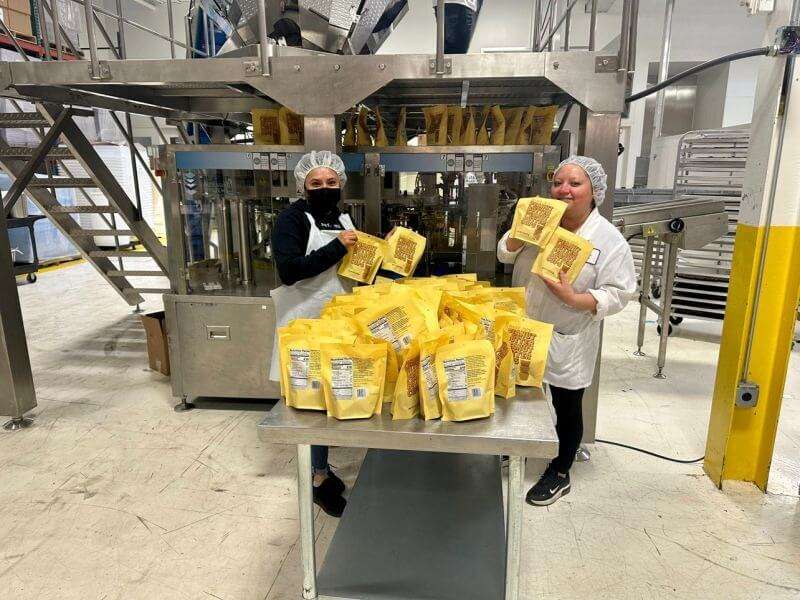
We are thrilled to announce another successful DUPLEX Roto install in Michigan! Paired with an EliteWeigh 20 Head Weigher and a Washdown Incline Conveyor, our customer has transformed their peanut butter chocolate production line.
They’re now producing an impressive 70 pouches per minute, significantly boosting their output and ensuring every pouch is weighed and packaged with precision.
It is a great example of how DUPLEX Roto can enhance efficiency and productivity. Here’s to growth and sweet success!
#successstory #clientsuccess #customerexperience PMMI: The Association for Packaging and Processing Technologies

July 13, 2023
A vertical form-fill-seal machine, or VFFS machine, is a popular packaging machine that can streamline your bagging process. It offers ...
A vertical form-fill-seal machine, or VFFS machine, is a popular packaging machine that can streamline your bagging process. It offers features and advantages that enhance your packaging requirements, distinguishing it from regular packaging equipment.
These machines are widely used across various industries for their efficiency and cost-effectiveness. Furthermore, they’re designed to optimize packaging processes and make things work even with a limited factory floor space.
The mechanism of a vertical packing machine is pretty straightforward. A large roll of film is formed into a bag shape. After that, the bag is filled with the product and sealed. You get this done while the packaged goods move vertically. These machines offer exemplary production speeds, sealing over 100 bags every minute.

According to VFFS machine manufacturers, these machines are capable of handling a wide range of materials, including:
These versatile machines can wrap various products, ranging from candies and crisps to milk, juice, detergent powder, nuts, and other food items like oats.
If you’re still unsure whether or not you need this machine for your business, consider the following advantages:
One of the most notable benefits of utilizing VFFs is having access to a comprehensive packaging solution. This high-powered tool encompasses different processes, including filling, sealing, and packaging. It streamlined these processes to increase productivity.
With this shift, you save significant time, which you usually spend packaging products. Aside from that, VFFs eliminate the need to purchase supplementary equipment like conveyors. You can use the money you saved from equipment purchases for other, more pressing factory needs.
A substantial benefit of VFFS machines is their capacity to reduce expenses for manpower. These kinds of equipment were engineered to be operated by one or two individuals. Hence, you don’t need to hire more people to keep your product assembly line running.
Essentially, these machines save you from hiring multiple personnel to oversee the packaging line. Your business will surely take home more profit with production costs consistently decreasing and productivity increasing.
Aside from the benefits mentioned above, a VFFS bagging machine also contributes to the improvement and efficiency of the entire bagging process.
These machines boast high-speed packaging capabilities, enabling more products to be packaged within a reduced timeframe. Over time, an accelerated packaging rate can be achieved, optimizing productivity and throughput in your operations.
Vertical packaging machines have a highly intuitive touchscreen interface, providing comprehensive control over the manufacturing line. You won’t have to process complex buttons to get a task done.
The user-friendly touch screen enables swift selection of the desired weight and dimensions for the pouch, ensuring efficient customization within minutes. This simplified process encompasses pouch formation, filling, and subsequent sealing.
By streamlining operations effectively using an automatic form fill and seal machine, the requirement for labor is significantly reduced, thereby mitigating associated expenses when producing substantial quantities of items.
Our offered vertical bagger equipment incorporates a modular component, facilitating swift and hassle-free adjustments to accommodate various pouch sizes.
Furthermore, the equipment enables effortless interchangeability between distinct bag sizes, eliminating the need for additional tools or equipment during the transition process.
Modern VFFS exhibit remarkable versatility, enabling effective implementation across diverse industries to meet unique production and packaging requirements.
Particularly, manufacturers in the following sectors recognize the substantial contribution vertical form fill and seal machines can make in optimizing their production lines, especially when it comes to packaging high-volume products efficiently:
Manufacturers in these industries consistently opt for innovative VFFS solutions for efficient bagging and packaging processes. These machines are preferred due to their user-friendly operation, specialized models tailored to industry-specific needs, and unmatched reliability.
Moreover, these dependable machines are frequently integrated with USB-based data systems, providing convenient storage options and facilitating analytics. It empowers manufacturers to monitor the performance of their machines and accurately assess bagging operations.
Furthermore, VFFS machines are now equipped with an extensive array of customizations and specialized equipment, each tailored to meet the distinct requirements of specific industries. It signifies that manufacturers with bagging operations can procure a VFFS precisely suited to their precise needs.
Beat your competitors by providing a seamless solution to your target market's packaging and bagging needs. As these businesses grow, they want to partner with companies that streamline their processes. You can significantly save on manpower, overhead expenses, and equipment purchases with an all-in-one VFFS machine.
Plan IT Packaging should be your number one choice if you’re looking for a business partner that understands your needs. We understand every factory owner’s pain points, and that’s why we devote our time to developing automated solutions that make sense. Call us today, and let’s talk about streamlining your product line.

August 12, 2022
Our customer in Michigan have just taken their packaging game to the next level with the delivery of their second ...
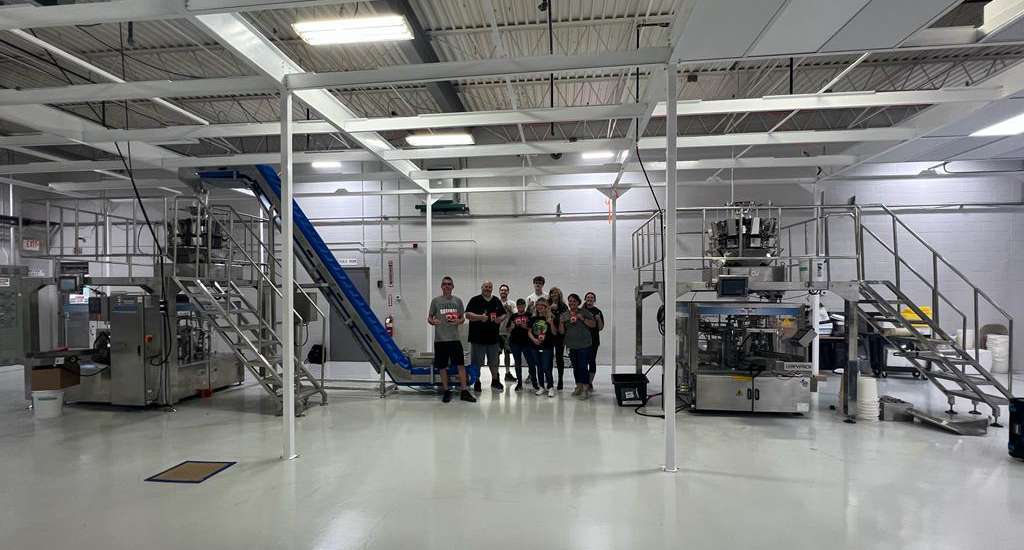
Our customer in Michigan have just taken their packaging game to the next level with the delivery of their second ROTOBAGGER™ machine packaging line. They first got their hands on one of our machines back in August of last year, which was used to package their delicious gummies.
And now, with the addition of a second machine, they're able to package a jaw-dropping 40,000 bags per 8-hour shift! It's truly amazing to see a company experience such rapid growth in such a short period of time, and we're thrilled to have played a part in their success.
As their trusted partner, we were able to provide them with packaging machinery that would last for a long time and help take their production to the next level.
Our Premade pouch machine is perfect for mid-level speeds and high production in 24/7 environments. It can package between 30 and 50 bags per minute and comes equipped with a range of features to make packaging a breeze.
These include a horizontal bag magazine for easy pouch loading, automatic servo changeover for different bag widths, and optional extras like an automatic zipper opening device, gas flush, bag shaker for product leveling, and inkjet printer for lot code and best-before-date printing.
It's no wonder that Plan It Packaging Group has achieved the most successful ROTOBAGGER installation for bagging infused gummies — our machines are truly the best in the business!

September 8, 2023
Numerous inquiries regarding line setup, compatibility with production, connectivity, and communication get thrown at packaging manufacturers. ...
In the competitive landscape of food packaging, businesses are constantly seeking ways to improve efficiency, reduce costs, and maintain the high quality of their products.
One area often overlooked is the role of packaging equipment maintenance in achieving these goals.
Regular maintenance of packaging equipment is not just a best practice; it’s a necessity for businesses aiming to operate at peak efficiency.
This article provides insights into why regular maintenance is crucial and offers practical tips on maintaining your packaging equipment.

Regular maintenance of packaging equipment is a proactive approach to preventing costly breakdowns and ensuring consistent product quality.
Here’s why it matters:
Equipment breakdowns can lead to significant downtime, which can cost a business thousands of dollars per hour.
Regular maintenance can help identify potential issues before they escalate into major problems, helping to prevent unexpected and costly downtime.
Packaging equipment is a substantial investment, and businesses want to get the most out of their machinery.
Regular maintenance can help extend the lifespan of your equipment, delaying the need for expensive replacements and reducing overall costs.
Packaging equipment that is well-maintained operates more consistently, leading to a higher quality of output.
This is particularly important in the food packaging industry, where quality and safety are paramount.
Regular maintenance of packaging equipment is often required to comply with industry safety regulations.
Non-compliance can result in fines, legal action, and reputational damage, making regular maintenance a key part of risk management.
Here are some practical tips for maintaining your packaging equipment:
Regularly inspect your equipment for signs of wear and tear, and clean it to prevent the buildup of dust and debris.
This will help to maintain the performance of the equipment and prevent potential issues.
Lubricate moving parts regularly to prevent friction and wear.
Always use the correct type of lubricant as specified by the equipment manufacturer.
Regularly check and replace worn parts before they fail.
This is a proactive approach to maintenance that can prevent costly breakdowns and extend the lifespan of your equipment.
Ensure that all employees who operate the packaging equipment are properly trained.
This includes training on how to operate the equipment correctly, how to identify signs of wear and tear, and how to perform basic maintenance tasks.
Keep detailed records of all maintenance activities.
This can help to identify patterns and trends in equipment performance, inform future maintenance schedules, and provide evidence of compliance with safety regulations.
Consider using predictive maintenance technologies, such as sensors and machine learning algorithms, to monitor the condition of your equipment in real-time.
These technologies can predict when maintenance is needed before a breakdown occurs, helping to minimize downtime and extend the lifespan of your equipment.
Your packaging equipment supplier can be a valuable resource for maintenance support.
They can provide guidance on the best maintenance practices for your specific equipment, supply replacement parts, and offer repair services if needed.
Building a strong relationship with your supplier can help to ensure that your equipment is always operating at its best.
Regular maintenance of packaging equipment is crucial for businesses in the food packaging industry.
It helps to prevent costly breakdowns, extend the lifespan of equipment, ensure consistent product quality, and comply with safety regulations.
By following the practical tips provided in this article and working closely with your equipment supplier, you can optimize the performance of your packaging equipment and achieve peak efficiency in your operations.
Explore our range of packaging machines and discover how we can help you achieve peak efficiency in your packaging operations.

June 21, 2023
There's nothing quite like the aroma and taste of freshly baked bread. However, knowing how to store bread and other ...
The global food packaging market is a dynamic landscape, constantly evolving to meet the demands of consumers, regulatory changes, and technological advancements.
Staying informed about the latest industry trends is crucial for companies in the food industry, as these trends can significantly impact business strategies, product quality, and environmental footprint.
This article provides an overview of the key trends and statistics in the food packaging market that are shaping the industry in 2024.

The food packaging market is a significant sector within the global economy. As of 2023, the market was valued at USD 357.5 billion.
This robust valuation reflects the increasing demand for packaged foods globally, driven by factors like urbanization, busy lifestyles, and rising disposable incomes.
Looking ahead, the market is projected to grow at a Compound Annual Growth Rate (CAGR) of 3.9% during the period of 2024-2032. This consistent growth is expected to push the market value to USD 492.1 billion by 2032.
This growth will be driven by emerging economies, changing consumer behavior, and the continuous development of innovative packaging solutions.
A paramount trend shaping the food packaging market is the shift towards sustainability. With growing environmental consciousness among consumers and tightening regulations, businesses are increasingly adopting sustainable packaging solutions.
In fact, a survey by Trivium Packaging found that 73% of global consumers are willing to pay more for products in sustainable packaging. This shift is not just about using recyclable materials; it also involves reducing packaging waste, optimizing packaging sizes to minimize material use, and exploring new sustainable materials like bioplastics.
Technology is revolutionizing the food packaging industry. Smart packaging technologies, such as freshness indicators, temperature sensors, and QR codes, are becoming increasingly prevalent.
These technologies not only enhance the consumer experience but also improve food safety and supply chain transparency. For example, smart labels can provide real-time information about a product’s freshness, helping to reduce food waste.
Consumer preferences are changing rapidly, and food packaging is evolving to keep up. There is a growing demand for packaging that aligns with current lifestyle trends, such as convenience, health, and sustainability.
For instance, single-serve and portion-controlled packaging are gaining popularity due to the trend towards healthier eating and smaller household sizes. Similarly, easy-to-open and resealable packaging is in high demand due to the convenience it provides.
The boom in e-commerce is having a profound impact on food packaging. With more consumers purchasing food online, packaging needs to withstand the rigors of shipping while also providing a positive unboxing experience.
This has led to increased demand for protective packaging, as well as a focus on brand aesthetics in packaging design. E-commerce packaging must balance the need for protection with the desire for sustainability and aesthetics.
Regulatory compliance is a significant concern in the food packaging industry. With governments around the world imposing stricter regulations on packaging materials and waste, businesses need to stay updated on these changes and ensure their packaging practices are compliant.
For example, the European Union has been progressively banning single-use plastics, which has forced companies to find sustainable alternatives. This regulatory pressure, combined with consumer demand for sustainable packaging, is accelerating the shift towards eco-friendly packaging solutions.
The food packaging market is not monolithic; it varies significantly across regions.
North America and Europe are mature markets with high adoption of advanced packaging technologies and a strong focus on sustainability.
In contrast, the Asia-Pacific region is an emerging market with significant growth potential. Factors like a large and growing population, rapid urbanization, and increasing disposable incomes are driving demand for packaged food and innovative packaging solutions in this region.
African and South American markets are also showing promise, with growing middle classes and increasing urbanization driving demand for packaged food.
The growth and evolution of the food packaging market present numerous investment opportunities.
Companies offering sustainable packaging solutions are particularly attractive, as the demand for eco-friendly packaging is expected to continue growing. Technologies like smart packaging, which can enhance food safety and consumer engagement, are also promising areas for investment.
Additionally, with the growth of e-commerce, companies offering packaging solutions tailored to the unique requirements of online retail have significant growth potential.
The food packaging market is a dynamic and growing industry, shaped by trends such as sustainability, technological advancements, and changing consumer preferences.
Understanding these trends and their implications is crucial for businesses in the food industry. By staying informed and adapting to these changes, businesses can ensure that they remain competitive and continue to meet the evolving needs of consumers and regulatory requirements.
For more information about our innovative packaging machines, don’t hesitate to get in touch.

December 27, 2023
In manufacturing and product packaging, a thermoforming machine is a versatile workhorse that revolutionizes the way products are created and ...
Sustainable packaging is no longer just a trend; it’s a pressing need in today’s world. With mounting environmental concerns, it’s becoming increasingly important for businesses in the food industry to adopt more sustainable packaging practices.
This article delves into some of the most innovative sustainable packaging solutions for the food industry, exploring various materials and methods that are leading the charge towards a more eco-friendly future.

The global packaging industry is a massive contributor to environmental pollution.
Traditional packaging materials, particularly plastics, are derived from non-renewable resources and can take hundreds of years to decompose. They often end up in landfills or oceans, causing significant harm to ecosystems.
However, with the right materials and methods, packaging can become a force for positive change. Sustainable packaging aims to reduce environmental impact through careful consideration of material selection, production, transport, use, and disposal.
One of the most promising sustainable packaging solutions is the use of biodegradable or compostable materials.
These materials are designed to break down naturally in the environment, reducing the amount of waste that ends up in landfills. Materials like PLA (Polylactic Acid), derived from renewable resources like corn starch, and packaging made from plant fibers, are increasingly being used in the food industry.
For example, mushroom packaging, which is made from agricultural waste and mycelium (the root structure of mushrooms), is compostable and can be a sustainable alternative to traditional foam packaging.
Recycled packaging involves the use of post-consumer recycled (PCR) materials in packaging.
This can significantly reduce the carbon footprint of packaging and helps to close the recycling loop. Similarly, designing packaging to be easily recyclable ensures that it can re-enter the production cycle rather than end up in a landfill.
For instance, many companies are now using packaging made from 100% recycled content, such as bottles made from recycled PET (rPET) or cardboard boxes made from recycled paper.
Plant-based packaging materials, such as those derived from sugarcane, bamboo, or hemp, are rapidly gaining popularity.
These materials are renewable and often biodegradable, making them a more sustainable choice compared to petroleum-based plastics.
For example, sugarcane bagasse is a byproduct of sugar production and can be molded into a variety of packaging forms, including plates, bowls, and takeout containers. It’s both compostable and recyclable, making it a highly sustainable packaging option.
An innovative and exciting frontier in sustainable packaging is edible packaging.
This involves creating packaging materials that can be eaten along with the food product, eliminating waste entirely. Examples include edible water bubbles made from seaweed extract, or edible cutlery made from rice or wheat.
While edible packaging may seem futuristic, it’s already being used in some sectors of the food industry, such as in the form of edible cups and wrappers for single-use items like coffee or ice cream.
Reusable packaging systems can significantly reduce the amount of waste generated by single-use packaging.
This can involve refillable containers, returnable packaging systems, or durable packaging designed to last through multiple uses. For example, some companies are adopting the ‘bottle return’ model, where consumers return their empty bottles to be cleaned, refilled, and resold.
Sometimes the most sustainable choice is simply to use less packaging.
Reducing the amount of packaging, or ‘lightweighting’, involves using thinner materials or streamlining the design to minimize material use without compromising the protection of the product. This not only reduces the environmental impact of packaging but can also lead to cost savings for businesses.
While there are many innovative sustainable packaging solutions available, there are also significant challenges to their widespread adoption.
These can include higher costs, changes to supply chains, and the need for consumer education and behavior change. However, these challenges also represent opportunities for innovation and leadership.
Businesses that can successfully navigate these challenges and embrace sustainable packaging are likely to gain a competitive edge, as consumers and regulators increasingly demand more sustainable practices.
The future of food packaging is sustainable.
By exploring and adopting innovative sustainable packaging solutions, food businesses can not only reduce their environmental impact but also meet the evolving demands of consumers and regulators.
From biodegradable materials and edible packaging to reduced packaging and reusable systems, there are a wealth of options available for businesses willing to invest in sustainability.
Explore our range of packaging machines and find the right solution for your sustainable packaging journey.

July 5, 2023
Technology has revolutionized the use of packaging in manufacturing industries. What once was a novelty has become a demand for ...
In the dynamic landscape of food production and packaging, efficiency and quality are paramount.
One machine that plays a crucial role in achieving these goals is the checkweigher. This article provides an in-depth look at checkweighers, their types, benefits, and considerations for choosing the right one for your business.

A checkweigher is an automatic or manual device for checking the weight of packaged commodities.
It is used on a production line to verify that the correct amount of product has been placed in a package, helping to ensure regulatory compliance and quality control.
A checkweigher works by measuring the weight of each package as it passes along a conveyor belt.
If the weight of the package falls outside the set parameters, the checkweigher will reject that package.
This helps to ensure that all packages contain the correct amount of product, reducing waste and ensuring customer satisfaction. It also helps businesses comply with legal requirements for minimum package weights.
There are many types of checkweighers available, each suited to different production and packaging processes.
Here’s a brief overview of the main types:
In-line checkweighers are integrated into the production line, providing real-time weight data for each product.
They can be set to reject products that fall outside the set weight parameters. They are ideal for high-volume production environments and can be integrated with other machinery for streamlined operations.
Combination checkweighers combine the functions of a checkweigher with other inspection technologies, such as metal detection or X-ray inspection.
This provides a more comprehensive inspection of each product, helping to ensure both weight accuracy and product safety.
Multi-lane checkweighers can weigh multiple products simultaneously, increasing the throughput of the production line.
They are ideal for businesses with high-volume production needs.
Bulk checkweighers are used for weighing large, bulk quantities of product rather than individual packages.
They can be used in a variety of industries and are particularly useful in the shipping and logistics industry, where accurate weight data is crucial for freight calculations.
Using a checkweigher in your production line offers several benefits.
Checkweighers provide a high level of accuracy in weight measurement, helping to ensure that each package contains the correct amount of product.
This not only ensures customer satisfaction but also helps businesses comply with legal requirements for minimum package weights.
By integrating a checkweigher into your production line, you can automate the process of weight checking, increasing the efficiency of your production process.
This can lead to significant time and cost savings.
Checkweighers play a crucial role in quality control by ensuring that each package meets the required weight standards.
This can help to reduce product returns and customer complaints, improving the overall quality of your products.
In many industries, there are strict legal requirements for minimum package weights. Using a checkweigher can help businesses comply with these regulations, avoiding costly fines and reputational damage.
Choosing the right checkweigher for your business involves several key considerations:
The production speed of your line can influence the type of checkweigher you need.
High-speed production lines may require a checkweigher with a high throughput rate to keep pace with the production process.
The type of product you’re weighing and the type of packaging it’s in can also influence your choice.
Different types of products and packages can have varying weight distributions, which can affect the accuracy of the checkweigher.
The level of accuracy required for your weight measurements is another important consideration.
Higher accuracy requirements may necessitate a more sophisticated checkweigher.
If you have other inspection or quality control systems in place, it may be beneficial to choose a checkweigher that can be integrated with these systems.
This can streamline your quality control processes and provide a more comprehensive view of your production line’s performance.
A checkweigher is an essential tool for businesses in the food packaging industry, offering accuracy, efficiency, and compliance with regulatory requirements.
By understanding the different types of checkweighers and the key considerations for choosing one, you can make an informed decision that best meets your business’s needs.
Explore our range of packaging machines to find the right checkweigher for your business.

August 3, 2023
In the candy packaging industry, understanding the importance of a reliable and efficient packaging process is necessary. Your packaging must ...
In the constantly evolving world of food processing and packaging, the auger filler stands out as a cornerstone of efficiency and accuracy.
This guide offers a comprehensive look at auger fillers, their types, workings, and how to choose the right one for your operations.

An auger filler is a type of filling machine that uses an auger (a spiral screw-like device) to dispense and fill products into containers.
It is most commonly used for powders and granular products. The auger’s rotation controls the amount of product dispensed, providing precision in filling.
The operation of an auger filler is grounded in the controlled rotation of its spiral screw, the auger.
The product to be filled is loaded into a hopper above the auger. As the auger rotates, it picks up the product and transports it downward, dispensing it into a container or pouch below.
The amount of product dispensed is controlled by the speed and duration of the auger’s rotation. This gives auger fillers a high degree of precision, making them ideal for applications where accurate filling is crucial, such as in the pharmaceutical industry or for premium food products.
There are several types of auger fillers, each designed for different applications:
Standard auger fillers are the most common type and are used for filling dry, free-flowing powders and granules into containers.
They are often used in industries such as food, pharmaceutical, and chemical.
Inline auger fillers are designed to be integrated into a production line, offering high-speed filling of powders and granules.
They are particularly suitable for high-volume production environments.
Rotary auger fillers are designed for high-volume production environments, featuring multiple filling heads that rotate to fill several containers simultaneously.
This design significantly increases the filling speed compared to single-head auger fillers.
Net weight auger fillers are designed for precision filling.
They incorporate a weighing system that ensures each container is filled to a precise weight. This type is often used in the pharmaceutical industry and for premium food products where precise measurements are critical.
Dual auger fillers feature two augers that can operate simultaneously, providing a high filling speed without sacrificing accuracy.
They are ideal for high-volume operations that require precise filling.
Choosing the right auger filler for your operations requires careful consideration of several factors:
The type of product you’re filling is a crucial factor in choosing an auger filler.
Different types of products (powders, granules, flakes, etc.) can have varying flow properties that affect the performance of the auger filler. It’s important to choose an auger filler that’s designed to handle your specific product type.
The volume of product you need to fill is also an important consideration.
If you have a high volume of product to fill, a high-speed rotary auger filler may be the best choice. If you have a lower volume or need more precise filling, a standard or net weight auger filler may be more appropriate.
The level of accuracy required for your filling process is another key factor.
If your filling process requires high precision (for example, in the pharmaceutical industry), a net weight auger filler may be the most appropriate choice.
Your budget will inevitably play a role in your choice of auger filler. More advanced machines with higher capabilities, like rotary or dual auger fillers, tend to be more expensive.
However, the investment can pay off in terms of increased productivity and efficiency in the long run.
Auger fillers are a critical component in many packaging operations, offering precision and efficiency.
By understanding the different types of auger fillers and the factors to consider when choosing one, you can make an informed decision that will best serve your operational needs.
For more information about our range of auger fillers and other packaging machinery, please don’t hesitate to get in touch.

March 22, 2024
Unique packaging addresses the struggle of businesses to make products stand out in the fiercely competitive retail landscape. With countless ...
In the highly competitive food industry, every detail matters – including how your products are packaged. For most businesses, the choice between vertical form fill seal (VFFS) and horizontal form fill seal (HFFS) machines is a critical decision that can significantly impact efficiency, quality, and costs.
This article aims to provide a comprehensive comparison of these two technologies to help you make an informed choice.

VFFS machines operate vertically. A roll of film is fed into the machine, where it’s formed into a tube around a fill tube. The product is then filled from the top, and the tube is sealed and cut to create individual packages.
VFFS machines are suitable for a broad range of products but are particularly effective for free-flowing products like granules, powders, and liquids. They are commonly used in the packaging of snacks, coffee, pet food, seeds, grains, and frozen vegetables.
VFFS machines are known for their high-speed operation and efficiency. They can produce a large number of packages quickly and are suitable for a wide range of package sizes and types, including pillow bags, gusset bags, and quad seal bags.
They require less floor space compared to HFFS machines, making them a good option for businesses with limited production space. They’re also versatile in terms of packaging materials.
VFFS machines can be challenging to use with fragile products, as the vertical filling process can potentially damage delicate items. They may also struggle with products that don’t flow freely, such as sticky or irregularly shaped products.
HFFS machines operate horizontally. A roll of film is guided through the machine horizontally, formed into a tube, filled with the product, and then sealed and cut to create individual packages.
HFFS machines are ideal for packaging solid products with a consistent size and shape. They are commonly used for packaging products like biscuits, chocolates, breads, vegetables, cheeses, and meats.
HFFS machines are designed to handle solid products with care, reducing the risk of product damage. They offer excellent flexibility, capable of handling different shapes and sizes of products.
HFFS machines can also work at high speeds and can accommodate a wide range of packaging materials and designs.
HFFS machines require more floor space than VFFS machines due to their horizontal operation. They may also be less suitable for free-flowing products like liquids or fine granules.
Comparing the two, VFFS machines are better suited for free-flowing products and situations where space is at a premium. They are generally capable of running at higher speeds and are more adaptable to a variety of product types.
HFFS machines, on the other hand, are ideal for solid, consistently-shaped products and offer superior product handling. They provide a more controlled packaging process but require more floor space.
There are several key factors to consider when choosing between VFFS and HFFS machines.
Understand your product’s properties: if it’s free-flowing, a VFFS machine is likely more suitable. For solid, consistently-shaped products, an HFFS machine would be a better fit.
Consider space constraints: VFFS machines are more compact, while HFFS machines require more floor space. Evaluate the speed and efficiency you need: VFFS machines are generally faster, while HFFS machines offer better product handling.
Think about the flexibility of packaging types: while both can handle a variety of packaging materials and designs, VFFS machines offer a wider range of bag styles.
Choosing the right machine is a critical decision for your business. Both VFFS and HFFS machines have their own unique advantages and challenges.
The right choice depends on your specific product, production requirements, and business goals. A deep understanding of your product’s properties, your space constraints, and the desired packaging outcome will be key to making the right decision.
If you need further assistance in making this decision, our team of experts is here to help.

September 26, 2023
Packaging production is critical for many industries, ensuring products are properly packaged and ready for distribution. The packaging production manager ...
If you’re looking to streamline your packaging process and enhance product safety, investing in a reliable pouch packing machine could be the answer.
This comprehensive guide will provide you with all the information you need to make an informed decision.

A pouch packing machine is a type of packaging equipment that automates the process of filling pouches or bags with various products.
These machines are versatile and can handle a wide range of products, from food items and pharmaceuticals to household goods. The machine fills, seals, and sometimes labels pouches or bags, increasing the efficiency and consistency of the packaging process.
A pouch packing machine works by first forming the pouch, then filling it with the product, and finally sealing it.
This is typically done in a continuous process. Some machines also include a labeling step. The specific workings of the machine can vary depending on the type of pouch and product being packaged.
There are several types of pouch packing machines, each designed to handle specific types of pouches and products.
Vertical Form Fill Seal (VFFS) machines are a type of automated assembly line product packaging system.
They form pouches from a flat roll of film and fill them from the top, then seal them at the bottom. VFFS machines are often used for packaging snack foods, coffee, and other free-flowing products.
Horizontal Form Fill Seal (HFFS) machines are similar to VFFS machines but operate horizontally.
They form pouches from a roll of film, fill them from the side, and then seal them. HFFS machines are often used for packaging solid food items, such as baked goods and snacks.
Premade pouch packaging machines use pre-formed pouches, rather than forming pouches from a roll of film.
This gives greater flexibility in pouch styles, such as stand-up pouches or flat-bottom bags. They are often used for packaging liquids, pastes, and granules.
Sachet packaging machines are designed to fill and seal small pouches, known as sachets.
These machines are often used for packaging single-use quantities of products like sugar, ketchup, or medicine. They can fill and seal hundreds of sachets per minute, making them highly efficient for high-volume production.
Stick pack machines are a type of VFFS machine that forms, fills, and seals stick-shaped packages.
They are commonly used for packaging products like coffee, sugar, salt, or pharmaceuticals. They offer a sleek, portable package format that’s popular for single-use servings.
Choosing the right pouch packing machine for your business requires careful consideration of several factors.
Different products require different types of pouch packing machines.
For example, if you’re packaging a liquid product, you’ll need a machine that can handle liquids without leakage. If you’re packaging a granular product, a machine with a volumetric or auger filler may be more appropriate.
The material and specifications of the pouches you plan to use can also impact your choice of machine.
For example, some machines may be better suited to handle certain types of film, such as polyethylene or polypropylene. The size and style of the pouch can also impact which machine is most suitable.
The speed and capacity of the machine should align with your production requirements.
A machine that’s too slow or has too little capacity may bottleneck your production process, while a machine that’s too fast or has too much capacity may be unnecessarily expensive.
A machine that is easy to operate and maintain can save you time and money in the long run.
Consider the complexity of the machine, the availability of technical support, and the ease of obtaining spare parts when making your decision.
The initial purchase price is just one component of the total cost of ownership.
Other costs to consider include installation, operation, maintenance, and replacement parts. A machine with a lower initial cost but high maintenance requirements may end up being more expensive in the long run.
A pouch packing machine can be a valuable investment for your business, providing efficiency, consistency, and flexibility in your packaging process. By considering the factors above, you can choose the right machine that meets your specific needs and budget.
If you need help to decide on the right machine for your needs, feel free to contact us.

July 4, 2022
The ROTOBAGGER™ was able to take our customer, Moonlight Mix’s production to the next level. It was able to increase ...

The ROTOBAGGER™ was able to take our customer, Moonlight Mix’s production to the next level. It was able to increase their capacity up to 4x! (Capable of up to 20,000 bags per shift) while reducing 50% of their labor!
This premade pouch machine is ideal in 24/7 environments. It is very easy to use and comes equipped with a horizontal bag magazine for easy pouch loading, automatic servo changeover for different bag widths, as well an automatic zipper opening device, gas flush, bag shaker at the fill station for product leveling, and inkjet printer for lot code and best before date printing.
We specialize in weighing, flow wrapping, end-of-the-line packaging, and premade pouch bagging solutions, extending our expertise from the East Coast to the West Coast — this is our forte!

September 13, 2024
In an industry where innovation often takes a backseat to tradition, we charted a different course-a path defined by relentless ...

In an industry where innovation often takes a backseat to tradition, we charted a different course-a path defined by relentless innovation, customer-centric solutions, and a deep commitment to sustainability.
Simply put, our journey is about transforming industries, empowering business, and leading the future of automation.
It sounds easy enough, right?!
When Plan It Packaging first entered the market, our vision was simple yet profound: to redefine the packaging industry with automation that meets and exceeds our client's needs. As I often emphasize, "Innovation is not just a goal; it's a responsibility." This belief has been the driving force behind every decision I've advocated for.
Our initial offerings were built on the foundations of reliability and efficiency. We introduced advanced packaging solutions such as flow wrappers and vertical form fill & seal machines (VFFS) engineered to enhance productivity across various sectors. However, we knew that to revolutionize the industry truly, we needed to embrace emerging technologies that could take automation to the next level.
As the industry evolved, so did our approach. Recognizing the potential of collaborative robots (cobots), we integrated them into our systems, setting a new standard for automation. Cobots are designed to work alongside human operators, performing repetitive tasks precisely while allowing employees to focus on more strategic activities. This integration improved operational efficiency and created safer and more dynamic work environments.
The impact of cobots on the packaging industry has been nothing short of transformative. According to recent data, the global market for collaborative robots is expected to reach $12.3 billion by 2025, growing at a CAGR of 41.8%. This surge in demand is a testament to the effectiveness of cobots in enhancing productivity and reducing costs. At Plan It Packaging, our cobot-enhanced solutions have helped businesses across North America achieve these results, positioning us as a leader in the field.
With a firm foundation in innovation, Plan It Packaging quickly expanded its reach across North America, serving a diverse clientele that includes everything from small-medium to Fortune 500 companies. Our ability to tailor solutions to the unique needs of each industry has been a critical factor in our success. Whether it's the food industry, pharmaceuticals, or cosmetics, our packaging systems are designed to optimize efficiency and drive growth.
The demand for automation has significantly increased in the food packaging sector alone. North America's packaging machinery market is projected to grow steadily, driven by the need for more efficient and flexible packaging solutions. Our systems, including flow wrapping machinery and vertical form fill & seal machines, are at the forefront of this growth, helping companies meet their production goals while maintaining the highest quality standards.
Sustainability has always been at the heart of our mission. Innovation and environmental responsibility go hand in hand. As businesses increasingly prioritize sustainable practices, our packaging solutions are designed to reduce waste and minimize environmental impact.
Our efforts in sustainability are reflected in the markets we serve. For instance, in the beverage industry, where sustainability is a growing concern, automated systems have enabled companies to reduce packaging waste by up to 30%. Our products help clients meet their sustainability goals and contribute to a healthier planet.
At PACK EXPO International 2024, we are set to showcase our latest advancements in
packaging technology, reaffirming our position as industry leaders. Our booth at Lakeside Upper LU-8735 will feature cutting-edge solutions, including the Mars Rapid VFFS, a vertical form fill & seal machine known for its adaptability and precision across various packaging sectors.
In addition to the Mars Rapid, we will introduce the RoboPacker, a compact 3-in-1 solution that combines robotic pick-and-place, case erecting, and case packing into one seamless operation. This system is designed for businesses looking to enhance their automation capabilities while optimizing space and resources.
These innovations are more than just machines; they embody our commitment to pushing the boundaries of what's possible in packaging. By continuously evolving our technology, we ensure that our clients are always at the cutting edge of efficiency and productivity.
As we look to the future, our vision remains clear: to lead the packaging industry by delivering innovative, sustainable solutions that drive success for our clients. The future of packaging lies in integrating advanced technologies that enhance efficiency, sustainability, and creativity.
We strive every day to embody this vision. We often say within our support teams, "The future of packaging is not just in the machines we build, but in the partnerships we forge." This philosophy has guided Plan It Packaging in building long-lasting relationships with clients, ensuring that we are not just a supplier but a trusted partner in their success.
The evolution of Plan It Packaging has been a journey of innovation, growth, and transformation. As we continue to lead the industry, we invite you to join us in shaping the future of packaging. Whether you are a current client or a business looking for new solutions, we are here to help you achieve your goals and take your operations to the next level.
Albert Einstein once said, "The important thing is not to stop questioning. Curiosity has its reason for existing." At Plan It Packaging, this curiosity drives us to explore new possibilities, innovate continuously, and push the boundaries of what's possible in packaging.
"To be a winner, you must prepare to win and expect to win, but most importantly - you need to Plan It." - That's a quote from me right now.
Contact the team for your win, and let's start to Plan It.

September 21, 2023
Today's diners seek both convenience and nutritious options at mealtime, giving rise to meal kits. Historically, these ideals clashed, with ...
The packaging industry is undergoing a profound transformation, driven by technological advancements, changing consumer preferences, and the urgent need for sustainable practices.
As we look towards the future, understanding these packaging trends is important for businesses seeking to maintain a competitive edge.
This article delves into the key trends shaping packaging in 2024 and offers insights into how businesses can adapt to these changes.

Environmental concerns are driving a major shift towards sustainable packaging solutions. Consumers are increasingly conscious of the environmental impact of their purchases, and businesses are responding with eco-friendly packaging.
This trend encompasses a wide range of practices, from using recycled materials and reducing packaging waste to developing compostable packaging and implementing refillable packaging systems.
For example, many companies are now using post-consumer recycled (PCR) materials in their packaging. These materials are made from consumer waste like plastic bottles and cardboard boxes that have been collected, sorted, and processed to be used again.
Less is more in the world of packaging design. There’s a growing trend towards minimalist packaging that uses fewer materials, simpler designs, and less ink.
This not only reduces the environmental impact of packaging but also appeals to consumers who prefer clean, simple aesthetics.
For instance, some companies are adopting naked packaging, where products are sold without any packaging or with minimal packaging. This approach can significantly reduce packaging waste.
Technology is revolutionizing the packaging industry. Smart packaging incorporates technologies like QR codes, RFID tags, and NFC chips to provide consumers with additional product information and improve the overall product experience.
For example, smart packaging can be used to track the freshness of food products, provide detailed product information, or enable interactive consumer engagement.
In an era of mass customization, personalized packaging is becoming a powerful marketing tool. Advances in digital printing technology have made it more feasible and cost-effective for businesses to offer personalized packaging.
This trend is particularly prevalent in the e-commerce sector, where businesses are using customized packaging to create a unique unboxing experience for their customers.
In our fast-paced world, consumers are increasingly looking for packaging that is easy to use, carry, and dispose of.
This has led to innovations like resealable packaging, single-serve packaging, and packaging with easy-open features. These types of packaging not only improve consumer convenience but also help to reduce food waste.
Consumers are demanding more transparency from brands, and this is reflected in the trend towards transparent packaging.
Clear packaging allows consumers to see the product they are buying, which can build trust and influence purchasing decisions. This trend is particularly prevalent in the food and beverage industry, where consumers want to see the quality and freshness of the products they are buying.
The rise of e-commerce has had a profound impact on packaging. With more consumers shopping online, packaging needs to be designed to protect products during shipping while also providing a positive unboxing experience.
This has led to a rise in the use of protective packaging materials, as well as a focus on aesthetics and brand storytelling in packaging design.
As governments around the world introduce new packaging regulations, businesses need to stay up-to-date with these changes and ensure their packaging is compliant.
For example, the EU has introduced new rules on single-use plastics, and the US has a range of state-level regulations on packaging recyclability. Businesses need to be aware of these regulations and adapt their packaging strategies accordingly.
To stay ahead in the evolving packaging landscape, businesses must proactively adapt to new trends and technologies.
Here are some strategies to consider:
Consumer preferences are rapidly changing, and businesses need to keep up with these changes. Conduct regular market research to understand the latest consumer trends and preferences.
For instance, a survey conducted by Trivium Packaging revealed that 74% of consumers are willing to pay more for sustainable packaging.
Technology plays a crucial role in the future of packaging. From smart packaging technologies to advanced printing techniques, there are numerous opportunities for businesses to leverage technology to enhance their packaging.
For example, augmented reality (AR) can be incorporated into packaging to provide consumers with a unique and interactive experience.
Sustainability is no longer just a trend; it’s a business imperative. Businesses should strive to reduce their environmental footprint by adopting sustainable packaging practices.
This could involve switching to recycled or recyclable materials, reducing packaging waste, or investing in new technologies that minimize environmental impact.
The packaging industry is a collaborative ecosystem. Businesses should seek out partnerships with packaging suppliers, technology companies, and industry bodies to stay abreast of the latest innovations and best practices.
For instance, partnering with a packaging supplier that specializes in sustainable materials can help a business transition to more eco-friendly packaging.
The packaging industry is at the cusp of a major transformation. Businesses that understand and adapt to the latest packaging trends will be well-positioned to meet consumer demands, comply with regulations, and stay competitive in the marketplace.
By embracing sustainability, leveraging technology, and staying attuned to consumer preferences, businesses can navigate the future of packaging with confidence.
Explore our range of packaging machines and see how we can help your business adapt to the latest packaging trends.

November 13, 2023
The vacuum sealer machine is a game-changer in the food industry. It addresses the challenge of maintaining the integrity of ...
The vacuum sealer machine is a game-changer in the food industry. It addresses the challenge of maintaining the integrity of goods in a landscape where shelf life and sustainability are crucial.
With the increasing need for fresh and sustainable products, this machine provides a solution that bridges the gap. Its role is to offer a transformative approach to food packaging.
This article delves into the numerous benefits this machine brings to the food industry. From extending shelf life to reducing food waste and enhancing product quality, let’s explore its advantages.

When it comes to food packaging, maintaining freshness is non-negotiable. However, vacuum sealers may be the most appropriate solution to this. They offer benefits that can greatly impact your business and customers.
Here are some of them:
One of the most significant advantages of utilizing this machine is extending the shelf life of packaged products.
By removing air from the packaging, the machine creates a vacuum-sealed environment that hinders the growth of spoilage microorganisms. This preservation technique ensures your food products remain fresh for more extended periods.
Whether dealing with fresh produce or meats, a food sealer machine significantly extends product freshness compared to conventional packaging approaches.
Vacuum sealers are also great for reducing food waste. Their ability to extend the freshness of perishable items enables businesses to manage inventory more effectively by reducing the frequency of expired products.
For example, a study published by the Journal of Future Foods pointed out that vacuum packaging can significantly extend the shelf life of cooked beef meat by 3 days at refrigeration temperatures. This reduction in waste not only has environmental benefits but also translates to cost savings for businesses.
Vacuum sealer machines play a crucial role in maintaining and enhancing the quality of packaged products.
By eliminating air and creating a tight seal, these machines prevent oxidation and freezer burn, which can degrade the quality of food products over time. This ensures that the products reaching consumers are of the highest quality, with maintained flavor, texture, and nutritional value.
In the long run, vacuum sealer machines offer significant cost savings for businesses.
The extension of product shelf life means less frequent disposal of expired products, reducing waste-related expenses. Additionally, the improved preservation of product quality reduces the likelihood of customer returns or complaints, further contributing to cost savings.
One of the remarkable aspects of vacuum sealer machines is their versatility. They can package a wide range of products, from fresh produce and meats to dry goods and liquids.
This flexibility makes them a valuable asset in various business settings. Whether you run a small local food business or a large-scale food processing company, the machine can be adjusted to meet your specific packaging needs.
Vacuum sealing is not just about preserving freshness; it’s also about ensuring the safety of the packaged products.
By creating an airtight seal, vacuum sealer machines can also prevent the ingress of contaminants, ensuring that the packaged products meet the stringent food safety standards and regulations. This helps businesses to comply with industry regulations and gives consumers the assurance that the products they are purchasing are safe for consumption.
Vacuum-sealed packages have a smaller footprint than traditionally packaged goods.
This is because the removal of air causes the packaging material to conform tightly to the shape of the product. This compact packaging can lead to more efficient storage and transportation, as more products can be stored or transported in the same space. For businesses, this translates to reduced storage and shipping costs.
Vacuum sealer machines come in various types, each designed to meet specific packaging needs. Here’s an overview:
Chamber vacuum sealers work by placing the entire item, including the bag, inside a chamber. The machine then extracts the air from the entire chamber before sealing the bag.
Chamber vacuum sealers are known for their efficiency and are often used in commercial settings due to their ability to handle a high volume of packaging. They are ideal for packaging liquids or items with high moisture content.
Snorkel vacuum sealers, also known as nozzle sealers, extract air through a snorkel or nozzle that is inserted into the bag. Once the air is extracted, the bag is sealed.
These machines are typically used for larger packages or items that cannot fit inside a chamber. They are versatile and can handle a variety of packaging materials.
Tray sealers are used to seal products in pre-formed trays with a lid of film. The film is heat-sealed to the rim of the tray, and air is extracted from the package before sealing.
Tray sealers are commonly used in the food industry for packaging items like fresh produce, meat, and ready-to-eat meals. They provide a clean and professional appearance, which can enhance the appeal of the product on retail shelves.
These machines form the package from a roll of film, fill it with the product, vacuum seal it, and cut it to the desired size.
Thermoforming vacuum sealers are highly automated and efficient, making them suitable for high-volume production. They are often used in the packaging of meat, cheese, and other food products.
VFFS machines are designed to create packages from a flat roll of packaging material. The material is formed into a tube, filled with the product, and then sealed.
VFFS machines are highly efficient and can handle a wide range of products and packaging materials. They are commonly used in the snack food and confectionery industry for packaging items like chips, candy, and coffee.
Selecting the right machine for your business is a critical decision that can significantly impact your operational efficiency, product quality, and bottom line.
Here are some key factors to consider when making this choice:
Consider the volume of products you need to package and the speed at which you need to package them. High-volume operations may require a more powerful machine with higher speed capabilities.
For instance, a VFFS machine can package a large number of products per minute, making it suitable for high-volume production.
Different machines are designed to handle different types of products.
For example, chamber vacuum sealers are ideal for liquids and items with high moisture content, while snorkel vacuum sealers are better suited for larger packages.
The type of packaging material you use can also influence your choice of machine.
Some machines are designed to work with specific types of packaging materials, such as laminates or barrier films. Make sure the machine you choose is compatible with the packaging materials you plan to use.
The cost of the machine is an important consideration.
While high-end machines may offer more features and higher efficiency, they also come with a higher price tag. Determine your budget and look for a machine that offers the best value for your money.
Consider the maintenance requirements of the machine and the level of support offered by the manufacturer.
Regular maintenance is essential to keep the machine running efficiently and to prevent costly breakdowns. Look for a machine that is easy to maintain and comes with good after-sales support.
Vacuum sealer machines are an indispensable tool in the food industry, offering a multitude of benefits from extending shelf life to enhancing product quality.
They are available in a variety of types to meet different packaging needs, making them a versatile solution for businesses of all sizes.
By carefully considering your specific needs and budget, you can choose the right vacuum sealer machine for your business, boosting operational efficiency and product quality.
Explore our range of machines here.

June 23, 2022
We recently installed our Pack 520 Horizontal Flow Wrapper at a customer in Ohio replacing their old equipment from our ...
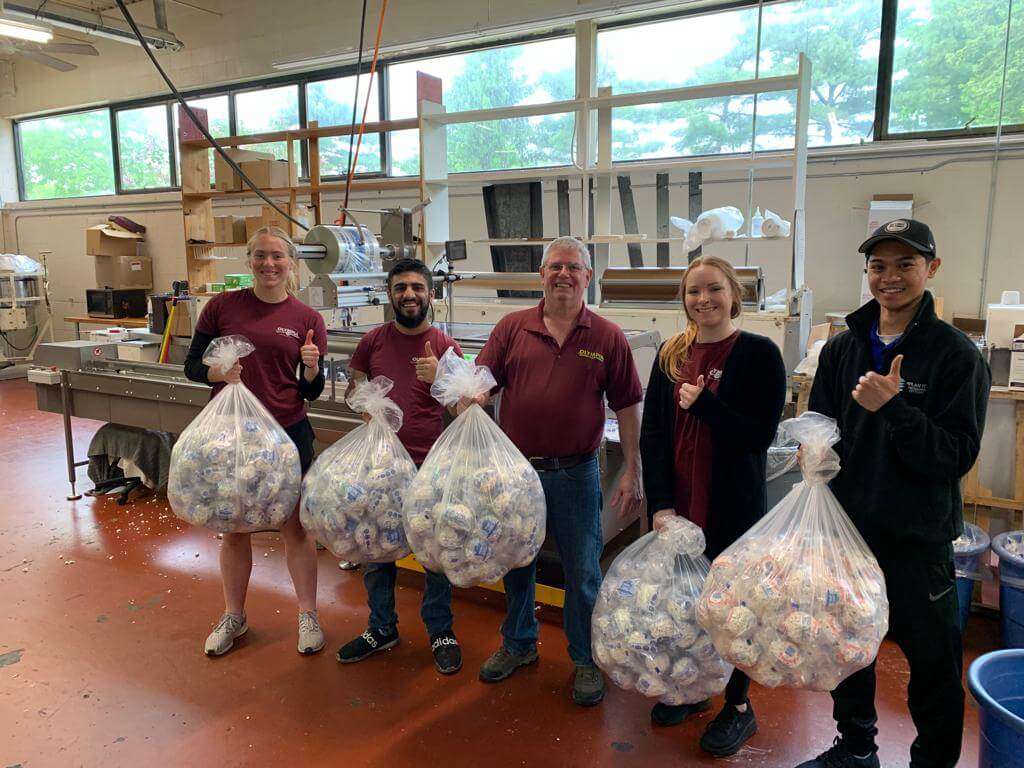
We recently installed our Pack 520 Horizontal Flow Wrapper at a customer in Ohio replacing their old equipment from our competitor. Our customer is packaging popcorn balls mostly for baseball stadiums at a speed of up to 100 packages per minute.
Few things that the customer loves about their new flow wrapper compared to their existing packaging machine:
The Pack 520 horizontal wrapping machine is built for a 24/7 environment. This machine will produce up to 150 packages per minute and is equipped to hold up to 520mm (20.4”) wide web film.

January 8, 2024
We're happy to share another success story from our customer in Arkansas. They've taken their production to the next level ...

We're happy to share another success story from our customer in Arkansas. They've taken their production to the next level by fully automating their flow wrap line with the FP 020 S Flow Wrapper from TecnoPack Group!
At 200 products per minute, this fully automated line represents a significant leap in efficiency and quality control for our client. We're proud to be part of their journey towards innovation and excellence in the food packaging industry.
Learn more about how our solutions can transform your production line: https://lnkd.in/dFmTZiCM
#PLANITPackaging #Automation #Packaging #FlowWrapper #CustomerSuccess #ClientSuccess PMMI: The Association for Packaging and Processing Technologies International Baking Industry Exposition (IBIE) Sweets & Snacks Expo BAKERY, SNACKS & SWEETS EXPO

November 14, 2024
As companies look to expand their operations and automate packaging processes, the testing and integration phases are critical for ensuring ...
As companies look to expand their operations and automate packaging processes, the testing and integration phases are critical for ensuring a smooth transition. PLAN IT Packaging provides a customized approach to testing and integrating packaging automation systems, ensuring that your production line operates efficiently from day one.
Testing ensures that all machinery works flawlessly before it’s installed in your production line. At PLAN IT Packaging, we simulate real-world operating conditions to ensure that our machines are fully compatible with your products, packaging materials, and existing systems. This reduces the risk of costly downtime, as issues are identified and resolved before the equipment is shipped.
For example, a frozen food company might need to integrate our Shrink Packaging Machine to seal products like frozen pizzas efficiently. Before installation, PLAN IT Packaging's team would run multiple tests using the company's actual products and packaging materials, ensuring that the shrink-wrapping process maintains product integrity and seals tightly to prevent freezer burn. This thorough testing process can cut post-installation downtime by as much as 40%, as potential problems are fixed early on.
Integration goes beyond simply delivering the machine to your site—it involves configuring it to work seamlessly within your existing production line. Whether incorporating a Robotic Lid Applicator for your wet wipes production or adding a new Premade Pouch Bagging Machine, PLAN IT Packaging’s team ensures that each piece of equipment is configured correctly for maximum efficiency. Our integration process includes calibrating equipment for speed, adjusting the machine to fit within the space available, and ensuring it interfaces correctly with your existing systems.
For frozen food companies, speed and accuracy are vital. For example, you might need to integrate a Vertical Form Fill Seal (VFFS) system into their existing line to seal large batches of frozen vegetables. Our VFFS Packaging Machines and Flow Wrapping Systems are customized to fit into unique spaces and optimize efficiency. Testing will likely uncover up to 60% improvement in production capacity compared to hand packing.

August 16, 2023
We are thrilled to share the success story of our valued Idaho-based customer, who is taking their jerky packaging to ...

We are thrilled to share the success story of our valued Idaho-based customer, who is taking their jerky packaging to the next level with our RotoBagger system!
Our customer was looking to reach their next levels of production and had already equipped their facility with a great semi-auto system from our friends at Multipond.
Recognizing their need to fully automate and preserve the freshness and quality of their jerky while increasing efficiency, we were able to step in and provide the advanced automation they required.
We provided a fully automated solution, including:
With our premade pouch bagging packaging machines, they are now packaging 30-40 pouches per minute (ppm), a remarkable achievement that has streamlined their process without compromising on quality.
Plan It Packaging takes pride in collaborating with forward-thinking businesses dedicated to excellence, and together, we are revolutionizing the future of packaging, pouch by pouch, with our cutting-edge RotoBagger system.

May 3, 2024
Aloha to our amazing community! We're thrilled to share a heartwarming success story straight from the beautiful islands of Hawaii. ...

Aloha to our amazing community! We're thrilled to share a heartwarming success story straight from the beautiful islands of Hawaii.
Meet our valued customer, a passionate mochi cake producer in Hawaii.
Faced with the challenge of meeting growing demand, they turned to Plan It Packaging for a solution. Enter the Pack 520 Horizontal Flow Wrapper!
It's more than just impressive stats. The genuine happiness of our customers, as they consistently meet and surpass their clientele's expectations and envision a future of growth, resonates deeply with our mission to empower businesses everywhere.
And no matter where you are, from the bustling cities to the serene islands, Plan It Packaging's robust support network ensures you're never alone. We're always here to help, ensuring your business thrives.
Our Hawaiian friend started with the Pack 520 Flow Wrapper and has big plans to expand the line as the business scales.
Here's to many more success stories, Aloha-wrapped in perfection! Call us now to start yours!
#HawaiianMochiCake #PlanItPackaging #SuccessStory #PackagingInnovation #customersuccess #clientsuccess

June 26, 2023
With the revolution of industries comes the development and advancement of packaging materials and the automation of machines. To respond ...
With the revolution of industries comes the development and advancement of packaging materials and the automation of machines. To respond to the manufacturing industry's demand, packaging manufacturers introduced pouch bags made by a vertical form fill seal machine (VFFS).
Everything starts with a large roll of film, converted into a pouch bag that becomes the packaging material for a product. The product undergoes an assembly that forms, fills, and seals using this state-of-the-art automated VFFS machine, which is efficient and accurate in streamlining the production process. As a result, you achieve high productivity with exceptional accuracy.

Manufacturing industries utilize automated assemblies like the VFFS, taking advantage of their high efficiency. This machine comes in two versatile options, the horizontal and vertical assemblies. And this is not only used by food manufacturers but also in many other industries.
Often, manufacturers use vertical form fill seal machines, an assembly that forms, fills, and seals flexible packages vertically. It creates bag pouches in different styles, including pillow bags, Doy packs, quad seal bags, and many others.
The VFFS machine automates a single system combining multiple functions, from laying hold of laminates or the flat packaging film to dispensing the product being packaged. It also has features that enhance its capabilities for printing expiration dates and lot numbers.
It can also do tear notches for easy opening, zipper integration, gas flushing for product stability, and shelf life extension. And because of its versatility, the machine can function in both food and non-food applications. For instance, it can be used in the beauty and cosmetics industry, pet food and much more.
Indeed, a form fill and seal machine is a packaging solution assembly that does the step-by-step process of production, which allows manufacturers to benefit from increased productivity and consistency in packaging operations.
Like any machine, the capabilities of a VFFS vary according to the specifications and models. It also varies according to the step-by-step process that the machine undergoes. So from flat laminate to finished product, this is the step-by-step guide on how the VFFS works:
The process starts with the automatic form fill seal machines forming the laminate material or the flat packaging film into the desired shape or container. It passes through a series of rollers to form a tubular shape or any desired shape, such as a pouch or bag, a pillow pack, a gusseted pouch, or a stand-up pouch. It can also be a three-sided seal pouch, a zipper pouch, or a spout pouch.
After the bag forms, the sides are sealed together to form a closed container — it is usually done by applying heat and pressure at the edges of the assembled container to bond them together firmly.
After the edge bonding, the next step is to fill the formed and sealed containers with the product. The form fill seal machine dispenses a measured amount of product into the bag using volumetric fillers for liquids, weighers for solids, and augers for powdery products.
For example, if the bag is being filled with a snack drink, the VFFS machine correctly and accurately measures it according to the required net fill weight declaration as printed on the packaging. Meanwhile, if it is filling a meal snack, then it is measured by using a weigher to get the exact desired measurement.
Dosing systems check that weighers are operating in sync to dispense products accurately. This step is equally critical as the others. Here, the form fill and seal machines ensure that the correct volume is dispensed into the packaging.
Sensors are frequently used in this step to measure the weight or volume of the product, and a mechanical system is used to control its flow into the bags.
The final closing happens in this step. After the bag is filled, the machine seals the remaining opening, often the top portion of the packaging. It is done by applying heat and pressure. Sealed parts must be assured of their sealing integrity to avoid product leaks, moisture absorption, and contamination.
Not all pouch bags undergo this step since not all pouches are continuous in form. However, continuous rolls are cut and separated to make individual packages as deemed applicable.
Here, the form fill and seal bagging machine has a predetermined length at which it uniformly cuts the material.
Some optional steps are added, like date coding, batch printing, etc. Although not all products undergo such phases, they usually happen after final sealing, cutting, and separation.
In this step, an advanced VFFS machine can do product detention or rejection to detect rejected bags, incorrect fill levels, or other quality issues. But it is essential to know that not all form fill and seal machines have these optional steps.
The final stages are done here, like packing, labeling, or shipping. More critical steps occur after everything has passed and been evaluated as to the required quality parameters. These may include quality control, case packing, packing completion, box closing, coding, and securing.
This step may also involve using additional materials like cushions and inserts and box labeling.
Indeed, when the correct steps are adapted during production, the seamless and efficient vertical form fill seal machine can do more for the business.
But note that the steps undertaken by the machine have specific variations. It differs according to the industry, product type, and packaging process. Various equipment can be customized with the features and options you need to meet specific packaging requirements and industry standards.
Whatever you need for your process, ensure you get it. Contact Plan IT Packaging for high-quality packaging system solutions. We can help you discover the machine that perfectly suits your needs. Likewise, we'll take you through each step of the process for the equipment you get.

January 9, 2023
We just made another customer ecstatic by revolutionizing their reptile food powder packaging with our cutting-edge RotoBagger premade pouch machine! ...

We just made another customer ecstatic by revolutionizing their reptile food powder packaging with our cutting-edge RotoBagger premade pouch machine!
Not only were we able to seamlessly integrate their existing All-Fill auger system, but we also boosted their packaging speed up to a mind-boggling 30 packages per minute or 1800 packages per hour!
Before discovering us, this customer was painstakingly sealing everything by hand. However, with our innovative technology, particularly our state-of-the-art premade pouch packaging machine, they can now sit back and watch their fully automated process cut labor costs and skyrocket productivity!

November 8, 2024
In today’s fast-paced world, packaging automation is often seen purely as a means of improving efficiency, but it also profoundly ...
In today’s fast-paced world, packaging automation is often seen purely as a means of improving efficiency, but it also profoundly impacts creativity. By automating the repetitive and time-consuming aspects of packaging, companies can focus more on innovation, product development, and brand storytelling. At PLAN IT Packaging, we help businesses balance efficiency and creativity with our advanced solutions.
Take a jam producer relying on Container Filling Solutions to automate the tedious task of filling hundreds of jars daily. By automating this process, the business owner can invest more time in developing new flavors or designing creative packaging that appeals to a broader audience. Automation frees up resources that would otherwise be tied up in manual tasks, allowing teams to brainstorm and implement innovative ideas that help differentiate their products.
PLAN IT Packaging offers various automated machines, including the Auger Powder Filling Machine and Vertical Form Fill & Seal (VFFS) Machine. These machines are designed to take over time-consuming packaging processes while maintaining consistency and product quality. This helps businesses scale without losing the ability to innovate.
Artists aren’t just found in design studios. At PLAN IT Packaging, we believe that anyone involved in the packaging process—product design, machinery engineering, or quality control—contributes to a work of art. That’s why our machines are built for precision. The ELITEWEIGH Multi-Head Scales and RotoBagger Premade Pouch Systems provide highly accurate fills, ensuring that every package has the exact amount of product, down to the gram.
Imagine a gourmet cookie company needing to package intricate, high-end cookies. The Multi-Head Scale allows for precise weighing, ensuring that each package is filled to the exact weight, while the Flow Wrapping System guarantees that each cookie is sealed perfectly to preserve freshness. This attention to detail allows brands to showcase their products in the best possible light while maintaining operational efficiency.
Packaging automation isn’t just about speeding up production. Freeing up time and resources empowers designers and marketers to get more creative with their product lines. Companies using PLAN IT Packaging’s Premade Pouch Machines or Shrink Wrapping Systems can customize their packaging to enhance brand storytelling. From vibrant colors to eco-friendly materials, automation enables businesses to explore new design elements that would be difficult to implement in manual packaging systems.
According to a recent study by [Smithers](https://www.smithers.com/services/testing/packaging/sustainability-testing), 60% of consumers are likelier to choose a product with unique, high-quality packaging. By investing in automation, companies can focus on creating packaging that stands out on the shelves, attracting more customers and driving sales.
At Pack Expo International 2024 in Chicago, we showcased how automation can unleash your team’s creative potential. Whether you're packaging gourmet foods, personal care items, or anything in between, PLAN IT Packaging has the solutions to help you automate while staying true to your brand’s creative vision. Visit our booth or schedule a consultation to learn more about how our systems can elevate efficiency and artistry in your packaging process.

January 2, 2024
Retail packaging plays a critical role beyond just containing products — it serves as a silent ambassador for brands, speaking ...
Retail packaging plays a critical role beyond just containing products — it serves as a silent ambassador for brands, speaking volumes about their identity, values, and quality.
Crafting an effective packaging strategy involves meticulously considering various elements, each contributing to the overall success of a product in the competitive market.

Packaging for retail is more than just a protective layer around a product — it's a powerful tool that significantly influences consumer behavior and brand perception. Here's why it matters:
Packaging is often the first point of contact between a consumer and a product. Custom retail packaging sets the initial impression, catching the eye and drawing attention in a crowded marketplace. An attractive package can pique curiosity and entice consumers to explore further.
Packaging serves as a visual representation of a brand's identity, values, and promises. It communicates who the brand is, what it stands for, and what consumers can expect from the product inside. Consistent packaging reinforces brand recognition and loyalty.
In a world inundated with options, unique packaging sets a product apart. It helps it stand out from competitors, making it recognizable and memorable. Creative and distinctive packaging can become a crucial differentiator, attracting consumers in a sea of choices.
Retail-ready packaging is an integral part of the overall consumer experience. It goes beyond just containing the main product. Well-designed, user-friendly packaging enhances the overall experience, making it more enjoyable and convenient for the buyer.
Packaging conveys vital information about the product — its features, usage instructions, ingredients, and more. Clear and concise information builds trust, educates consumers, and influences purchase decisions.
Packaging has the potential to evoke emotions. It can create excitement, joy, or satisfaction, particularly during the unboxing experience. This emotional connection can lead to a stronger bond between the consumer and the brand, fostering loyalty and repeat purchases.
With the growing concern for sustainability, eco-friendly custom retail packaging is becoming increasingly important. Sustainable packaging aligns with consumer values and contributes positively to a brand's image.
Packaging serves as a silent yet powerful marketing tool. It can convey the brand's message, promotions, and even storytelling. Clever packaging designs can generate buzz and serve as a cost-effective marketing tool, drawing attention and creating a buzz around the product.
A well-thought-out packaging strategy can significantly impact a brand's success by influencing consumer perception, purchasing decisions, and brand loyalty.
Explore the essential factors that can make or break a retail packaging design.
The packaging should be a visual ambassador of the brand. From colors, fonts, and logos to the overall design aesthetic, it should reflect the brand's essence and resonate with its target audience. Engaging storytelling through packaging can evoke emotions and create a lasting connection with consumers, amplifying brand recall.
While aesthetics are crucial, functionality should never be compromised. Packaging must protect the product from damage during transportation and storage while ensuring ease of handling for both retailers and consumers. Convenience in opening, resealing, and storing can significantly enhance the user experience.
In the era of heightened environmental awareness, sustainable retail packaging solutions are no longer a choice but a necessity. Consumers are increasingly inclined toward eco-friendly options.
Using recyclable, biodegradable materials or adopting minimalistic packaging designs reduces environmental impact and aligns with the ethos of responsible consumption.
In a crowded marketplace, standing out is paramount. Unique packaging that captures attention amidst competitors can be a game-changer. Employing innovative shapes and textures or incorporating interactive elements can intrigue potential buyers, compelling them to explore the product further.
Clear and concise information on packaging regarding the product's features, usage instructions, and ingredients fosters transparency and builds trust with consumers.
Complying with regulatory requirements while providing valuable information enhances credibility and assures buyers of the retail-ready packaging's reliability.
Packaging should align with your target market's lifestyle, aspirations, and preferences. For instance, a product aimed at children might benefit from vibrant colors and playful designs, while a luxury item might focus on sophistication and elegance.
As markets evolve, packaging designs must remain adaptable and scalable. A packaging strategy allowing variations or modifications to cater to seasonal trends or new product lines ensures long-term relevance and agility in responding to market changes.
Balancing quality and cost is a crucial aspect of packaging design. Opting for cost-effective materials and efficient production processes without compromising quality is imperative for maintaining profitability, especially for smaller businesses.
Retail product packaging must adhere to industry-specific regulations, ensuring safety, hygiene, and legal requirements are met. Non-compliance can lead to legal repercussions and damage the brand's reputation.
Great packaging elicits emotions and creates memorable experiences. Unboxing a product should evoke joy, excitement, or satisfaction, enhancing the overall customer experience and fostering brand loyalty.
Are you looking for a reliable partner to transform your retail packaging into a standout asset for your brand? Look no further than Plan It Packaging — your ultimate destination for innovative and reliable packaging solutions.
Plan It Packaging is not just another packaging provider but the architect of exceptional retail packaging experiences. With a keen understanding of the intricate dynamics of retail, we specialize in crafting packaging solutions beyond mere containment.

September 18, 2024
In an era of economic uncertainty, where interest rates are unpredictable and capital is increasingly scarce, businesses across industries are ...

In an era of economic uncertainty, where interest rates are unpredictable and capital is increasingly scarce, businesses across industries are grappling with a critical question: how do they continue to grow without detrimentally affecting profitability?
For those in the packaging sector, the stakes are exceptionally high. Whether or not to automate can be the difference between thriving and merely surviving.
Yet, automation is expensive. Mid-sized companies, especially manufacturing companies, are staring down the barrel of equipment costs that can easily surpass $500,000. For many, this isn't just a business decision—it's a make-or-break moment.
https://youtu.be/0FMmnvCqbmc?feature=shared
Automation is no longer a luxury; it's a necessity. A study by Deloitte highlights that 53% of companies plan to increase their use of automation in the next two years. However, the initial investment is steep. In the packaging industry, automation is seen as a critical path to efficiency, with companies reporting up to a 30% increase in production speed and a 25% reduction in labour costs within the first year of adopting new technology.
But these benefits come with a hefty price tag. Jonathan Ballard, Director of Business & Market Development at Plan It Packaging and LeafyPack, captures the essence of this dilemma: "Companies that delay automation are not just missing out on efficiency gains—they're also risking their long-term profitability." The numbers back him up, and the reality is stark: businesses that fail to automate are often left behind, unable to compete in a rapidly evolving market.
Despite the clear benefits, the path to automation is riddled with financial hurdles. Traditional processes for working with a few key lenders, which once served as the lifeblood of business financing, have become increasingly cautious. The National Small Business Association's 2023 report reveals that a quarter of small businesses could not secure the necessary funding, citing onerous loan terms as a primary obstacle.
This tightening of the purse strings couldn't come at a worse time. The prospect of navigating complex financing arrangements can feel overwhelming for businesses already stretched thin by rising labour costs and supply chain disruptions. "In today's environment, holding onto cash is more critical than ever," Ballard observes. "If a business depletes its reserves to buy new equipment, it risks its future."

Recognizing these challenges, Plan It Packaging has pioneered a new way to finance automation that bypasses the traditional pitfalls.
Plan It offers financing solutions through an exclusive partnership with Fort Capital through its cloud-based system. This seamless, integrated experience allows businesses to secure the funding they need without leaving Plan It's ecosystem.
The process is refreshingly straightforward. After selecting the necessary equipment, customers are provided with a pre-approved financing plan.
These plans, offered through Fort Capital, boast some of the industry's most competitive terms: sub-5% interest rates, zero down payments in many cases, and payment deferrals for up to six months during equipment production(OAC, Terms apply). The entire transaction can be completed in minutes, all within a secure online portal.
Ballard highlights the impact of this streamlined process: "We've removed the barriers that typically slow down or derail a sale. Customers no longer need to juggle multiple banks or navigate the complexities of loan approvals—they can get everything done in one place, with terms that are often better than what traditional lenders offer."
Traditional financing routes are fraught with challenges that can jeopardize a company's financial health. High interest rates, lengthy approval times, and rigid repayment schedules are the beginning. These obstacles can be insurmountable for businesses operating in today's high-stakes environment.
Many mid-market companies are in a bind, dealing with multiple banks, each with cumbersome requirements. This delays the financing process and increases the likelihood of costly mistakes. "It's not just about securing the funds," Ballard explains. "It's about securing them on terms that work for your business."
The complexity of traditional financing often leads to decision paralysis, where businesses delay critical investments simply because the path forward is unclear. "In this economy, every day counts," Ballard emphasizes. "We're giving our customers a way to move forward without the usual financial headaches."
What sets Plan It Packaging apart is more than just our innovative financing and commitment to exceptional customer service. The financing process is designed to be as smooth and supportive as possible.
Customers are guided by their territory managers, who stay with them through every step, ensuring a seamless experience from start to finish.
This personalized approach builds trust and strengthens relationships, which Ballard considers essential. "We don't just hand over a list of banks and leave our customers to fend for themselves," he says. "We walk them through the entire process, providing support at every turn."
By integrating financing into the sales process, Plan It Packaging isn't just selling equipment—it's offering a comprehensive solution that addresses the real-world challenges its customers face. "Our goal is simple: to make sure our customers succeed," Ballard asserts. "That means giving them the tools—and the access to financial support they need to grow - without unnecessary stress."
The need for innovative, customer-focused financing solutions will only grow as the packaging industry evolves. Plan It Packaging is leading the charge, offering state-of-the-art equipment and the financial flexibility that today's businesses require.
"At the end of the day, it's about more than just machinery," Ballard reflects. "It's about helping our customers continue to build sustainable, profitable businesses. And that starts with ensuring they have the financial resources they need to succeed."
With their pioneering approach to financing, Plan It Packaging is proving that businesses don't have to choose between growth and financial stability—they can have both; in today's challenging economic landscape, that's a message every business owner needs to hear.

Experience the process yourself and contact us now.
Sources:

May 3, 2023
We are happy to share a fantastic customer success story featuring one of our valued clients, a Quinoa manufacturer in ...

We are happy to share a fantastic customer success story featuring one of our valued clients, a Quinoa manufacturer in Mississauga. They have recently automated their packaging process with our RotoBagger and Auger Filler, achieving impressive efficiency and speed!
In order to streamline their packaging process and meet growing demand, our client sought a solution that could increase their efficiency. With our machines, they are now packaging their Quinoa at an impressive rate of 30 bags per minute! This automation has reduced manual labor and significantly increased their production capacity.
Our full system has been tailored to ensure optimal performance, enabling our customers to focus on what they do best — delivering high-quality Quinoa products. By integrating our RotoBagger and Auger Filling system, they've achieved:
We're proud to support our client's growth and success, and we remain committed to providing cutting-edge solutions, including RotoBagger and Auger filler, for businesses in today's competitive market.
#success #growth #automation #packaging PMMI Media Group

March 7, 2022
Plan IT Packaging Systems will be moving to a new facility on June 1, 2022 to accommodate the company's rapid ...

Plan IT Packaging Systems will be moving to a new facility on June 1, 2022 to accommodate the company's rapid growth. We have invested in a much larger facility, located in the heart of Mississauga (10 minutes from Toronto Pearson International Airport). This will provide more space for new employees, assembly, local fabrication and a showroom of high end automated packaging machinery.
Stay tuned for more expansion news in the U.S. and upcoming new team additions. Thank you to all our employees, customers and partners who have supported us and believed in what we do. We are super excited on a bright future ahead!

March 8, 2024
The snack and candy industry is evolving rapidly, with consumer demands shifting towards innovative, sustainable, and convenient packaging solutions. As ...

The snack and candy industry is evolving rapidly, with consumer demands shifting towards innovative, sustainable, and convenient packaging solutions. As manufacturers strive to meet these demands, the role of advanced packaging systems becomes crucial. Enter PLAN IT Packaging Systems—a leader in providing cutting-edge packaging solutions that cater to the dynamic needs of the snack and candy industry. With a focus on efficiency, sustainability, and customization, PLAN IT Packaging is revolutionizing the way products are packaged and experienced by consumers worldwide.
At PLAN IT Packaging, we understand that one size does not fit all. Our comprehensive range of packaging solutions includes vertical form fill seal (VFFS) machines, horizontal flow wrappers, stand-up pouch systems, and more, each designed to address specific packaging challenges in the snack and candy industry. Whether you need to package delicate chocolates, assorted candies, or a variety of snacks, our machines ensure precision, speed, and product safety, enhancing shelf life and consumer appeal.

Our VFFS machines are the cornerstone of snack packaging, offering versatility and efficiency for a wide range of products. Equipped with advanced technology, these machines can handle various packaging materials and formats, from traditional pillow bags to innovative zippered pouches, ensuring your products stand out on the shelves while maintaining their freshness and flavor.
Candies, with their diverse shapes and sizes, require gentle handling and precise packaging. Our horizontal flow wrappers excel in wrapping individual candies and bars, providing airtight seals and impeccable presentation. With customization options, these machines can accommodate different packaging styles, including twist, fold, and seal wraps, highlighting the quality and uniqueness of your candy products.
Stand-up pouches are becoming increasingly popular for their convenience, resealability, and shelf presence. Our stand-up pouch systems offer a flexible solution for packaging a variety of snacks and candies, supporting sustainability with options for recyclable and biodegradable materials. These systems are designed for efficiency, filling and sealing pouches at high speeds without compromising on quality or durability.
Choosing PLAN IT Packaging as your packaging solutions provider means investing in your brand's future. Our commitment to innovation, quality, and customer service ensures that you receive not only the best packaging machinery but also comprehensive support, from initial consultation to after-sales services. Our experts work closely with you to understand your needs, offering customized solutions that optimize your production line, reduce waste, and elevate your brand's appeal.
At PLAN IT Packaging, we are dedicated to reducing the environmental impact of packaging. Our machines are designed for energy efficiency and compatibility with eco-friendly materials, helping your brand contribute to a greener planet. By embracing sustainable packaging solutions, we can together make a positive difference for future generations.
In the ever-evolving snack and candy industry, staying ahead means constantly innovating and adapting. PLAN IT Packaging Systems is your partner in this journey, offering advanced, sustainable, and customizable packaging solutions that meet the demands of today's consumers. With our technology, expertise, and support, your products will not only capture attention but also preserve quality, ensuring satisfaction from the first bite to the last. Let's redefine packaging excellence together.

September 20, 2024
In a future driven by efficiency and automation, only the strong will survive. At PACK EXPO 2024, PLAN IT Packaging ...
In a future driven by efficiency and automation, only the strong will survive. At PACK EXPO 2024, PLAN IT Packaging will unveil a vision of innovation and caution, with cobots designed to work seamlessly alongside humans.
Judgment day is fast approaching for businesses that ignore this technological evolution.
As industries worldwide scramble to stay competitive, PLAN IT Packaging emerges as a leader in the vanguard of human-robot collaboration. "Our cobots represent the next phase of the industrial revolution," declares Yasha Shamayeli, Director of Marketing at PLAN IT Packaging. "We are not just creating machines; we are shaping the future of work itself."
Cobots, or collaborative robots, are distinct from their traditional industrial counterparts.
Designed with human interaction in mind, these machines work alongside employees, taking on repetitive or dangerous tasks, while their human counterparts focus on more complex and creative endeavors. At PACK EXPO 2024, PLAN IT Packaging's display will be an exhibition and a declaration: evolve or face extinction.
The cobots developed by PLAN IT Packaging are more than mere tools; they embody efficiency and safety in the workplace.
As Mark Evangelista, Director of Sales at PLAN IT Packaging, puts it, "We are entering an era where the distinction between man and machine blurs. Those who embrace this change will thrive; those who don't will be left behind, as the forces of innovation march inexorably forward."
This sentiment is echoed by the very design of the cobots, which prioritizes safety and adaptability. Equipped with advanced sensors and intuitive programming, these machines can detect human presence and adjust their operations accordingly, ensuring that the workspace remains safe and productive.
"Our cobots are designed to integrate seamlessly into existing production lines," Evangelista explains. "They require minimal modifications, making them ideal solutions for businesses looking to stay ahead of the curve without disrupting their workflow" (Planit Packaging).
However, for every business that adopts this advanced technology, some will resist, clinging to outdated practices. For these companies, the consequences are clear.
"Judgement day is coming for businesses that refuse to adapt," warns Shamayeli. "In a world where efficiency is king, there is no room for hesitation. The companies that fail to integrate cobots into their operations will find themselves obsolete, their competitors having outpaced them in both productivity and innovation."
This stark message is more than just marketing rhetoric; the data supports the rise of cobots as a necessary evolution in the industrial landscape.
Businesses that have integrated these collaborative robots into their operations report significant efficiency and improvement in employee satisfaction. "Our cobots allow workers to focus on what they do best—thinking, creating, solving problems—while the robots handle the monotonous tasks," Evangelista states. "This is not just about machines replacing humans; it's about enhancing what humans can achieve by eliminating the drudgery of repetitive work" (PACK EXPO International).
At PACK EXPO International 2024, PLAN IT Packaging will offer a glimpse into this future. Their booth will feature live demonstrations of cobots in action, showcasing their versatility in tasks ranging from packing and palletizing to more intricate operations such as quality control. But this isn't just a demonstration—it's a challenge.
"Come to our booth and see for yourself," Shamayeli urges. "Experience the future of automation, and ask yourself whether your business is ready to survive in the coming age of robotics. The decisions made today will determine whether companies thrive or perish shortly."
For businesses brave enough to step into the future, PLAN IT Packaging offers more than just technology—it offers a path to success.
"We don't just sell machines," Evangelista emphasizes. "We work with our clients to ensure that our cobots are tailored to their specific needs, helping them not just survive, but dominate their industries" (PACK EXPO International).
As the countdown to PACK EXPO 2024 continues, businesses are pressured to leap into the future. The event promises to be the largest of its kind, with over 45,000 attendees and 2,500 exhibitors, and will be the ultimate battleground for industrial innovation.

July 4, 2024
We are thrilled to announce that PLAN IT Packaging Systems is expanding to Tampa, Florida this summer! As a Canadian-owned ...
We are thrilled to announce that PLAN IT Packaging Systems is expanding to Tampa, Florida this summer! As a Canadian-owned company known for our innovative solutions in the packaging industry, this new facility marks a significant milestone in our journey of growth and service excellence.
Tampa, with its strategic location and thriving business environment, provides the perfect backdrop for our expansion. This vibrant city not only offers ample opportunities for growth but also allows us to better serve our customers across the United States. The expansion to Tampa ensures that we can continue to deliver our high-quality packaging solutions more efficiently and effectively.
Our brand-new, 35,000 square foot facility in Tampa is more than just an additional space; it's a hub of innovation and excellence. Here's what you can expect:
At PLAN IT Packaging Systems, our growth is driven by our unwavering commitment to excellence. The new Tampa facility is a testament to our dedication to providing top-notch packaging solutions and our readiness to adapt and expand to meet the evolving needs of our customers.
We can't deny our growth, and this expansion is a significant step in our mission to offer the best to our clients. Whether it's our fragile scales, vertical drop scales, or any of our comprehensive packaging systems, we are here to ensure that you receive solutions that are both innovative and reliable.

Quote from Mark Evangelista, PLAN IT Packaging Sales Director:
"We are thrilled to announce the opening of our new 35,000-square-foot facility in Tampa, FL, as part of our U.S. expansion. Conveniently located just minutes from the airport, this state-of-the-art facility will significantly boost our manufacturing capabilities and strengthen our presence in the Southeast region.
Tampa will be key to expanding the manufacturing and assembling of our VFFS bagging line, and for boosting our case packing and end-of-line solutions capabilities with advanced robotics.
This facility will feature a 5,000-square-foot showroom and system testing center, where customers can test and validate their products with our systems before making a commitment and investment.
We anticipate being fully operational by late November or early December, closing the year on a high note. Tampa is not only a fantastic city but also one of my personal favorites. We look forward to becoming an active part of its thriving business community and tapping into its talented workforce."
As we prepare to open our doors in Tampa, we are excited about the new opportunities and possibilities that lie ahead. This expansion is just the beginning, and we are eager to continue growing and innovating to serve you better.
Stay tuned for more updates as we get closer to the grand opening of our Tampa facility. Thank you for your continued support and trust in PLAN IT Packaging Systems. We look forward to serving you from our second home in Tampa!

March 12, 2023
Exciting news! Our customer in Oregon is thrilled with our automated EcoBagger machine. With a 10-head multihead weigher, metal detector, ...

Exciting news! Our customer in Oregon is thrilled with our automated EcoBagger machine. With a 10-head multihead weigher, metal detector, and printer, it's an efficient and reliable solution for their bagging needs.
The premade pouch packaging machine increased their productivity and peace of mind with the built-in metal detector, ensuring product safety. Contact us to learn more about how the EcoBagger can improve your operations.

June 11, 2024
In the competitive world of cookie production, maintaining product quality while optimizing operational efficiency is a constant challenge. Mom's Best ...
In the competitive world of cookie production, maintaining product quality while optimizing operational efficiency is a constant challenge. Mom's Best Cookies, a beloved brand known for its delicious and wholesome products, recently faced such a challenge. Their goal was to reduce handling damage and improve overall production efficiency. Partnering with PLAN IT Packaging, they deployed a new scales and bagging line, resulting in significant improvements.
Mom's Best Cookies, like many cookie processors, struggled with handling damage during the packaging process. This issue not only affected the appearance and integrity of their products but also led to increased waste and operational costs. To maintain their commitment to delivering high-quality cookies to their customers, it was crucial for Mom's Best to find a solution that would minimize damage while streamlining their packaging operations.
PLAN IT Packaging stepped in to address these challenges with their state-of-the-art ELITEWEIGH weigher and RotoBagger bagging system. The solution included:
The implementation process was smooth and efficient. PLAN IT Packaging worked closely with the team at Mom's Best Cookies to customize the solution to their specific needs. This collaborative approach ensured that the new system seamlessly integrated with their existing production line, minimizing downtime and disruption.
The results of deploying the new scales and bagging line were impressive:
“We’ve slashed labour costs with this turnkey scales/bagging line,” says Robert Cappola, President of Mom’s Best Gourmet Foods. “We produce 40,000-50,000 kilos of dough per day, and we needed to find a machinery integrator who could move us into a more sustainable pouch-packaging line. This is where PLAN IT Packaging Systems came in. They built the whole line for us from start to finish… to handle, weigh and bag our cookies delicately into appealing, lightweight zipper pouches that help us with our sustainability objectives.”
PLAN IT Packaging technician Rick Neill and Mom’s line operator Doecheenee Nicola take us through the process from cookie conveying to weighing, bagging, and sealing Mom’s treasured Cookie Ginger Crisps. The system features a unique low-height ELITEWEIGH weigher feeding an eight-station RotoBagger at precise, consistent 170-gram weights. The slanted delivery in the scale buckets, equipped with a softening buffer, prevents cookie breakage and can reach speeds of 45 bags per minute.
Robert Cappola concludes, “I can’t tell you how much easier this makes my life."
The success story of Mom's Best Cookies highlights the importance of investing in advanced packaging solutions to address common industry challenges. PLAN IT Packaging’s innovative ELITEWEIGH weigher and RotoBagger bagging system provided the perfect solution, helping Mom's Best Cookies enhance their product quality and operational efficiency. This case study exemplifies how strategic partnerships and modern technology can drive success in the food processing industry.
For more information on how PLAN IT Packaging can help your business optimize its packaging processes, contact us today.

December 15, 2023
PLAN IT Packaging is excited to announce a groundbreaking addition for the North American market. We've successfully installed three cutting-edge ...
PLAN IT Packaging is excited to announce a groundbreaking addition for the North American market. We've successfully installed three cutting-edge Bag in a Box Bulk Lines, designed specifically for packaging hamburger patties. This efficient trio of lines is currently serving the largest hamburger producer in North America, signifying a major leap in packaging technology.
Our fully automated packaging solution is a timely response to the prevalent labor shortages, freeing up 96 employees across three lines and two shifts for more critical tasks. A $3M investment paid off within 8 months. Also, This system is specifically tailored for cold environments, maintaining high hygiene standards. The use of high-quality stainless steel ensures resistance against rust and corrosion, a significant upgrade over lower-end machines prone to damage from harsh cleaning agents.
Don't let this opportunity pass you by. Embrace innovation and efficiency with Plan IT Packaging. Contact us today to start your journey toward unparalleled business success!

March 29, 2024
In the heart of Mexico's bustling food industry, a challenge was brewing. Our client, a popular gummy manufacturer, needed to ...

In the heart of Mexico's bustling food industry, a challenge was brewing. Our client, a popular gummy manufacturer, needed to ramp up production without sacrificing quality.
Enter the heroes: Plan It Packaging's High-Speed VFFS Rapid and the 16-head EliteWeigh with memory buckets.
🍬 The Transformation: With these cutting-edge machines, our client's packaging process turned magical, hitting a remarkable speed of 130ppm! Efficiency soared, and the quality remained top-notch.
🔍 For added safety assurance: A high-speed VFFS system, coupled with a metal detector, ensured that every gummy package was perfect inside and out.
🎉 The Outcome: Today, in Mexico, they're not just meeting demand. They're setting new standards in the gummy world, proving that with the right technology, every challenge has a sweet solution.
Transform your packaging process today with Plan It Packaging. Contact us now!
#customersuccess #clientsuccess #clientsatisfaction #customersatisfaction #Efficiency #packaging #SuccessStory #FoodSafety PMMI: The Association for Packaging and Processing Technologies PACK EXPO Sweets & Snacks Expo International Baking Industry Exposition (IBIE)

October 3, 2023
Food safety is a paramount concern in the food industry. Ensuring that products are free from contaminants is a legal ...
Food safety is a paramount concern in the food industry. Ensuring that products are free from contaminants is a legal requirement and a moral obligation to protect consumers. One crucial tool in achieving this goal is metal detectors.
In food packaging, it plays a significant role in safeguarding product quality and consumer well-being. This article will explore why they are vital in food packaging.
As the name suggests, the primary function of a detector in food packaging is to detect metal contaminants. These contaminants can come from various sources, including machinery parts, packaging materials, or even foreign objects introduced during processing.
Common metal contaminants include ferrous (iron), non-ferrous (aluminum, copper, etc.), and stainless steel.
Detecting these metal contaminants is crucial because ingesting metal fragments can pose serious health risks to consumers of packaged foods. They can cause physical harm, including mouth, throat, or digestive system injuries. Moreover, consuming contaminated food can lead to lawsuits, product recalls, and severe damage to a brand's reputation.
Food safety regulations are stringent, and compliance is mandatory for all food manufacturers and packaging facilities. Metal detection is often a prerequisite for meeting these regulatory requirements.
Regulatory agencies like the U.S. Food and Drug Administration (FDA) and the European Food Safety Authority (EFSA) have established strict guidelines to ensure food safety. Non-compliance can result in heavy fines, legal penalties, and, in some cases, business closure.
Food manufacturers demonstrate their commitment to adhering to these regulations by incorporating the best metal detectors into their packaging lines. They also provide documented evidence of due diligence in safeguarding product quality.
Food recalls are costly financially and in terms of a company's reputation. A recall is often the only option when a metal-contaminated product reaches the market and poses a risk to consumers. The costs associated with recalls include:
Detecting metal contaminants with a metal detector before products reach consumers helps prevent costly recalls, protecting a company's bottom line and reputation.
Detectors maintain product quality by ensuring that no foreign objects, such as metal fragments, are present in the packaged food. Even small metal particles can affect the texture and taste of the product. Ensuring the final product is free from contaminants is essential to meeting consumer expectations for quality and consistency.
Consumer trust is a valuable asset for any food brand. When consumers trust that a brand takes their safety seriously, they are more likely to remain loyal and recommend the brand to others. Metal detectors are an outward expression of a brand's commitment to food safety, helping to build and maintain consumer trust.
Modern detectors offer high customization and adaptability to different packaging processes and food types. Manufacturers can adjust sensitivity levels, eliminate false positives, and fine-tune these machines to meet specific requirements. This flexibility ensures that these detectors integrate seamlessly into various production environments.
The best metal detector is designed to be integrated with existing packaging lines. They can be positioned at strategic points in the line to ensure a thorough inspection of the products. This integration does not significantly disrupt the production process and minimizes the risk of contamination escaping detection.
Many detectors have advanced real-time monitoring and reporting features. They provide data on the detection of contaminants, allowing operators to take immediate action if an issue arises. This real-time feedback helps maintain consistent product quality and safety standards.
By detecting metal contaminants early in the packaging process, a metal detector prevents the need to discard entire batches of contaminated products. It reduces waste and conserves resources, contributing to sustainability efforts within the food industry.
Detectors are not limited to just one type of food product. They are used across various food industry segments, including baked goods, dairy, meat and poultry, fruits and vegetables, and more. This versatility makes them a valuable tool for ensuring food safety.
Detectors are a critical component of food packaging, serving as the first line of defense against metal contaminants that can pose serious health risks to consumers and harm a company's reputation and bottom line.
Their significance in the food industry is underscored by their role in compliance with food safety regulations, preventing costly recalls, maintaining product quality, enhancing customer trust, and offering customization and adaptability.
In a world where food safety is paramount, metal detectors are indispensable tools for ensuring that packaged food products meet the highest quality and safety standards.
Call Plan It Packaging to help you harness the power and use of this machine.
Book a one-on-one consultation today!

November 28, 2023
Modified Atmosphere Packaging is a game-changer that maintains the freshness of various products. Since its inception, it has transformed how ...
Modified Atmosphere Packaging is a game-changer that maintains the freshness of various products. Since its inception, it has transformed how we package food and other perishables.
The logic behind this innovation is simple. It carefully adjusts the atmosphere inside the packaging to create an environment that stops spoilage and maintains quality.
In this article, we dive deep into what MAP is and how it works. We also learn its benefits and why your business should consider using this technology. Lastly, we'll discover the science behind it, its practical uses, and its importance in today's market.

MAP may be a modern technique that has yet to be discovered by many. However, it has revolutionized how the world preserves and extends the shelf life of different food items. It allowed manufacturers to tailor their packaging to the unique requirements of their products.
Consumers can now enjoy fresher, longer-lasting meats, fruits, and vegetables with MAP. On the other hand, businesses reduce food waste and meet the demand for extended expiration.
But as amazing as this innovation may seem, there is an explanation behind it.
The fundamental principle of MAP involves replacing the air inside a packaging container with a carefully selected mixture of gases. The typical composition of this modified atmosphere includes carbon dioxide, nitrogen, and, often, small quantities of oxygen.
The gas composition varies depending on the specific needs of the packaged food item. For instance, vegetables and fruits might require a different gas mixture than fresh meat or bakery products. By adjusting the gas composition, MAP serves several essential functions:
Oxygen is one of the gases used in Modified Atmosphere Packaging. Reducing the oxygen content inside the package helps inhibit the growth of aerobic spoilage microorganisms. It also slows down oxidative reactions that lead to food deterioration.
A vital part of this process involves precise carbon dioxide control. This adjustment is critical for regulating the respiration rate of fresh produce, guaranteeing ideal storage conditions, and prolonging product freshness.
Altering the atmosphere can effectively suppress the development of harmful bacteria and pathogens, increasing food safety.
Discover the advantages of using MAP. Also, learn how it can revolutionize how you preserve and protect your products.
One of the most significant advantages of MAP is its ability to prolong the shelf life of food items. By slowing down the degradation process, products remain fresh and appealing for extended periods. It also reduces food waste.
Maintaining the quality and taste of food items is crucial, and MAP excels in this regard. The modified atmosphere prevents spoilage and maintains food quality, whether fresh produce, meat, dairy, or baked goods.
(MAP) Modified Atmosphere Packaging helps inhibit the growth of harmful microorganisms. This environment keeps perishable food items fresh.
Reduced food waste and longer shelf life lead to less environmental impact. MAP contributes to sustainability by minimizing the disposal of spoiled food products.
Providing customers with high-quality, fresh products can enhance brand loyalty and reputation. It brings more repeat customers and positive reviews, which may increase your business ROI.
This innovative equipment has a wide range of applications across the food industry. Some common applications include:
Aromatic coffee and crunchy snacks often fall victim to flavor degradation caused by exposure to oxygen. MAP machines come to the rescue by limiting oxygen levels in the packaging. They also preserve the aroma of coffee beans and snacks' crunchiness.
Bread, pastries, and baked products stay soft and delicious for an extended period. Thanks to MAP, these delectable treats maintain their delightful freshness and texture.
Fresh fruit packaging is a big help in preserving newly harvested produce. You see, fruits and veggies can go bad quickly because of air and time. In this case, MAP machines come in handy. They ensure enough air to keep fruits like apples, berries, and citrus fresh for longer.
Even pantry staples like nuts and dried fruits benefit from MAP technology. MAP machines slow down the oxidative processes that can affect the flavor and texture of these food items.
Dairy products can be tricky — they're delicious but can quickly turn not-so-yummy. That's where active modified atmosphere packaging comes in.
Smart packaging fends off things that can spoil your cheese's taste or make your yogurt less creamy. It extends the freshness of your dairy delights so you get more time to enjoy them without worrying about anything going to waste.
The freshness of meat and poultry is paramount, and MAP machines play a crucial role in preserving these protein-packed delights.
These machines slow the oxidation process by adjusting the gas composition within the packaging. They also prevent discoloration and maintain the meat's color, flavor, and texture. This raw meat or poultry packaging ensures prolonged freshness for consumers.
Whether a quick snack or a ready-made meal, its packaging keeps these convenient treats fresh and tasty.
Ready-to-eat meals and pre-packaged salads benefit from MAP to ensure they remain appetizing. The controlled atmosphere extends their shelf life while preserving their enticing taste and appearance.
Seafood, vegetables, and other flash-frozen delights benefit significantly from MAP machines. These machines maintain an optimal atmosphere, preventing freezer burn and preserving the flavor of frozen items.
Whether it's shrimp or a mix of vegetables, flash-frozen product packaging ensures consumers enjoy the freshness of these products for a longer time.
MAP machines preserve the potency of herbs and spices by creating an atmosphere that inhibits oxidation. They help ensure the flavors and aromas of various culinary essentials remain intact for an extended period.
MAP is an effective tool that can transform food preservation and storage methods. And if you need it, Plan It Packaging has got you covered.
We design our cutting-edge Modified Atmosphere Packaging solutions to cater to the unique needs of your products. Hence, your food items remain fresh, safe, and of the highest quality.
Take advantage of the opportunity to enhance your food packaging strategy. Contact our professional team today to explore our diverse product offerings.
Let's journey towards a more customer-friendly, efficient, and sustainable food preservation and presentation approach. Embrace innovation and stay ahead in this dynamic world!

January 16, 2024
Ensuring a safe workplace is paramount, especially around heavy machines. The reason is that modern production's relentless pace brings unique ...
Ensuring a safe workplace is paramount, especially around heavy machines. The reason is that modern production's relentless pace brings unique challenges in maintaining a safe environment.
From the constant hum of machinery to the complexities of logistics, the quest for a safe working space demands attention. Fortunately, achieving this goal is not as arduous as it may seem.
This article explores the need for creating a safe space around packaging equipment. It also delves into the easy and effective ways to accomplish this.

Creating a safe working area is more than just meeting regulations. It's a holistic approach that fosters employee well-being and operational efficiency. Elements like proper training, clear communication, and the implementation of safety protocols contribute to this environment.
Regular equipment maintenance and hazard identification also play pivotal roles in ensuring the safety of individuals working around heavy machines.
Operating industrial equipment is essential for efficient production. However, this setup brings about risks. Identifying the potential hazards of packaging machines allows you to act ahead and create a safe working environment.
Industrial equipment often involves moving parts, conveyor systems, and robotic components. The risk of entanglement or being struck by these moving elements is a constant concern.
Without proper precautions, employees face the potential for injuries ranging from minor incidents to severe accidents.
Materials, containers, and equipment may have sharp edges or protruding parts within industrial settings. Mishandling these elements can result in cuts, lacerations, or puncture wounds.
Experts suggest regular safe workplace training to minimize the risk of injuries related to these machine features.
The continuous hum and vibrations generated by industrial equipment can pose health risks for workers. Prolonged exposure to high noise levels may lead to hearing loss, while vibrations can contribute to musculoskeletal disorders.
Implementing noise reduction measures and providing suitable personal protective equipment (PPE) can mitigate these risks.
Certain industrial processes may produce dust or involve the use of chemicals. Inhaling airborne particles or encountering hazardous substances can result in respiratory and skin-related health risks.
Adequate ventilation, proper PPE, and the safe handling of chemicals in the workplace are vital to minimize these dangers.
Repetitive tasks common in industrial operations can lead to musculoskeletal disorders over time. Consistent lifting or reaching may cause strains, sprains, and chronic pain. Ergonomic design considerations and regular breaks can help prevent these injuries.
Neglecting routine maintenance of industrial equipment can result in malfunctions and unexpected breakdowns. These issues not only disrupt production but also pose safety hazards.
Regular inspections, timely repairs, and adherence to maintenance schedules are critical in preventing accidents caused by failing packaging machines.
The lack of training and understanding among employees presents a significant danger. Inadequate knowledge of machine operation, safety protocols, and emergency procedures increases the likelihood of accidents.
Regular awareness programs equip workers with the necessary skills and knowledge for emergencies.
A lack of well-defined emergency response planning can worsen the dangers of accidents. Establishing clear protocols, conducting regular drills, and ensuring swift response mechanisms can reduce the impact of emergencies.
Ensuring a secure and healthy workplace is not merely a regulatory obligation but a fundamental commitment to the well-being of employees. Here, we delve into the proactive measures and strategies that create an environment where safety and health are paramount.
Provide comprehensive training on machine operation, safety protocols, and emergency procedures. Also, regularly update training programs to align with evolving industry standards.
Establish clear and concise safety protocols that employees can easily follow. Then, conduct regular safety drills to ensure everyone is familiar with emergency procedures.
Ask your packaging machine operator to implement a robust maintenance schedule for your machines. Regularly inspect and promptly address wear and tear to prevent breakdowns and accidents.
Optimize the layout of the workspace to reduce strain on employees. Invest in ergonomic machines and tools to enhance employee comfort and productivity.
Conduct regular risk assessment programs to identify potential hazards. Take proactive measures to eliminate or mitigate identified risks.
A safe workplace isn't just necessary — it's the cornerstone of every company's sustainable success. And in your journey toward creating a safe space, Plan It Packaging acts as your guiding force.
With meticulous attention to employee training and a commitment to ergonomic excellence, we can help create a secure workplace for everyone.
Take action today. Entrust your packaging needs to a partner who delivers quality solutions and ensures your workforce's safety and well-being. Secure your workplace with Plan It Packaging's machines and pave the way for a thriving future.
Contact us to learn more about our product and service offerings.

July 10, 2023
Packaging automation involves the process of packaging products without traditional manual labor. Companies may introduce packaging solutions through machines that ...
Packaging automation involves the process of packaging products without traditional manual labor. Companies may introduce packaging solutions through machines that automate one step or the entire process.
For example, a box assembly machine makes one part of the packaging process more efficient. On the other hand, businesses may also use several devices to insert void fill, reduce box height, and seal containers.
Automation allows companies to reduce labor costs, save space, avoid employee accidents, enhance consistency, and lessen environmental impact. In this article, you'll learn how to incorporate an automated system into your packaging business.

Know which part of the process you'll introduce automated packaging solutions.
You must determine your business' packaging process to evaluate which step needs automation. Moreover, you must remember the transition points in the packaging process. Suppose you're involved in the food industry. The lack of takeaway conveyors can make transporting finished products to the packaging line and packaged items to the shipping area difficult.
Instead of increasing efficiency and reducing labor costs, the business might need more time to deliver goods. Moreover, the employees might work additional hours to transport the products. You can prevent these problems by considering the lapses in your packaging process before buying automated packaging machines.
Before shifting to automated solutions, you may consider the following:
There are different types of machines used in system automation. You must know the proper equipment to buy for your business.
It would also help to consider your business' speed requirements Moreover, knowing the right time to purchase heavy equipment for your company is also crucial.
You must have an in-depth plan starting from delivery to commissioning of the machines. Introducing packaging automation equipment to your business does not end in purchasing it.
First, arrange for the proper receipt and unloading of the machine after its delivery. Make sure to inspect the equipment before formally receiving it. You wouldn't want misprinted boxes in your production line. Formal protocol for the inspection of heavy machinery can avoid manufacturing delays.
Second, consider the manner of transporting the machine or equipment from the entrance to the production floor. You may need to rent another piece of equipment to put the machine inside the facility. It would help if the seller could assist you during this step.
Third, prepare adequate tools to test the machine. For example, you must store enough film for your newly-bought sealing machines. You must also ensure that you have coated or specialty paper if you installed a labeling machine in your warehouse.
An automated packaging machine needs little human intervention, so it is crucial to train your workers. You can implement several strategies to inform them about their new duties.
Switching to automated equipment entails a comprehensive preventive maintenance plan. Hence, it requires careful planning and trained employees.
It may be daunting to automate your packaging process, but it helps if you know the entire packaging process, so you can purchase the right equipment. You must also prepare your warehouse for the machine's delivery, train your workers, and craft a maintenance plan.
Contact Plan IT Packaging for all your packaging automation needs. We can conduct an on-site consultation to determine the most suitable machine for your business. We can ensure your smooth transition to an automated system.

October 13, 2023
Packaging is crucial in your production process, safeguarding and enhancing your products. This step dictates your readiness for market sales. ...
Packaging is crucial in your production process, safeguarding and enhancing your products. This step dictates your readiness for market sales. Invest in a suitable packaging machine to achieve a more efficient production line.
It minimizes downtime, controls costs, and boosts profits. Yet, proper care of packaging equipment is vital for successful production. A well-maintained machine will benefit your operations for years. Here are five essential packaging machinery maintenance tips to remember.

The best recommendation for extending the lifespan of your machine is preventative maintenance. This approach is crucial because, like a car, packaging equipment requires regular upkeep to maintain peak overall equipment effectiveness and optimal production. After installing a machine for packaging, establishing and diligently following a preventative maintenance schedule becomes paramount.
A maintenance schedule serves to prevent both minor issues and major catastrophes, reducing unexpected downtime. Examples of preventative maintenance tasks include the following:
These preventative maintenance tasks often demand higher technical proficiency and knowledge. Consequently, highly qualified and trained personnel should carry out these tasks, ideally a certified service technician from the packaging equipment manufacturer.
Leading packaging technicians offer service audits and preventative maintenance plans featuring scheduled onsite visits tailored to your automated packaging machine's specific business requirements.
It's beneficial to combine comprehensive machine maintenance tasks with more straightforward, routine activities that can be executed regularly by trained machine operators.
Following a structured machine maintenance checklist, operators are assigned tasks to be completed at daily, weekly, monthly, quarterly, and biannual intervals. These assignments typically include straightforward visual inspections.
As operators become more acquainted with the machine through repeated maintenance duties, they often develop an ability to discern when something appears abnormal, potentially identifying issues before the scheduled visit of a food packaging machine technician.
In packaging machinery, downtime can be critical. Ideally, even before investing in equipment, it's essential to thoroughly assess the OEM (Original Equipment Manufacturer) to understand their technical service offerings, communication channels, and associated expenses.
Opt for a manufacturer that ensures a human response to your calls or emails. Seek out those with remote capabilities, enabling them to diagnose and resolve most routine issues without costly and time-consuming onsite visits.
The COVID-19 pandemic in 2020 underscored the significance of remote service capabilities. With many companies suspending business travel, virtual meetings and video conferences have become invaluable tools. They empowered OEMs and their clients to troubleshoot packaging machines remotely, regardless of global circumstances.
Following acquiring packaging machinery, your OEM should furnish you with a suggested spare parts inventory. This inventory should be categorized by part type according to their wear characteristics, allowing for a strategic approach to managing your parts supply.
For example, in the case of Plan It Packaging, our parts are categorized as follows:
These components have a shorter lifespan or may not be readily available, often requiring extended lead times.
These parts enjoy a longer lifespan and are less prone to failure, though occasional replacements may be needed.
These packaging machine components are typically reliable and should seldom, if ever, require replacement.
Maintaining a stock of high-wear parts at all times is advisable. When your machine experiences downtime, the last thing you want is to endure delays waiting for a part to be manufactured or shipped. Every minute your device remains inactive during production hours translates to lost revenue.
It's a reality that packaging equipment and software evolve, necessitating upgrades or replacements when specific machinery or components become outdated and are no longer supported. Technological advancement is rapid, and packaging equipment is no exception.
Stay constantly in touch with your automated packaging machine manufacturer to stay informed about essential or suggested upgrades. Additionally, ensure you receive notifications if your specific equipment is approaching obsolescence.
In such cases, establish a proactive strategy for upgrading or replacing your machinery, components, or software to minimize downtime effectively.
Don't wait for equipment breakdowns—proactivity is critical to uninterrupted production and efficiency. Regularly inspect your packaging machinery, adhere to maintenance schedules, and include autonomous tasks. Understand your spare parts inventory, categorize them by wear, and plan for upgrades and obsolescence.
Plan It Packaging is your trusted partner if you want an efficient packaging machine and sensible packaging solutions. Whether you need maintenance advice or equipment upgrades, we've got you covered. Our professionals help achieve seamless operations and reduce downtime.
Contact us today for proactive service and excellent solutions. Don't wait for issues—plan for success with Plan It Packaging.

February 13, 2024
Congratulations on becoming the happy owner of a shiny new pouch-filling machine! Prepare for exciting perks such as boosted efficiency, ...
Congratulations on becoming the happy owner of a shiny new pouch-filling machine! Prepare for exciting perks such as boosted efficiency, fresher products, lower labor costs, and reduced product waste.
We know you're eager to dive into production, but hold on. Here are tips to ensure you make the absolute most of your packaging machine investment.

Embrace the mantra — train, train, train! Operating modern packaging equipment effectively demands technical skill and proper training despite its user-friendly design.
The best training resource is contacting the experts — your packaging machine manufacturer. They can guide you through everything, from setting up the machine to troubleshooting common issues and executing swift changeovers.
Whether your contract includes training or not, view it as a valuable operational investment.
Well-trained premade pouch-filling machine operators and maintenance crews are safer, more confident, more efficient, and capable of independently addressing machine issues. It boosts employee morale and ensures a well-performing automated packaging system.
Highlighting the importance of training and skills management is crucial. Remember to consider the impact of well-trained employees on the potential of your packaging line.
Investing in proper people training ensures that your team maximizes the equipment's capabilities, preventing any limitations arising from insufficient skills.
Your decision for a day can have a lasting impact. When considering the purchase of a new production line, invest time in comprehending various technologies. Leading manufacturers employ approximately five critical filing systems, just the starting point.
Delve into specifics such as the automatic pouch filling and sealing machine's Overall Equipment Effectiveness (OEE), filling accuracy, product range, limitations, and quality monitoring. In the long run, these details will determine the significant costs or savings throughout the machine's lifetime.
Make an informed decision, as the consequences will resonate for years.
Prepare to do some math and set benchmarks. Evaluating your new packaging system for production efficiency and return on investment is very important.
If you haven't started yet, figure out how much your packaging machine earns compared to its costs. A helpful way to understand this is by finding the payback period. This step shows how long it will take to return the money you spent on the pouch filler machine.
Here's how it works:
After installing and putting your automated bagging machine into production, you can assess the savings on labor, increased throughput, and improved production efficiency. For payback period calculations, these dollar factors are considered the 'net benefit of your purchase.'
Divide the machine's total cost by the net benefit and arrive at your payback period. You may be surprised at how short it is.
Following the operational period of your machine, delve into the system's Overall Equipment Effectiveness (OEE). Although more intricate, this calculation provides a percentage between 0 and hundred, where higher values indicate better performance.
A world-class OEE is typically around 85%, but continuous improvement should be the goal. Establish your baseline pouch-filling packing machine OEE and strategize ways to enhance that number over time. Aim for progress and keep pushing towards even higher levels of efficiency.
The last thing you want is downtime waiting for parts when your packaging machine is out of commission. Our suggestion — always keep high-wear parts in stock.
Additionally, consider stocking parts that may require custom fabrication, as these often involve longer lead times and may need to be special-ordered from the OEM or crafted from scratch.
Regular inspections of your packaging equipment are also a wise move. These pouch-filling machines' inspections help predict when parts are nearing the end of their lifespan, allowing you to plan and maintain a well-stocked inventory.
Most factory owners advocate for a regular inspection and parts replacement schedule, while only a few prefer waiting until something breaks. Stay proactive to keep your packaging machine running smoothly.
While a top-notch automated bagging machine may require minimal upkeep, that doesn't grant you a free pass to neglect it entirely.
Take the initiative to establish a preventive maintenance plan for the machine, incorporating annual or semi-annual visits from the manufacturer for expert inspections and equipment audits.
Regardless of your workforce's expertise, an external expert's periodic assessment can reveal potential food pouch-filling machine issues you might need to look into. Like a car, bringing in a highly-trained eye for a packaging machine 'tune-up' can prove invaluable.
You can also handle numerous maintenance tasks independently, such as maintaining a clean machine and performing routine maintenance checks. Consistently performing these tasks can significantly impact your packaging machine's longevity and optimal performance.
Your relationship with the equipment manufacturer starts once you set up your packaging machine. You'll work together for the machine's life for many years. It's a good idea to keep in touch regularly.
Staying close to Plan It Packaging helps you stay informed about updates, pouch-filling machine news, and new technologies that could affect your business. Call us today for more information.

December 12, 2023
In a world where freshness matters, knowing how to enhance the shelf life of our food can make a difference. ...
In a world where freshness matters, knowing how to enhance the shelf life of our food can make a difference. The right packaging can help ensure that what we consume remains delicious and safe.
Packaging is crucial in prolonging the shelf lives of our favorite foods. Not only does it preserve flavors, but it also reduces food waste. But how exactly does the humble wrapper transform into a superhero?
Let's journey through the science and artistry of preserving foods. Together, we'll explore how various aspects enhance the longevity of different edibles.

Effective packaging solutions preserve the freshness and nutritional integrity of food items. To ensure food freshness, you must protect and package items properly.
Ideally, food items with long shelf life need a solution that protects against deterioration. The packaging has to keep essential nutrients and flavors intact.
On the contrary, perishable goods require something that cools quickly. It must work to reduce air exposure to prevent premature decay and spoilage.
As you may have noticed, the core of food freshness revolves around selecting the right custom packaging solutions. The best choice should align with each product's unique characteristics. Doing so ensures our favorite foods stay fresh longer.
Certain foods inherently possess extended shelf lives, making them suitable for prolonged storage. Let's explore a variety of these foods:
Grains like quinoa, barley, and farro have extended shelf lives and maintain their nutritional value over time.
Beans, lentils, and peas are legumes that can last for an extended time with the right packaging.
Have you ever asked what is the shelf life of rice? Rice is a staple in many diets. It can last up to 30 years if stored in a cool space.
Honey can stay fresh longer because it has low moisture content and antimicrobial properties.
Rich in healthy fats, nuts, and seeds can last for an extended period when stored in airtight packaging.
Removing moisture helps preserve the freshness of fruits and vegetables, making them suitable for long-term storage.
The shelf life of flour varies with proper storage. When you use the correct packaging, it maintains freshness longer.
Advanced food preservation methods reshaped our approach to maintaining product quality over extended periods. Our favorite food items boast prolonged freshness thanks to innovative techniques.
Let's delve into how these advancements enhance the longevity of food items.
Yes, retaining the original tastes of your favorite snacks for longer is possible. You can achieve it using an innovative packaging solution incorporating oxygen barrier technology.
This technology prevents the oxidation process, which causes a change in color, flavor, and nutritional content. With the right packaging, we can enjoy the original taste of various snacks and staples whenever we want.
Moisture-resistant materials in advanced packaging prevent undesirable sogginess in snacks. They act as a protective barrier against excess water, preserving the crispiness and texture of snacks. Products like biscuits and crisps remain enjoyable, even when stored longer.
Sunlight has harmful ultraviolet rays that can compromise food quality. Innovative packaging solutions incorporate light-blocking materials, acting as a shield against photodegradation. Minimizing exposure to light helps preserve food's sensory and nutritional qualities.
Innovative solutions often integrate antimicrobial components, inhibiting the growth of unwanted microorganisms. Using them helps keep packaged food safe and fresh for longer.
Smart packaging now includes sensors and indicators that provide valuable data on environmental conditions. It addresses our storage challenges and keeps products in optimal condition.
The right temperature will preserve the nutritional content of the products and prevent spoilage. Advanced and sustainable packaging solutions keep flavor longer by creating a temperature-controlled environment.
Plan It Packaging has emerged as a leader in the packaging industry.
We provide cutting-edge solutions to preserve the freshness and quality of food items. We have advanced machines, including sachet, vertical form fill, seal machines, and tray sealers. These machines cater to diverse needs and ensure meticulous preservation of food products.
Our expert team wants to help extend product shelf life not only by incorporating technology. We embrace a collaborative approach tailored to unique needs. So, start your journey towards delivering unmatched freshness to your consumers.
Choose us to elevate your standard in packaging and make a lasting impact on your product's longevity. We are your gateway to a world of fresher, longer-lasting food. Contact us for more information.

July 31, 2023
Making and preserving baked goods on a large scale can be quite overwhelming, especially when financial resources are limited. Managing ...
Making and preserving baked goods on a large scale can be quite overwhelming, especially when financial resources are limited. Managing inventory is a complex task for everyone.
However, understanding the ideal packaging for various products can simplify the process. Each baked item has unique packaging requirements to guarantee freshness and effectively extend its shelf life.
As a baker, you must uphold these essential baking metrics. Before delving into the various food packaging materials you can use, let's first explore the common types of bakery products.

Bread is one of the most widely produced batch baked goods, offering diverse tastes and textures that people from all walks of life enjoy. It has become a dietary staple, which explains why effective packaging is essential to maintaining its freshness for as long as possible.
This article will explore the importance of proper packaging and the diverse bakery packaging types. We will also cover how these packaging materials enhance the shelf life and preserve the freshness of baked items.
Preserving the taste and texture of bakery items is of utmost importance due to their limited shelf life. Spoilage poses a significant challenge when it comes to storing such goods. On the other hand, staling and moisture loss can lead to product deterioration.
Additionally, water and microbial activity can cause problems like unwanted growth and rancidity. Using appropriate packaging materials becomes imperative to preserve the quality of your healthy baked goods.
Numerous packaging materials are available for storing goods, each designed with specific purposes and use cases in mind. Some of the commonly used materials in bakery packaging include the following:
It has proven to be an indispensable choice for baking due to its durability and long shelf life. Customers typically plan their purchases rather than making impulsive decisions, and using parchment paper as bakery packaging aligns perfectly with their thoughtful buying approach.
It comes as no surprise that parchment paper is gaining popularity among bakeries. In fact, it has become every baker's packing staple. Its reliability and versatility make it an essential tool for any baker seeking to deliver superior products to their customers.
When packaging your delectable baked items, it can be a savvy, cost-saving choice. This eco-friendly bakery packaging protects the goods during transportation and storage at the bakery. It serves no further functional purpose once the product reaches its destination and the packaging is removed.
By utilizing brown paper, you can efficiently safeguard your goods without compromising quality. Even better, you can keep your expenses in check. It's a smart and practical solution for any bakery looking to maintain product integrity through a budget-friendly approach.
As a type of plastic film, polypropylene films offer a reliable solution to shield baked goods from external impacts. Thanks to its outstanding structural stability, it is an excellent packaging choice to ensure that products remain in pristine condition throughout their journey.
Whether it's short-distance transportation or long-haul shipping, it keeps the contents secure until they reach their final destination. Moreover, when used with other materials, it acts as an effective moisture barrier, safeguarding breads and pastries against the detrimental effects of moisture and ensuring their freshness and quality.
This custom bakery packaging presents a compelling choice for packaging bakery products, offering numerous benefits that cater to the varying needs of the industry. One of their key advantages is their exceptional ability to retain heat and moisture over extended periods.
This feature ensures that the baked items remain fresh and flavorful, enhancing customer satisfaction.
Additionally, their cost-effectiveness makes them an economical choice for bakery businesses. With this bakery packaging option, you can minimize your expenses without compromising quality. This affordability makes it easier to maintain a competitive edge in the market.
Furthermore, metallized films' surface is conducive to printing, allowing for attractive and eye-catching designs. Custom branding and labeling become seamless, enhancing the overall presentation of bakery goods. In the end, you'll be elevating the product's appeal to potential customers.
The versatility and practicality of metallized films make them an excellent choice for bakery packaging. It ensures the products' longevity, visual appeal, and cost efficiency. By employing it in your bakery's packaging strategy, you can elevate your brand and delight your customers with top-notch, well-preserved breads and pastries.
At Plan IT Packaging, we offer an extensive array of top-notch packaging solutions designed to cater to your needs and production requirements. Our primary focus is delivering reliable, high-quality products that stand the test of time.
Rest assured, our offerings are crafted with premium materials to meet the evolving demands of your growing business.
For a deeper insight into how our baked goods packaging solution can elevate your brand and product line, contact us for a free consultation.
Discover how our advanced technology can streamline and enhance your packaging processes, ensuring efficiency and excellence in every step of your bakery operation.

March 28, 2024
The selection of appropriate pouch packaging equipment and the provider can significantly influence a project's outcome. Effective packaging and secure ...
In today's global market, packaging is a critical element of business strategy, playing a key role in brand identity, consumer experience, and sustainability. The field of packaging consulting has emerged as a vital service for businesses looking to navigate the complexities of packaging design, production, and compliance.
This blog post delves into the world of packaging consulting, exploring how businesses can leverage these services to enhance their packaging strategies.
Packaging consultants are experts who provide professional advice on various aspects of packaging, from design and materials to production processes and sustainability. They help businesses develop effective packaging strategies that align with their brand values, target audience, and operational needs. The role of a packaging consultant extends beyond mere design advice; they serve as strategic partners, helping businesses navigate regulatory requirements, market trends, and technological innovations in packaging.
Packaging consultants offer a wide range of services:
Engaging a packaging consultant can offer numerous advantages:
Choosing the right packaging consultant is crucial. Businesses should look for consultants with a strong track record in their specific industry, expertise in relevant areas (like sustainability or e-commerce), and the ability to provide tailored solutions.
It's important to assess the consultant's communication style and approach to ensure they align with your business culture and objectives.
Packaging consulting should be an integral part of a business's overall strategy. This involves not only engaging consultants for specific projects but also incorporating their insights into long-term planning and decision-making processes.
By integrating packaging consulting into your business strategy, you can ensure that your packaging continuously evolves to meet market demands and aligns with your business goals.
In conclusion, packaging consulting is a powerful tool for businesses looking to enhance their packaging strategies. Whether it's improving design, adopting sustainable practices, or navigating regulatory compliance, packaging consultants provide the expertise and guidance needed to succeed in the competitive packaging landscape.
For businesses seeking expert packaging consulting services, Planit Packaging offers a wealth of experience and innovative solutions to help elevate your packaging strategies to new heights.

April 4, 2024
A bagging machine allows manufacturers to package products rapidly, including liquids, powders, and solids. From foodstuffs like tea and rice ...
In a world where environmental consciousness is at an all-time high, the demand for sustainable packaging solutions has never been greater. At the forefront of this green revolution is Planit Packaging, a leader in providing innovative and eco-friendly packaging solutions.
This blog post will explore how Planit Packaging is not just meeting but exceeding the standards of sustainable packaging, offering a glimpse into the future of environmentally responsible packaging.
Planit Packaging has established itself as a pioneer in the realm of sustainable packaging. With a deep commitment to environmental stewardship, Planit Packaging goes beyond conventional packaging solutions to offer products and services that are not only functional and aesthetically pleasing but also environmentally responsible.
Their approach to sustainable packaging is comprehensive, encompassing every aspect of the packaging process, from material selection to design and end-of-life considerations.
Central to Planit Packaging's sustainability strategy is the use of eco-friendly materials. They utilize a range of sustainable materials, including recycled paper and cardboard, biodegradable plastics, and other innovative materials that minimize environmental impact.
Planit Packaging is constantly exploring new materials and technologies to reduce the environmental footprint of their packaging solutions. This includes experimenting with plant-based plastics, which offer a renewable and often biodegradable alternative to conventional plastics.
Planit Packaging's design philosophy centers on sustainability. Their packaging designs are not only visually appealing but are also conceived to minimize waste and environmental impact.
This involves optimizing packaging designs to use the least amount of material necessary, considering the end-of-life of the packaging (such as whether it can be recycled, composted, or reused), and designing packaging that extends the life of the products it contains, thereby reducing waste.
Planit Packaging's sustainable packaging solutions cater to a wide range of industries, from food and beverage to pharmaceuticals, cosmetics, and more.
Understanding that different industries have unique packaging needs and challenges, Planit Packaging tailors its solutions to meet these specific requirements while maintaining a focus on sustainability.
Planit Packaging is committed to adhering to the highest standards of sustainability and regulatory compliance. This includes compliance with local and international environmental regulations, as well as adherence to industry-specific standards.
Their packaging solutions are designed to meet, and often exceed, these standards, ensuring that their clients can confidently use their packaging without concern for regulatory issues.
A key aspect of Planit Packaging's approach is educating and empowering their clients to make more sustainable packaging choices. They provide consultations and resources to help businesses understand the environmental impact of their packaging choices and how they can transition to more sustainable options.
This educational approach ensures that their clients are not just using sustainable packaging but are also advocates for sustainable practices in the broader market.
In conclusion, Planit Packaging stands as a beacon of innovation and commitment in the realm of sustainable packaging. Their dedication to eco-friendly materials, design for sustainability, and client education makes them a leader in the industry.
For businesses looking to elevate their packaging to meet the demands of today's eco-conscious consumers while maintaining high standards of quality and innovation, Planit Packaging is the go-to partner. With Planit Packaging, you are not just choosing a packaging supplier; you are choosing a partner committed to a greener, more sustainable future.

March 21, 2024
Embarking on the journey to find the ideal packaging machines for your business can seem daunting. However, with countless options ...
In the world of packaging, two common terms often arise: private label and white label packaging. While these terms are sometimes used interchangeably, they refer to distinct concepts that are crucial for businesses to understand.
This blog post will explore the nuances of private label vs. white label packaging, providing a comprehensive guide for businesses looking to make informed decisions in their packaging strategies.
Private label packaging refers to products that are manufactured by a third-party but sold under a retailer's brand name. In this model, the retailer has control over the product specifications, including its ingredients, design, and packaging. The retailer essentially 'owns' the product from a branding perspective.
White label packaging, on the other hand, involves products that are manufactured by one company and then sold to multiple retailers who can rebrand and sell them as their own. The key difference is that white label products are generally sold 'as-is,' with minimal customization options, and are often used by multiple brands simultaneously.
Private label packaging offers several significant benefits. Firstly, it gives retailers complete control over the product, allowing them to tailor it to their specific customer base and brand identity.
This can lead to higher profit margins since retailers aren't paying a premium for someone else's brand name. Private label products also tend to foster greater customer loyalty, as they're exclusive to a particular retailer. Furthermore, they provide an opportunity for retailers to differentiate themselves from competitors.
White label packaging offers its own set of advantages, particularly in terms of speed to market and cost-effectiveness. Since white label products are pre-developed and ready for branding, businesses can quickly enter a market without the extensive time and resources required for product development.
This model is particularly advantageous for businesses looking to expand their product range without the associated risks and costs of developing new products from scratch.
The choice between private label and white label packaging is not one-size-fits-all and depends on various factors including business goals, target market, budget, and brand strategy.
Businesses need to consider factors like the level of product customization they require, their budget for product development and marketing, the importance of brand exclusivity, and their capacity to manage longer product development cycles.
In both private and white label packaging, the packaging itself plays a crucial role in branding. For private label products, packaging is a key differentiator, helping to create a unique brand identity.
For white label products, even though the product itself may be similar across different brands, the packaging can still be used to differentiate and add value.
Quality control and regulatory compliance are critical in both private and white label packaging. Businesses must ensure that their products meet all relevant safety and quality standards.
In private label, this often means more rigorous oversight of the manufacturing process, while in white label, it relies more on the original manufacturer's quality standards.
The packaging industry is constantly evolving, with trends like sustainability, personalization, and technology integration increasingly influencing both private and white label packaging strategies.
Businesses need to stay abreast of these trends to remain competitive and meet consumer expectations.
In conclusion, both private label and white label packaging have their unique advantages and considerations. The choice between them should be guided by a thorough understanding of your business needs, market dynamics, and strategic goals.
For more in-depth guidance on private label vs. white label packaging and to explore innovative packaging solutions tailored to your business needs, reach out to Planit Packaging. Our team of experts is ready to help you navigate the complexities of the packaging world and develop a strategy that best fits your business objectives.

March 14, 2024
A trade show is an event or exhibition where businesses from a specific industry gather to showcase their services, products, ...
In the dynamic world of packaging, achieving perfection in both design and manufacturing is not just an aspiration but a necessity. For businesses operating in the packaging industry, maintaining high standards of quality control is crucial.
This blog post explores the realm of packaging quality control, highlighting best practices and the role of innovation in maintaining and improving standards.
Packaging quality control refers to the processes and standards employed to ensure that packaging materials and finished products meet predefined quality requirements. It involves a systematic approach to measuring, monitoring, and controlling the quality of packaging at various stages of the supply chain.
From the selection of raw materials to the final packaging of products, quality control ensures that each step meets the requisite standards for safety, functionality, and aesthetics.
There are several crucial components that any packaging quality control system must address to be effective:
The packaging industry is continually evolving, and so are the methods for quality control. Advanced technologies such as automated inspection systems, AI-driven quality analysis, and real-time monitoring tools are being increasingly adopted.
These technologies offer more precise, efficient, and consistent quality control compared to traditional manual methods.
Adherence to industry standards and certifications plays a significant role in packaging quality control. Standards such as ISO (International Organization for Standardization) set benchmarks for quality and safety that packaging manufacturers must meet.
Certifications not only ensure compliance with these standards but also serve as a badge of quality and reliability for businesses.
An often overlooked but crucial aspect of packaging quality control is the management of supplier quality. Ensuring that suppliers adhere to the same quality standards is essential for maintaining the overall quality of the packaging.
This involves rigorous supplier selection and evaluation processes, as well as ongoing monitoring and collaboration to address any quality issues.
Consumer feedback is an invaluable resource for quality improvement in packaging. It provides direct insights into how the packaging performs in real-world conditions and how consumers perceive the quality.
Incorporating this feedback into the quality control process helps in identifying areas for improvement and in making necessary adjustments to meet consumer expectations.
In today's eco-conscious world, sustainability has become an integral part of packaging quality control. This involves not just the use of environmentally friendly materials but also ensuring that the packaging processes are sustainable. Sustainable quality control looks at the entire lifecycle of the packaging, from production to disposal, and aims to minimize the environmental impact at each stage.
Packaging quality control faces several challenges, including balancing cost and quality, adapting to rapidly changing technology and consumer demands, and managing the complexity of global supply chains.
Additionally, the need to continuously comply with evolving regulatory requirements adds another layer of complexity to the quality control process.
Packaging quality control is a complex but essential aspect of the packaging industry. By embracing best practices and innovative approaches, businesses can ensure that their packaging not only meets the required standards but also stands out in the market for its quality and reliability.
For expert guidance on packaging quality control and to explore innovative packaging solutions, visit Planit Packaging. Our team of experts is here to help you navigate the complexities of packaging quality control and achieve excellence in your packaging solutions.

March 7, 2024
Not long ago, being eco-friendly was unique in business. Only a few companies cared about it. But now, being sustainable ...
Custom packaging has become a game-changer in the business world, offering a unique opportunity for brands to stand out in a crowded marketplace.
As consumers increasingly seek personalized experiences, the demand for custom packaging solutions has skyrocketed, making it an essential tool for brand differentiation.
This blog post explores the world of custom product packaging, delving into the latest design trends and how businesses can harness the power of unique packaging to amplify their brand identity.
The shift towards custom packaging is a response to the changing dynamics of consumer behavior and market competition. Traditional, generic packaging no longer cuts it in a market where consumers are bombarded with choices.
Custom packaging offers businesses the chance to create a distinct visual and tactile experience that resonates with their target audience and reinforces their brand values.
Custom packaging goes beyond mere aesthetics; it's a powerful marketing tool. It communicates a brand's story, values, and personality without a single word. By creating a memorable unboxing experience, brands can forge a deeper emotional connection with their customers, leading to increased brand loyalty and repeat business.
Moreover, custom packaging can significantly enhance the perceived value of a product, allowing brands to justify premium pricing.
As we move into 2024, several key trends are shaping the custom packaging landscape. Minimalist designs continue to dominate, with brands opting for clean, simple aesthetics that communicate sophistication and elegance. There's a growing trend toward using natural, earthy tones and textures, reflecting the broader shift towards sustainability and eco-consciousness.
Bold typography is also making a statement, with brands using distinctive fonts and graphic elements to create packaging that is both visually striking and easily recognizable.
Additionally, there's a rise in interactive packaging designs, where elements like QR codes, augmented reality features, and innovative opening mechanisms are used to create a more engaging experience for consumers.
Sustainability has become a non-negotiable aspect of custom packaging. Today's consumers are more environmentally conscious than ever, and they expect the brands they support to reflect their values.
Eco-friendly custom packaging, made from recycled or sustainable materials, not only appeals to this growing consumer segment but also demonstrates a brand's commitment to environmental responsibility.
This trend is not just about using sustainable materials; it's about rethinking the entire packaging process to minimize waste and environmental impact.
Creating effective custom packaging involves a range of technical considerations. The choice of materials, whether it's cardboard, wood, metal, or biodegradable options, impacts both the aesthetic and functional aspects of the packaging.
The printing techniques used, such as digital printing, offset printing, or letterpress, play a crucial role in the final look and feel of the packaging. Advanced finishing techniques like embossing, debossing, foil stamping, and spot UV coating can add a luxurious touch to packaging, elevating the brand experience.
The explosion of e-commerce has brought new challenges and opportunities for custom packaging. In the online world, packaging is often the first physical touchpoint between a brand and its customer.
E-commerce packaging needs to be robust enough to protect products during shipping while also creating a memorable unboxing experience that delights customers and encourages them to share their experience on social media.
This has led to innovations in packaging design, with a focus on creating packaging that is not just functional but also share-worthy.
As we navigate the ever-changing landscape of consumer expectations and market competition, custom packaging stands out as a key differentiator for brands looking to make an impact.
By embracing the latest design trends and technologies, and aligning packaging with brand values and consumer expectations, businesses can create powerful brand experiences that resonate with consumers and drive business growth.
For businesses looking to explore the potential of custom packaging, Planit Packaging offers expert guidance and innovative solutions to help bring your brand's vision to life.

February 29, 2024
Pet owners are more conscious than ever about getting the proper diet for their companions. With an increasingly varied market, ...
In the highly competitive world of retail, the packaging of a product is not just a container but a critical component of the brand's identity and a key factor in consumer purchasing decisions.
The right retail packaging can transform a simple product into an exceptional brand experience.
This blog post explores the essentials of retail packaging and the best practices that brands should follow to make their products stand out on the shelf.
Retail packaging is the final form of packaging that consumers see when they purchase a product in a store. It serves multiple functions: protecting the product, providing information, and most importantly, communicating the brand's identity and values.
Good retail packaging creates a connection with consumers, making them more likely to pick up and purchase the product. The impact of packaging on consumer behavior is profound; studies have shown that a significant percentage of purchasing decisions are made in-store based on packaging alone.
The most critical aspect of retail packaging is brand alignment. The packaging must reflect the brand's identity, values, and aesthetic. This consistency helps in building brand recognition and loyalty.
Alongside this, visual appeal is crucial. Eye-catching designs, colors, and graphics that stand out in a crowded retail environment can significantly impact consumer attention and interest.
Functionality also plays a pivotal role. Beyond aesthetics, the packaging must be practical. It should be easy to open, reseal (if necessary), and dispose of. Packaging that frustrates consumers can lead to negative brand associations.
Product information must be clear and comprehensive, including details about the product, its usage, ingredients, or components, and any regulatory information required by law.
In today's environmentally conscious market, sustainable packaging is no longer optional but expected by many consumers. Using eco-friendly materials and processes can also be a key marketing message.
Color is a powerful tool in packaging design. Different colors evoke different emotions and associations, making color choice a critical decision in packaging design.
For example, green often conveys eco-friendliness and health, while blue suggests trust and reliability. Brands must choose colors that not only appeal to their target audience but also reinforce their brand message.
The typography and messaging on packaging are equally important. The fonts, text sizes, and the overall layout must be legible and aligned with the brand's voice. The messaging should be concise, clear, and compelling, communicating the product's unique selling points effectively.
Innovation in packaging structure can set a product apart. Unusual shapes, opening mechanisms, or structural features not only attract attention but can also enhance the functionality and user experience of the packaging.
As e-commerce continues to grow, the role of packaging extends beyond the store shelf. E-commerce packaging must be designed to protect the product during shipping while also providing an engaging unboxing experience.
The packaging becomes a direct interaction between the brand and the consumer, making it a crucial marketing touchpoint.
Sustainability in retail packaging is not just about using eco-friendly materials; it's about adopting a holistic approach to packaging that considers the entire lifecycle of the packaging. This includes minimizing the use of materials, opting for recyclable or biodegradable options, and reducing the overall environmental impact of the packaging.
Before finalizing packaging, it's crucial to test it with actual consumers. This can provide valuable insights into how the packaging is perceived and whether it effectively communicates the brand's message. Consumer testing can also identify potential issues with functionality or appeal that can be addressed before the product hits the shelves.
While high-quality packaging can significantly enhance a product's appeal, it must be balanced against cost considerations. Finding the right balance between quality and cost is key to developing packaging that is both effective and economically viable.
In conclusion, retail packaging is an indispensable part of a product's success in the market. It is the silent salesman that communicates the brand's identity and values to the consumer. By following these best practices, brands can develop packaging that not only protects their products but also enhances their market presence and drives sales.
For more insights and innovative packaging solutions, visit Planit Packaging and let us help you create packaging that stands out and resonates with your target audience.

February 22, 2024
Filling machine plays a crucial role in the packaging industry, ensuring accuracy and efficiency in filling containers with various products. ...
In today's dynamic and rapidly evolving business landscape, the packaging industry stands as a critical pillar of global commerce. As we look towards 2024 and beyond, understanding the current state of packaging and the trends that are shaping its future is essential for businesses keen on staying ahead of the curve.
This blog post delves into the major packaging trends for 2024, with a particular focus on sustainability, innovation, and the integration of new technologies.
One of the most significant trends in the packaging industry is the shift towards sustainability. Consumers and businesses alike are becoming increasingly aware of the environmental impact of packaging, leading to a growing demand for eco-friendly packaging solutions.
The global sustainable packaging market is projected to reach significant value in the coming years, driven by consumer demand and regulatory pressures.
A key aspect of sustainable packaging is the use of biodegradable and compostable materials. These materials, which can be broken down naturally by microorganisms, are gaining popularity as they help reduce waste and minimize environmental impact.
Examples include packaging made from plant-based materials, fungi, or even seaweed, which are all being explored by innovative companies in the packaging space.
Another trend gaining momentum in 2024 is minimalist packaging design. The idea here is to use as little material as possible while still effectively protecting and presenting the product. This trend not only helps in reducing waste but also tends to resonate with consumers who prefer simplicity and elegance in design.
The rise of digital printing technologies is revolutionizing the packaging industry. These technologies allow for greater flexibility, personalization, and efficiency in packaging design and production.
Digital printing enables short-run printing, reducing waste and costs, and allows for intricate designs that were not previously feasible with traditional printing methods.
Smart packaging, which incorporates technology to provide additional functionalities beyond traditional packaging, is a trend that is set to grow significantly in 2024.
This includes active packaging, which can interact with the contents to extend shelf life or maintain freshness, and intelligent packaging, which can communicate information about the product's condition or authenticity.
As e-commerce continues to grow, so does the need for innovative packaging solutions that can withstand the rigors of shipping while also providing an exceptional unboxing experience.
Packaging designed specifically for e-commerce is becoming more prevalent, with a focus on durability, sustainability, and the ability to create a memorable brand experience.
Consumer-centric packaging design is another trend that is becoming more prevalent. This approach focuses on making packaging more user-friendly, accessible, and enjoyable to interact with.
This can include features like easy-open designs, resealable closures, and packaging that provides a premium unboxing experience.
In light of increasing environmental regulations and a growing focus on safety and health, packaging compliance is becoming more critical than ever. Businesses need to stay abreast of changing regulations and ensure that their packaging meets all necessary standards.
Customization and personalization in packaging are growing trends as businesses seek to differentiate themselves in a crowded market. Custom packaging not only enhances brand identity but also creates a unique experience for consumers, potentially increasing brand loyalty and customer satisfaction.
Innovation in material science is leading to the development of new packaging materials that offer improved performance while being more environmentally friendly.
From advanced bioplastics to novel composite materials, these innovations are setting the stage for a new era in packaging.
The packaging industry in 2024 is at an exciting crossroads, with sustainability, innovation, and technology driving significant changes. Businesses that embrace these trends and adapt their packaging strategies accordingly will be well-positioned to meet the evolving needs of consumers and the market.
For businesses looking to navigate these trends and find cutting-edge packaging solutions, Planit Packaging offers a wealth of expertise and resources to help you stay ahead in this dynamic industry.

October 31, 2024
As production demands increase, maintaining consistency, speed, and product quality becomes more challenging. Companies across various industries, from food to ...
As production demands increase, maintaining consistency, speed, and product quality becomes more challenging. Companies across various industries, from food to pharmaceuticals, are addressing these issues with automation. PLAN IT Packaging provides state-of-the-art equipment that ensures your packaging line operates with the highest levels of efficiency without sacrificing the quality and finish of your products.
In industries where product presentation is crucial, such as food and beverage or cosmetics, consistency in packaging can make or break a brand. Imagine a confectionery company producing premium chocolates. Consumers expect each chocolate to be perfectly packaged, with no signs of damage or mishandling. This is where the Flow Wrap Machines shine.
The Pack Series Flow Wrapper offers rapid packaging speeds, ensuring each unit is sealed perfectly. This level of consistency helps businesses reduce product returns due to packaging defects and maintain a premium brand image. Additionally, the machine’s ability to handle different product sizes allows companies to diversify their packaging offerings without significantly changing their production line.
Speed is critical in today’s market. Manufacturers need to meet high consumer demand while maintaining the quality and consistency that defines their brand. PLAN IT Packaging’s machines, such as the Flow Wrapping Systems, allow businesses to package up to 1000 units per minute, ensuring they can keep pace with market demand while maintaining high standards.
For instance, a health and beauty company using the Auger Powder Filling Machine can automate the filling process for powders, creams, and lotions. This automation speeds up production, ensures consistent fill levels, and reduces product waste. According to a McKinsey report, companies that adopt automated packaging solutions can boost production efficiency by 20% and reduce labor costs by as much as 30%.
PLAN IT Packaging is transforming the way businesses approach packaging automation. Please meet us at Pack Expo International 2024 in Chicago to see how our machines can increase your speed, consistency, and product finish. Whether you want to automate part of your line or fully integrate a new system, we have solutions tailored to your needs. Reach out today to learn more, or visit our booth at the event.

February 15, 2024
Utilizing automated packaging systems can significantly enhance your company's ROI through various avenues. ROI is the profit percentage a company ...
In the ever-evolving world of product delivery and presentation, packaging plays a crucial role that goes beyond mere aesthetics. It's an intricate balance of form, function, safety, and sustainability. Understanding the various types of packaging and their specific requirements is key to making informed choices that satisfy both business objectives and customer expectations.
The world of packaging is diverse, with each type of packaging serving specific purposes and meeting particular needs. From primary to tertiary packaging, from rigid to flexible materials, the choices are vast.
This is the first layer of packaging that comes into direct contact with the product. Its main purpose is to protect the product and maintain its integrity. For instance, a bottle for a beverage or a blister pack for medication. Primary packaging must be carefully chosen based on the product it contains, considering factors like material compatibility, seal integrity, and user convenience.
Secondary packaging groups primary packages together and provides additional protection during transit. Examples include a cardboard box containing multiple blister packs of medication. This type of packaging serves a dual purpose: protection and marketing, as it's often what consumers see first in a retail setting.
Tertiary packaging is used for bulk handling and shipping, combining multiple secondary packages for transportation. Pallets and stretch wraps are common examples. This type of packaging is crucial for logistics and supply chain management.
Packaging materials range from paper and cardboard to plastics, metals, glass, and biodegradable materials. Each material has its own set of properties and uses.
Paper and Cardboard: Versatile and recyclable, used in various forms. Plastics: Offer versatility and durability, but environmental concerns are leading to innovations in this area. Metals: Provide excellent protection and are often used for food and beverage packaging. Glass: Offers premium quality and is fully recyclable. Biodegradable materials: An eco-friendly alternative gaining popularity.
Different products have unique packaging requirements:
Food Products: Safety, freshness, and regulatory compliance are paramount. Pharmaceuticals: Need to be tamper-evident, child-resistant, and information-rich. Electronics: Require static-free, cushioned, and moisture-resistant packaging. Fragile Items: Need extra cushioning and careful design to prevent damage during transit.
Packaging must adhere to various local and international regulations, especially for food, pharmaceuticals, and hazardous materials. Non-compliance can lead to legal repercussions and damage to brand reputation.
In today's environmentally conscious world, sustainable packaging is becoming increasingly important. It involves using materials that are recyclable, biodegradable, or made from renewable resources, and minimizing waste.
Good packaging design is a blend of art and science. It must protect the product, appeal to consumers, comply with regulations, and be environmentally responsible. It involves choices about materials, shapes, sizes, closures, and printing techniques.
With the rise of e-commerce, packaging requirements have evolved. E-commerce packaging must be robust enough to withstand the rigors of shipping, provide a positive unboxing experience, and be environmentally friendly.
Custom packaging offers a competitive edge by enhancing brand identity and customer experience. It involves creating unique designs that resonate with the target audience and reinforce brand values.
Maintaining consistent packaging quality requires rigorous quality control processes, including testing for strength, seal integrity, and compliance with standards.
Packaging costs can significantly impact the overall product cost. Balancing quality with cost efficiency is a key challenge in packaging management.
Technological advancements are driving innovations in packaging, from smart packaging with embedded sensors to improved biodegradable materials.
Navigating the world of product packaging is complex but crucial. Making the right packaging choices can protect your products, enhance your brand image, and contribute to a more sustainable world.
Contact Planit Packaging today to explore how our expertise can help you find the perfect packaging solutions for your products.

January 26, 2022
Hardy Buoys Smoked Fish, founded in 1994 by Bruce and Carol Dirom, is a provider to major grocery store chains ...

Hardy Buoys Smoked Fish, founded in 1994 by Bruce and Carol Dirom, is a provider to major grocery store chains across Canada. As its product demand grew, the company looked to automate its packaging line.
Bruce Dirom, founder and president of Hardy Buoys, explained that before the pandemic, the company had been increasing sales but was struggling for three years to attract plant floor workers in spite of the high unemployment rate at its Port Hardy B.C. facility. This struggle only became more of a challenge as the pandemic emerged, so the company had to short some of its orders, restricting customer expansion. But as product demand continued to grow, Hardy Buoys had to embrace more automated solutions.
Plan It offered its ROTOBAGGER™ machine, which includes a multi-head weigher, the ROTOBAGGER™—a pre-made pouch machine with a platform and sanitary washdown inclined conveyor. This equipment requires only four operators, saving Hardy Buoys $3,500 per week in labor.
“We expressed what we were doing with our current demands and what our future demands may be,” Dirom said. “We were probably doing 2000 packages a day and we expected we’d need to get to 5000 packages a day, so we got a machine that could do 10,000 packages a day.”
Bruce Dirom, founder and president of Hardy Buoys
Read the full story here:

February 8, 2024
When it comes to wrapping products at high speed and low cost, one option stands above the rest — a ...
In an age where environmental concerns are growing exponentially, the concept of sustainable packaging has become increasingly important for businesses across all sectors.
Among the various strategies for eco-friendly packaging, using recycled materials stands out as a particularly impactful approach.
This blog explores the world of recycled packaging, shedding light on its significance, processes, benefits, and the choices it presents for businesses and consumers.
Recycled packaging refers to packaging materials that have been repurposed from previously used products. This can include anything from post-consumer waste (PCW), like used cardboard boxes, plastic bottles, or aluminum cans, to post-industrial waste, such as manufacturing scraps or offcuts.
The key objective is to transform materials that would otherwise end up in landfills into new, functional packaging materials.
This approach not only reduces the waste generated but also diminishes the need for virgin materials, thereby conserving natural resources.
The recycling process for packaging materials involves several stages. It starts with the collection of used materials from various sources, including households, businesses, and public collection points.
After collection, these materials are sorted and cleaned to remove contaminants. Then, through various physical and chemical processes, they are transformed into raw materials that can be used to produce new packaging.
The specifics of this process vary depending on the type of material being recycled. For example, paper and cardboard are typically pulped and reformed, while plastics may undergo melting and remolding.
The use of recycled materials in packaging brings a host of benefits:
Several certifications can help businesses identify truly eco-friendly packaging options:
Despite its advantages, recycled packaging comes with its set of challenges. The quality of recycled materials can vary, and not all materials are suitable for recycling.
There are also logistical challenges in collecting and sorting recyclable materials. Furthermore, consumer behaviors and recycling infrastructure vary greatly across different regions, affecting the effectiveness of recycling programs.
There's also the issue of 'wish-cycling,' where consumers put non-recyclable items into recycling bins, which can contaminate entire batches of recyclable materials.
Businesses aiming to incorporate recycled packaging need to consider several factors:
Recycled packaging represents a key strategy in the pursuit of environmental sustainability. It offers substantial benefits, both for the environment and for businesses that adopt it.
As technology advances and consumer awareness grows, the use of recycled materials in packaging is likely to become increasingly prevalent and sophisticated.
For businesses, the shift to recycled packaging is not just an environmental choice but also a smart business strategy in a world where sustainability is becoming a crucial factor in consumer decision-making.
If you are looking to incorporate more eco-friendly packaging into your supply chain, reach out to Planit Packaging to learn how we can help.

October 28, 2024
For companies investing in automated packaging equipment, ensuring the machinery integrates smoothly into their existing production line is crucial. This ...
For companies investing in automated packaging equipment, ensuring the machinery integrates smoothly into their existing production line is crucial. This is where Factory Acceptance Testing (FAT) comes in, providing peace of mind before equipment leaves the factory. At PLAN IT Packaging, we offer a comprehensive FAT process that guarantees your equipment will meet your performance and production expectations from day one.
Factory Acceptance Testing (FAT) is a thorough evaluation of a machine’s performance carried out at PLAN IT Packaging’s facilities before it is shipped to the customer. The process involves simulating actual production conditions, ensuring the machine works perfectly within your specific parameters. FAT typically includes speed trials, performance checks, product integrity tests, and system compatibility evaluations.
For instance, a cosmetics company investing in an Auger Powder Filling Machine to handle foundation powder would have the equipment tested with their actual product during FAT. This ensures that the powder is accurately dispensed into bags without spillage, clumping, or waste while maintaining a consistent fill level across all units.
The primary advantage of FAT is identifying any potential issues before installation. By running the equipment under actual production conditions, PLAN IT Packaging can detect and resolve problems early, avoiding costly downtime and production delays later. According to a PMMI report, companies incorporating FAT reduce post-installation issues by 30%, saving time and money.
For example, a food manufacturer integrating a Vertical Form Fill & Seal (VFFS) Machine for powdered spices could avoid packaging malfunctions by identifying misalignments or sealing inconsistencies during FAT. Without this testing, the machine could arrive with defects that would cause production bottlenecks.
PLAN IT Packaging goes above and beyond traditional FAT protocols. Our process is fully customizable, allowing us to adapt to your needs. Whether your company produces food, pharmaceuticals, or consumer goods, we test the machinery using your actual products and packaging materials. We also ensure the equipment integrates seamlessly with your existing systems, testing for compatibility with conveyors, labelling machines, and other packaging line components.
This approach has helped PLAN IT Packaging build a reputation for delivering equipment that works perfectly from day one. For example, when a pharmaceutical company required the integration of an Inspection System alongside its filling machines, PLAN IT Packaging ran a series of tests to ensure that the machines worked together without delays, minimizing installation time at the client’s facility.
Are you considering new packaging equipment for your production line? See PLAN IT Packaging’s FAT process live at Pack Expo International 2024 in Chicago. Our experts will be available to demonstrate how we ensure seamless integration for your packaging automation needs. Please stop by our booth or contact us today to schedule your consultation.

October 25, 2024
Packaging is critical in maintaining freshness, consistency, and visual appeal in the fast-paced bakery production world. Automated packaging solutions can ...
Packaging is critical in maintaining freshness, consistency, and visual appeal in the fast-paced bakery production world. Automated packaging solutions can help businesses in the bakery sector keep up with high consumer demand while ensuring their products are well-protected and visually appealing. PLAN IT Packaging offers industry-leading equipment designed to meet these unique requirements.
Bakeries face specific challenges when it comes to packaging. Cookies, cakes, and other baked items are often fragile and require delicate handling to prevent damage during the packaging process. Flow Wrapping Machines from PLAN IT Packaging are ideal for such delicate products. For example, bakeries producing cookies can benefit from the machine's ability to wrap up to 1000 packs per minute, maintaining the product’s quality and visual appeal. The flow wrappers apply a tight, secure seal that protects the product from air exposure and moisture, which is critical for ensuring long shelf life without preservatives.
The Premade Pouch Bagging Machine offers another layer of efficiency for bulk packaging, filling and sealing large quantities of bakery items quickly and consistently. For example, a bakery producing high volumes of muffins or loaves can automate the process and package these items in resealable pouches that maintain freshness for weeks. With this solution, PLAN IT Packaging helps businesses reduce labor costs by up to 30% while improving overall packaging speed by nearly 80%, making them far more competitive in a growing market.
Recent data shows that bakeries adopting automated packaging solutions have seen a 15% reduction in material waste and a 50% increase in production capacity. This efficiency boost allows bakeries to scale operations more effectively without sacrificing quality or consistency.
Sustainability is also a growing concern for modern consumers. PLAN IT Packaging addresses these concerns by offering machines compatible with eco-friendly, recyclable packaging materials. For instance, the Flow Wrapping Machines can use biodegradable films, which helps bakery brands reduce their environmental impact. Since 70% of consumers now consider sustainability when purchasing, businesses can improve their brand image and consumer appeal by adopting more eco-conscious packaging options.
The bakery industry is transforming, and automation is leading the way. Join us at Pack Expo International 2024 in Chicago to witness firsthand how PLAN IT Packaging’s machines are revolutionizing bakery packaging. We’ll demonstrate the Pack Series Flow Wrapping Machines and RotoBagger Premade Pouch Systems live at our booth. Visit us or contact our team to learn how we can help automate and enhance your bakery’s packaging processes.

April 19, 2023
This one takes up a lot more than 10 square feet. Thank you, Valley Pure Farms, for your partnership! We're ...
This one takes up a lot more than 10 square feet. Thank you, Valley Pure Farms, for your partnership! We're thrilled to announce another successful installation of our cutting-edge Neptune RotoBagger at Valley Pure Farms in Visalia, CA!
This incredible piece of equipment is now packaging a whopping 30 1/8ths per minute, streamlining operations and maximizing efficiency at their facility.
After experiencing frustration with a competitor's slower and less reliable bagger, Valley Pure Farms turned to us for a game-changing solution. Our RotoBagger exceeded their expectations and has transformed their packaging process!
Our amazing technicians deserve a huge shoutout for installing the RotoBagger premade pouch machine. They also provided top-notch training to the Valley Pure Farms team. Their expertise and commitment to customer satisfaction are truly unmatched.
If you're seeking to streamline your packaging process or considering an upgrade for an outdated machine, feel free to reach out to PLAN IT Packaging.
Revolutionize your facility with cutting-edge technology and exceptional service. Experience unparalleled efficiency and convenience. Contact us now and discover how Neptune RotoBagger can transform your operations.
#packaging #technology #bestinclass

September 30, 2022
Seed Needs LLC, one of the leading suppliers for home gardeners, recently took delivery of their ECOBAGGER™ Mini Servo premade ...

Seed Needs LLC, one of the leading suppliers for home gardeners, recently took delivery of their ECOBAGGER™ Mini Servo premade pouch machine with a 4-lane linear weigher and Z-Bucket conveyor.
They were packaging manually, and they came to us and wanted a fully automated solution by simply loading their products into a hopper and then automatically weighing, filling, and sealing their bags.
Plan It Packaging's state-of-the-art premade pouch bagging packaging machines have empowered them to boost production. They are currently packing up to 1200 bags per hour, achieving significant reductions in manual labor.

February 1, 2024
Eco-friendly packaging is the newest trend. With increasing brands focused on convenience and delivering high-quality products directly to our doorsteps. ...
Eco-friendly packaging is the newest trend. With increasing brands focused on convenience and delivering high-quality products directly to our doorsteps. There's also a growing awareness of building a more sustainable future.
The packaging industry, often overlooked yet vital to global commerce, is critical to environmental accountability. Packaging significantly contributes to worldwide waste, thus considerably impacting ecological degradation.

Sustainable packaging is environmentally friendly and designed for easy recycling. Whether made from compostable materials or featuring minimalist designs, such packaging aims to decrease waste.
Eco-friendly product packaging embodies a mindful approach to packaging design that emphasizes environmental responsibility. In contrast to conventional packaging, eco-friendly boxes strive to minimize their impact on the environment.
Utilizing renewable, biodegradable, and natural materials promotes minimal energy consumption and increased reusability.
It's essential to grasp the environmental consequences of packaging to chart a successful course toward sustainability. Nearly half of the world's plastic waste comes from packaging, highlighting the significant challenges in achieving environmental sustainability.
Every year, millions of tons of packaging waste end up in landfills and oceans, while most plastics, reliant on fossil fuels, have minimal recycling rates.
Beyond solid waste, the production of packaging materials requires significant energy and natural resources, contributing to greenhouse gas emissions and depleting natural reserves.
Despite these challenges, the packaging industry is undergoing a transformative shift towards sustainability. New eco-friendly packaging trends are emerging, driven by consumer demand, regulatory pressures, and advances in technology.
These trends include the use of plant-based plastics that reduce dependency on fossil fuels, innovations in biodegradable materials that reduce lasting environmental impact, and smart packaging solutions that minimize waste.
The industry is also exploring reusable packaging models, which could dramatically reduce single-use packaging waste.
Incorporating eco-friendly packaging can yield benefits well beyond just the environmental advantages.
It can be a strong differentiating factor for your brand, as consumers increasingly prefer companies that prioritize environmental responsibility. Sustainable packaging can also lead to cost savings in the long run, as it often involves using less material and energy. Additionally, it helps companies stay ahead of increasingly strict environmental regulations.
The shift towards eco-friendly packaging is not just a trend. It's a necessary step towards a more sustainable future. As the world becomes more environmentally conscious, businesses that adapt to this shift will be better positioned for long-term success.
The journey toward eco-friendly packaging may be challenging. Still, with the growing number of innovative solutions available, it's more achievable than ever. Explore the Planit Packaging website to learn more about how we can help your business make this important transition.

July 6, 2023
People of all ages love sweets as treats for themselves or their loved ones. Whether it is a white or ...
Businesses in the food and beverage industry are always looking for ways to improve the productivity and efficiency of their processes. One area that is often overlooked is packaging – yet it's an area where there are significant improvements to be made.
Advanced packaging technologies allow companies to automate their processes, significantly increasing productivity and efficiency. By selecting the most appropriate food packaging machine for your business, you can improve packaging speeds, reduce waste and costs, and ensure product quality and safety.
We look at five packaging machines that can significantly improve productivity and efficiency in your manufacturing business.

Vertical form fill seal machines are versatile machines often used for packaging snack foods, coffee, dried food, and frozen products. They form a bag from a roll of flat film, fill it with product, and seal it all in one continuous process.
These machines are capable of producing bags at impressive speeds – typically ranging from 20 to 200 bags per minute – and they can handle a wide range of product types and bag sizes. Additionally, VFFS machines can be integrated with weighers and other feeding systems, allowing for accurate and efficient product measurement and filling.
For a typical VFFS line, the machine can be set up and changed over in under 15 minutes and requires one to two operators per shift. It can produce bags in a variety of sizes – from 25g to several kilograms – with a high degree of accuracy, usually within 1-3% of the target weight. This makes it suitable for a wide range of food and non-food applications.
Flow wrappers are machines used to package single or multiple products in a horizontal film wrap. They are commonly used in the bakery, confectionery, and fresh produce industries.
Flow wrappers can work at high speeds, handling up to 400 products per minute, and are very adaptable, capable of packaging a wide variety of product types and sizes. They are suitable for fragile products, such as biscuits and cakes, as they can handle products gently.
Flow wrappers can be integrated with other systems, such as metal detectors, checkweighers, and labelers, to ensure that all products meet quality standards. For a typical flow wrapper line, the machine can be set up and changed over in under 30 minutes and requires one to two operators per shift. The flow wrapper can produce wraps at high speeds, usually 100 to 400 wraps per minute.
Premade pouch machines, or rotary pouch filling and sealing machines, fill and seal preformed pouches or bags. They are commonly used in the food industry for products such as snacks, cereals, pet food, and liquid products.
These machines can handle a wide variety of pouch sizes and styles and can work at high speeds. They are also highly adaptable, capable of filling a range of product types from dry granules to liquids. Premade pouch machines can be integrated with other systems, such as scales, labelers, and metal detectors, to ensure that all products meet the required quality standards.
For a typical premade pouch line, the machine can be set up and changed over in under 30 minutes and requires two to three operators per shift. They can produce pouches at high speeds, usually 30 to 70 pouches per minute, depending on the pouch size and product.
Multi-head weighers are used to weigh and dispense product into a packaging machine. They are commonly used in the food industry for products such as snacks, fresh produce, frozen foods, and meat products.
These machines can work at high speeds, producing accurate weights at up to 120 weighments per minute, and are very adaptable, capable of handling a wide variety of product types. Multi-head weighers can be integrated with other packaging machines, such as VFFS and flow wrappers, to create a complete automated packaging line.
For a typical multi-head weigher line, the machine can be set up and changed over in under 30 minutes and requires one operator per shift. It can achieve high accuracy, usually within 1-2% of the target weight, and can produce up to 120 weighments per minute, depending on the product and target weight.
Checkweighers are used to check the weight of products after they have been packaged. They are commonly used in the food industry to ensure that all products are within the required weight range.
These machines can work at high speeds, checking up to 400 products per minute, and they are very accurate, usually within 0.1-0.5g. Checkweighers can be integrated with other systems, such as metal detectors, labelers, and divert systems, to ensure that all products meet the required quality standards.
For a typical checkweigher line, the machine can be set up and changed over in under 15 minutes and requires one operator per shift. It can achieve high accuracy, usually within 0.1-0.5g, and can check up to 400 products per minute, depending on the product and target weight.
The food packaging machines above can help transform your manufacturing operations. From improving packaging speeds and accuracy to reducing waste and improving product quality, these machines are essential investments for any food manufacturing business looking to remain competitive.
If you're considering upgrading your packaging operations, contact Plan IT Packaging today for a free consultation. We can help you find the right packaging machine for your needs and budget and provide the support and expertise you need to make the most of your investment.

October 24, 2023
Whether you're a newbie to packaging automation or a seasoned pro in equipment acquisition, calculating the return on investment (ROI) ...
Whether you're a newbie to packaging automation or a seasoned pro in equipment acquisition, calculating the return on investment (ROI) is pivotal in your decision-making process. You'll want to determine how quickly you can recover your initial investment and compare the ROI of different packaging equipment options.
So, how do you go about crunching these critical numbers? Our experts simplify the process for you below.

Before delving into the intricacies of calculating the ROI for a potential packaging machine acquisition, it's crucial to grasp why this process holds immense importance.
Simply put, it all boils down to one fundamental aspect—ensuring that any investment in capital equipment proves profitable for your company. This decision carries significant weight and consequences.
While this may seem common sense, it's surprising how many companies skip the vital step of crunching the numbers before acquiring food packaging equipment. Although it requires time and effort, the results derived from ROI calculations can be invaluable for informed decision-making.
But here's the kicker—ROI considerations aren't a one-time affair. Throughout the entire lifespan of the packing machine, you must remain vigilant to avoid mistakes that could eat into your profits and efficiency gains.
When determining the ROI for the shiny new packaging device you've been eyeing, you'll need two crucial figures:
ROI formulas provide a structured approach to comparing these two numbers, shedding light on the financial feasibility of investing in your desired automated packaging equipment.
So, without further ado, let's dive into a step-by-step guide on calculating the return on investment for your upcoming equipment purchase.
When you're in the process of acquiring an automated packaging machine, it's essential to consider more than just the machine's price tag. For precise ROI calculations, your equipment cost should encompass the total cost of ownership, which includes factors such as:
These expenses can vary significantly and may be challenging to estimate accurately. We recommend contacting packaging equipment manufacturers to obtain precise cost information tailored to your application and business requirements.
Now that you have determined the total cost of ownership for the new equipment you are contemplating, it's time to proceed to the next step.
A significant aspect of ROI calculations is the total monetary gain or loss expected upon purchasing new equipment. When making these assessments, consider three main categories:
Begin by determining your packaging staff's current fully loaded hourly wage, factoring in pay rates and benefits such as insurance, paid time off, and other perks. Before getting the return on invested capital, calculate the total annual labor cost, encompassing all employees in your packaging line.
Next, compute the exact figure, but this time, account for how labor costs would change by implementing a new automated packaging system. Although the hourly wages may remain the same, the number of employees needed may significantly decrease.
Often, this means a substantial reduction in the required workforce, sometimes by half or more. Subtract B from A to calculate your estimated labor gain/loss.
Start by calculating the number of packages produced annually and the return on investment profit per package in monetary terms. Multiply these figures to determine your annual gross profit from packaging activities.
Then, calculate the same metric, considering how gross profit would change with packaging automation. Use specifications provided by manufacturers, such as cycles per minute or bags per minute, to estimate the number of packages you could produce after automation.
Multiply this by the hourly production rate and hours of operation to get the estimated yearly production number. Using your profit per package, you can determine the gross profit before and after automation to determine the estimated gain/loss in gross profit.
Consider these factors to estimate yearly savings from reduced waste: current waste rate, type and cost of the product, and amount of waste generated. Automation typically reduces product waste, resulting in cost savings.
These annual labor, gross profit, and waste reduction figures combine to calculate your net benefit/loss. Let's move on to the last step.
Now that you have the total cost of new equipment (A) and the net benefit/loss (B), you can calculate ROI. The packaging machine ROI formula is: ROI = [(B - A) / A] x 100.
This formula gives you a percentage representing the return on your investment. A positive percentage means you're making money from the investment, while a negative percentage suggests the investment is losing money.
There you have it—a 3-step formula for calculating the ROI of your packaging machine investment, helping you make smart business decisions.
We're here to guide you through the decision-making process and help you select the packaging machine that maximizes your ROI. With decades of experience in the packaging industry, our team of packaging specialists understands the unique challenges and opportunities that each business faces.
Our team can provide a comprehensive analysis of your packaging needs, helping you identify the most cost-effective and efficient packaging solutions. We assist in evaluating and comparing different packaging machine options, considering factors such as speed, output volume, footprint, energy consumption, and maintenance requirements, to help you make an informed choice.
Ready to maximize your packaging machine ROI? Contact our team today for a free consultation.

April 26, 2024
We're thrilled to spotlight a beloved Californian bakery's journey toward automation with our Pack 520 Flow Wrapper. Seeking to enhance ...

We've recently completed an installation in Montreal, featuring a Saturn VFFS with a 14-head scale that has been precisely calibrated for bagging seeds.
This installation shows the versatility of our machinery, specifically designed to handle the unique challenges presented by seed packaging.
The Saturn VFFS machine delivers exceptional performance, efficiency, and reliability in this area, ensuring that each bag of seeds is perfectly measured and sealed.
Plan It Packaging is proud to continue expanding our reach and positively impacting businesses across North America.
#Packaging #VFFS #Seeds #Montreal #CustomerSuccess

April 13, 2023
Next-day deliveries and just-in-time supply chains demand rapid packaging, shipping, and delivery. Whether shipping directly to customers or sending your ...

Next-day deliveries and just-in-time supply chains demand rapid packaging, shipping, and delivery. Whether shipping directly to customers or sending your product to a warehouse, automated packaging systems can save you time and money.
In fact, the latest models have revolutionized the packaging industry, providing businesses of all sizes with a cost-effective and efficient packaging solution.
Curious to learn more? Join us as we explore the top ten benefits of this industry’s advanced technology for your business below.
This process refers to the integration of advanced technologies that perform the packaging process without human input. Commonly automated machines include fillers, sealers, palletizers, labelers, and conveyors.
Collectively, these machines pack the products efficiently and accurately – reducing labor costs and increasing productivity for manufacturers operating at scale. However, even smaller manufacturers can benefit from automation, with an increasing spectrum of machines operating at all scales.
Indeed, you can find these machines across several industries, notably food and beverage, pharmaceuticals, electronics, and consumer goods. Moreover, they accommodate a wide range of product types, from liquids to powders to solids and semisolids.
These systems can seamlessly integrate into modern production lines, allowing for streamlined operations and an improved bottom line using the most advanced techniques and industry know-how.
These automated machines are an increasingly popular solution for companies to scale their packaging process rapidly. Industries like food and beverage, retail, and eCommerce now routinely use automation to meet the demands of just-in-time supply chains and one-day deliveries.
Here are the top 10 benefits:
Automated systems comfortably handle high volumes of products, reducing the need for manual labor and increasing production efficiency. In addition, these systems operate 24/7 without rests, holidays, or breaks, reducing the time needed to complete packaging tasks. This increased efficiency means businesses process more products in less time, boosting productivity and profitability – human labor simply cannot compete.
Human error is inevitable. Even highly trained staff cause accidents or make mistakes – it's unavoidable. In contrast, automated packaging machinery ensures consistent quality and accuracy with minimal risk of errors, thereby improving customer satisfaction.
These advanced machines rely on sensors, cameras, and software to monitor the packaging process continually, guaranteeing products are packaged correctly. You can build a trusted reputation for packaging excellence through this high level of quality control.
Packaging automation also allows businesses to lower labor costs and reallocate resources. Because companies reduce their spending on overtime or temporary staff during peak periods, they can pivot towards their core operations, e.g., customer support, product development, and scaling the business.
With more investment in R&D or expansion, the benefits of the automated packaging system aren't just a drop in labor costs but in the overall growth and competitiveness of the enterprise.
Cushioning, sealing, and labeling technologies are almost without fault. Achieving the highest standards of product protection and quality maintenance means that products arrive at their destination in one piece without breakages. Not only does that reduce customer complaints, but it also cuts down on product waste.
They can operate continuously, reducing downtime and increasing productivity. These automated packaging machines can run without stopping for breaks or shift changes, ensuring that packaging processes always run at peak efficiency. That ensures businesses meet project deadlines and fulfill customer orders faster – it's a win-win!
Almost all businesses operate in peaks and troughs. For example, when reliant on labor, low periods result in staff layoffs or wasted expenditure; in contrast, sudden high demand is often curtailed by a struggle to onboard staff quickly.
Automated machinery allows production to be rapidly scaled up or down depending on demand. Packaging machines are also highly flexible and capable of being configured to handle different types of products and packaging materials.
So, even if a particular line loses popularity, your automated box packaging systems, for example, can be retooled for another product. That helps you stay competitive and adaptable in a changing market.
Packaging automation enables businesses to meet growing demand without the need for significant investment in additional resources. These systems increase production capacity without additional labor or space requirements, allowing businesses to grow and expand their operations. For companies looking to enter new markets, launch new products, or increase profitability, it's a game-changer.
Contrary to expectations, machinery is highly adaptable to new specifications. For example, automated food packaging systems can be quickly customized for various packaging materials, product sizes, and packaging designs – the same is true of all automated machinery. This level of customization allows enterprises to develop new packaging solutions to enhance their brand identity further.
Automation ensures that products are packaged and delivered to customers quickly and accurately, improving overall customer satisfaction. But that's not all — customized packaging options, such as branding and labeling, enable businesses to print bespoke messages to customers, enhancing their experience. Manufacturers can therefore build customer loyalty and increase repeat business.
Best of all — an automated packaging machine cannot become injured, while manual handling causes 30% of workplace injuries. Therefore, reducing your workers' involvement in packaging reduces the risk of workplace injuries associated with manual packaging processes. In addition, they eliminate the need for workers to handle heavy or bulky products, reducing the risk of strains and injuries. As a result, businesses can reduce their insurance costs and improve their bottom line.
Whether you are looking for a complete automated packaging system or need to upgrade your existing equipment, we can help.
Plan IT Packaging specializes in automated machines in all packaging industries. Our state-of-the-art systems help streamline your processes, increasing your productivity while ensuring the highest standards of quality and accuracy.
We offer a diverse range of components, including fillers, sealers, and conveyors, all of which can be customized to your needs.
If you want to learn more about our automated packaging systems, please schedule a free consultation with our team. During the consultation, we'll explore your packaging needs, answer any questions you may have, and provide you with a detailed quote.
We're ready to help you discover the unparalleled benefit of automated packaging – get in touch today.

September 1, 2023
Businesses require flexible, accurate, and agile supply chains to boost productivity and enhance efficiency. With customers expecting faster service and ...
Businesses require flexible, accurate, and agile supply chains to boost productivity and enhance efficiency. With customers expecting faster service and labor issues, companies in the cold food sector are turning to automation to improve their supply chains and keep their frozen foods fresh.
Artificial intelligence is making robots smarter. Machines are handling order picking and packing, and the Internet of Things (IoT) is refining the accuracy and movement of equipment.
However, before integrating automation into the cold food supply chain, it's vital to grasp how these advanced systems can be implemented and their implications for the packaging used in transporting, storing, and organizing product loads.

With the rise of e-commerce in food sales, it's crucial to move frozen food brands and cold food supply chain items efficiently and safely. It is where automated systems and processes simplify operations at various supply chain stages.
Within manufacturing and production facilities, automation ranges from primary conveyors to advanced robots, all geared towards boosting capacity, ensuring employee safety, and enhancing quality and consistency.
For instance, automated stackers and pickers can navigate intricate racking systems to move pallets, decreasing picking errors and labor requirements and enhancing warehouse space and overall productivity.
Within the warehouse, automated packaging comes in various degrees of complexity. Simple automation involves machinery and vehicles to boost the number of items picked per worker. More advanced systems incorporate artificial intelligence and robots.
For instance, retailers can employ conveyors, sortation systems, and other tools to ensure quick and accurate order fulfillment. Automated quality control can be a solution for companies seeking quicker and more precise order fulfillment.
Products can be evaluated through a combination of scanners and cameras to determine if they meet quality standards. These automated packaging machine technologies are adept at detecting and resolving concerns related to food safety, product integrity, and traceability efficiently and accurately.
Automated packaging systems are a better choice than hiring extra workers when there's a need to speed up production or make more products in a shorter period of time.
Compared to traditional ways of making food, automation and robots offer several advantages. For instance, automated packaging systems can do the same task repeatedly with high precision and minimal variation. Unlike humans, these machines don't get tired, ensuring a steady work pace.
This combination of accuracy and speed has been shown to improve the performance of food production companies while meeting industry standards for frozen packaged items.
Concerns over food safety are growing every year. Research shows that nearly one in ten people worldwide fall ill from consuming contaminated food. Even more alarming, around 420,000 individuals die yearly for the same reason.
Despite improvements in frozen food packaging and safety standards, diseases caused by contaminated food remain widespread, even in developed nations. Food manufacturers can address this critical issue by integrating automated packaging machines into their facilities. How does this help?
Workers involved in food packaging, especially those handling raw materials, can quickly transfer different types of bacteria from one product to another or between different areas within the factory. By minimizing human contact during food packaging, companies in the food industry can significantly decrease the risk of food contamination.
An automated packaging machine is stationed in a fixed location, reducing the potential for carrying bacteria from other areas. While there are still slight cross-contamination risks if these machines are not cleaned properly, adhering to strict hygiene requirements significantly lowers those risks.
Humans are prone to making mistakes. It's a reality. However, in many cases, these mistakes can lead to significant costs for a company. It explains why quality assurance is paramount for food production and packaging organizations.
Minimizing errors and defects is the most efficient approach to boosting profitability and efficiency. And the optimal way to achieve this is through automated packaging equipment.
Automated food packaging machines can readily prevent some of the most common human errors, such as inaccurate weight calculations that result in product waste or incorrect labeling. These machines play a pivotal role in preventing such slip-ups by ensuring more precise operations.
By introducing automated food packaging systems in factories, companies can achieve significant cost reductions, and here's how it works.
Recruiting dependable workers to handle high production and packaging volumes in food factories can be challenging. Automating these processes using an automated packaging machine doesn't eliminate jobs — it simplifies the work.
With these machines, you only need to familiarize your team with their operation and teach them how to use them. When there are changes in your team, training new members to use the machine is far simpler than instructing them in various manual techniques.
Manual food packaging processes can lead to production delays due to human errors. In such instances, automated methods can help prevent these delays. Custom automated packaging machines are designed to match the production line's pace, reducing the chance of packaging errors and minimizing downtime and delays.
Furthermore, manual labor often involves breaks, causing production to halt during these periods and resulting in lower manufacturing efficiency. Automated food packaging machines can help optimize break times. These machines work automatically and require minimal monitoring, which helps minimize the time lost during breaks.
Partner with Plan IT Packaging if you want to streamline your packaging system or shipping frozen food process. Your customers deserve only the best quality products from you. This expectation is the main reason why you should take food safety seriously.
You need a partner that understands the demands of your industry and the needs of your clientele. That partner should also have your best interests at heart, suggesting solutions that are cost-effective and efficient.
We can offer this and more. Let us improve how you handle your inventory and shipment of frozen foods. Call us now for a free case evaluation.

May 3, 2023
Looking to buy a new packing machine? With so many options available, deciding which to choose can be overwhelming – ...
Looking to buy a new packing machine? With so many options available, deciding which to choose can be overwhelming – after all, it's a big investment for your business. However, whether you're in the market for packing equipment for pouches, a machine for pouch sealing or some other type of packaging equipment, there are numerous key features to consider.
In this guide, we'll help you do your homework and due diligence, investigating the different aspects of machinery for packaging, from your requirements to what to look for.

A checklist of your requirements is necessary before browsing different products. From the size to the speed to the ease of use, modern packaging equipment comes in all shapes, sizes, and types. Add these items to your checklist:
What are you packaging? Solids, semi-solids, liquids, powders? Considering the shape, size, weight, and state of your product will eliminate the majority of equipment for packaging.
Determine the speed at which the product needs to be packaged. Speed is primarily calculated based on your demand and upscale times. Even if you don't produce substantial quantities on average, you may still need to churn out products rapidly at certain peak points.
For example, the speed of a pouch- packing machine is typically measured in terms of the number of pouches it can fill and seal per minute. You can try to use Calculator soup to calculate the equivalent bag per minute.
Calculate the amount of money available to purchase machines for packaging. The price point is usually the biggest factor in deciding which equipment a company can buy.
How much quantity will need to be packaged? In part, this is related to the speed of the machine. However, it also refers to the volume of product being packaged per unit – which decides the size and capacity of the equipment.
Determine any labeling requirements that need to be met. For example, some food packaging machines offer integrated labeling capabilities.
What packaging layer is required: primary, secondary, or tertiary? Primary packaging contains each unit, secondary packaging groups the units together, and tertiary packaging stores containers or boxes of secondary packages for transportation and storage.
Once you've got your checklist ready – it's time to apply it to the equipment itself. Investing in the right equipment can make or break a business. The last thing you want is for the packaging process to be the limiting factor preventing the product from reaching the consumer.
Here are some of the best features of packaging machines to look for when buying one:
The size of your it should be determined by the space available in your production facility. Additionally, the machine's size should be proportional to the size and the shape of the product you are packaging – the bigger the product, the larger (and more expensive) the machine.
Depending on the product you're trying to pack, different types of packaging machines are available – including vertical-fill, horizontal-fill, and rotary. There are even mini sachet pouch packing machines. Talk to the manufacturers to determine which type of machine is optimal for your set-up.
Plastic bags, cardboard, metal, and more – almost any material can be used for packaging. Most machines are designed to work with a handful (or just one) of materials. However, some are more versatile and can work with various materials.
Your packaging needs will adapt and change over time. It is, therefore, important to choose an equipment that is also flexible and adaptable – whether that be in terms of product or packaging design. Try to anticipate possible future changes your pouch packing machine must account for.
The speed of a packaging machine is one of the most important factors that can significantly impact the efficiency and productivity of a packaging line. A faster machine increases your productivity and output, but it may also require more maintenance and consume more energy.
The operating costs of running a packaging facility eat into your profit margin. Balancing energy efficiency and minimal maintenance with your facility needs is key to keeping operating costs as low as possible.
When purchasing a pouch sealing machine, choose one that is easy to maintain and has readily available spare parts. Doing so minimizes downtime and ensures your production line runs smoothly.
Even the best-designed and maintained machines break down. Wear and tear are inevitable – especially in high-production environments. So ensure a readily available supply of spare parts is available to keep the line running smoothly.
The labor requirements and training needed to operate your packaging machinery should also be considered. While machinery reduces labor costs, it often requires highly trained employees to operate it safely and efficiently. Is the machine's manufacturer capable of providing this training?
Hopefully, you now have a better idea of your packaging needs and what to ask any manufacturer. Never rush into any decision – it requires careful consideration and attention to detail. However, with so many factors to consider, you need an experienced packaging equipment provider to help you work through your requirements.
At Plan IT Packaging, we work with suppliers and manufacturers to determine their packaging needs. Then, our team of experts identifies the best packaging machinery we have available based on our analysis.
We understand that each business or industry comes with a unique set of challenges. That's why we take the time to listen to your expectations and develop a customized packing machine solution that meets your specific needs and helps optimize your packing operations.
Book a free consultation to explore our packaging solutions from start to finish. We can take your business to the next level using cutting-edge technology and expertise.

August 10, 2023
An industrial weighing machine like a multi-head weigher is known for its accuracy, speed, and reliability. Usually, manufacturers use them ...
An industrial weighing machine like a multi-head weigher is known for its accuracy, speed, and reliability. Usually, manufacturers use them to pack various inventories ranging from non-food items to food products.
Historically, workers used a weigher to weigh particular produce. However, as time passed, they began using them to distribute snacks and confectionery into packaging efficiently.
Generally, a weigher machine disperses a product to food hoppers, then drops it to an empty weight hopper. These machines have automated mechanisms determining the product’s mass across the weight hoppers.
Through this system, they can accurately weigh the product nearest to the target weight. The weigher then opens hoppers which dispense the product to distribution systems via discharge chutes.
Selecting the appropriate features is crucial to ensure optimal production performance when looking for a multihead weigher packing machine. Having equipment that achieves high accuracy, efficiency, and long-term reliability is essential to reduce unnecessary production costs.
This article delves deep into what manufacturers must look for on a multi-head scale to enhance a business’s profitability, productivity, and competitiveness in the manufacturing industry.
Choosing a packing scale machine with high accuracy ensures manufacturers that they can consistently achieve desired packing targets. It maximizes profitability and minimizes product waste.
These advantages are vital to maintain product quality and meet customer expectations. Precise ingredient ratios are critical, especially in the food, chemical, and pharmaceutical industries. A slight deviation in weight can affect a product’s efficacy, taste, or safety.
In addition, minimizing product waste, which refers to the amount of product that exceeds the target weight, promotes cost control. Precise weight allows producers to optimize material usage and maximize the yield of raw materials and ingredients.
Similarly, the efficiency and accuracy of a weigher scale directly impacts profitability and productivity in weighing operations. These factors enable manufacturers to process more products within a given timeframe. It maximizes productivity and output, which allows businesses to capitalize on sales opportunities and meet market demands.
Improved efficiency reduces the need for product adjustments or rework, which saves resources and time. It also reduces cycle times and idle periods, which optimizes resource utilization and overall equipment effectiveness.
In a multi-head weigher, heads refer to individual weigh hoppers or weighing units that work together to weigh items. Each head comprises a load cell and a discharge mechanism that loads the weighted product into the packaging equipment.
These load cells measure the product’s weight and operate simultaneously to achieve a high-speed weighing process. Thus, a weigher machine's ideal number of heads depends on various production-related factors.
For instance, the physical properties of the products play a significant role in choosing a multihead weigher machine.
A higher number of heads may be ideal for lightweight or small products to ensure accurate measurement due to their limited weight. On the other hand, heavier and larger products may require fewer heads to achieve the desired accuracy.
Another essential consideration is the desired production throughput or the number of products to process per minute. Higher output levels typically need more heads to attain the desired speed and exceed production demands.
However, cost considerations are also essential when determining the number of heads you want for your equipment. Machines with more heads tend to be more costly, especially for smaller businesses. Balancing the available budget with accuracy requirements is crucial to mitigate overspending on unnecessary features.
The weighing range refers to the variety of materials, items, or ingredients the equipment can accurately weigh. A well-designed multihead weigher can accommodate various products, such as granular, solid, or piece-type items. In addition, it should be capable of handling products of different sizes, shapes, and weights.
When selecting the right machinery for your business, it is crucial to consider the minimum and maximum weights of the products. This consideration ensures that the equipment can handle the full range of weights that the product requires.
Aside from the minimum and maximum weights, dynamic range is also an essential feature in a multihead weigher packing machine. Its ability to handle both very light and hefty weights effectively is crucial to ensure long-term use and versatility. Choosing a weigher with a broad dynamic range is vital, allowing for flexibility in handling a wide variety of products.
Hoppers in multihead packing machines are essential in storing and dispensing products during the weighing process. These hoppers serve as containers that hold the product and ensure a steady supply of products, preventing interruptions and maintaining continuity.
The hoppers, equipped with multihead weighers, include discharge mechanisms such as vibratory feeders. These mechanisms act as gates, controlling the release of weighted products and ensuring a consistent and precise flow into the discharge chutes. This setup enables accurate measurements and minimizes product waste.
There are crucial aspects to consider when choosing packing machines. It includes the product’s flow characteristics, bulk density, and feeding requirements. For instance, items with low bulk density may require larger hoppers to maintain a consistent flow. Meanwhile, those with high bulk density may require smaller hopper capacities.
In addition, analyze the production line’s overall flow and how the hoppers integrate with other equipment. It includes conveyors, feeders, or packaging machines. Ensure the hopper capacity aligns with the equipment’s power and speed to maintain an efficient and balanced production process.
The accessibility of technical support and maintenance is crucial to operating a multihead packing machine efficiently.
For instance, for issue resolution and troubleshooting, it assists in identifying and resolving any operational issues or malfunctions. Prompt access to knowledgeable support staff lessens downtime and ensures equipment's smooth operation.
In addition, choose one with fault detection and diagnostics when looking for multihead weighers. It analyzes data and identifies anomalies or patterns indicating a fault or impending failure.
Having these features enable maintenance personnel to take proactive measures and resolve such issues. For instance, it can replace worn-out parts or conduct preventive maintenance, reducing the risk of unexpected breakdowns.
Since social media content is diverse. Hence, it’s best to use strategies to catch people’s attention and keep them wanting more. An excellent example would be using YouTube shorts, vertical videos that only run for 60 seconds or less. You can also use Instagram reels and TikToks.
If you’re using any social media platform, explore the data and insights the app provides. This relevant information can establish facts like how long your followers watched your videos and what content they interacted with the most. These metrics can help you adjust your content strategy accordingly.
Multihead weighers are standard in the market. However, businesses must carefully choose which equipment to entrust their production with.
Plan IT Packaging has a comprehensive range of high-quality packaging solutions to meet your needs and production demands.
We prioritize reliability and quality. Our products provide solutions built to withstand the test of time. You can trust our products are made with quality materials and meet your growing business's requirements.
You can contact us for a free consultation to know more about how you can elevate your production line with a multi-head weigher.

March 11, 2024
Have you ever wondered how your favorite bakery keeps those muffins and pastries fresh? The answer lies in a game-changer ...

Have you ever wondered how your favorite bakery keeps those muffins and pastries fresh? The answer lies in a game-changer called automated packaging systems. These high-tech stuff ensure your treats stay yummy from the bakery to your home.
While these systems make a huge difference in how bakeries work, they pose challenges to humans. Bakers need to understand the ropes to maintain product quality and retain the freshness of baked treats.
Let's explore this world of smart packaging, where a little know-how can make your bakery experience even better.
These automated food packaging systems are efficient, high-tech helpers that ensure your favorite treats stay fresh and delightful. They employ advanced processes to wrap, seal, and protect food products without constant human intervention.
They can wrap each treat precisely, ensuring it's snug and secure. Imagine a tireless team ensuring each muffin, pastry, or loaf is perfectly packaged for you at its best.
Interestingly, these systems are smart, too! Some can adjust packaging speed based on the product type, ensuring delicate pastries get the gentle treatment they deserve.
In a nutshell, these automated box packaging systems make the packaging process faster and more consistent. Most importantly, they help maintain the quality of the food you love.
Bakeries thrive on freshness, and the right packaging system can make all the difference. Here are three top-notch options to keep your treats at their best:
Flow-wrapping automatic feeding systems delicately wrap your favorite bakery treats, offering a tight embrace that seals in freshness.
Whether it's the softness of cakes or the fluffiness of buns, this automated equipment ensures each product gets a snug fit while preserving its texture and flavor.
Toast, pancakes, and even playful chocolate balls find their perfect packaging match with this versatile solution.
The automated flow wrapping streamlines the packaging journey and guarantees consistency, ensuring every product receives the same level of care.
When it comes to packaging cookies and biscuits, speed and precision take center stage. Enter pre-made pouch bagging packaging machines.
This packaging solution can pack many treats per minute, ensuring a swift and efficient packaging process without compromising quality. It carefully handles each cookie or biscuit, places it accurately into the pouch, and seals it for freshness.
The quality remains consistent from the first cookie to the last. These machines are invaluable assets for bakeries that demand speed and excellence.
The Vertical Form & Fill Seal (VFFS) automatic packing machine takes precision to a new level. It can handle a spectrum of bakery products with finesse.
These machines can package loose items and fresh or frozen produce, like powders, granulated products, and even liquids.
Each vertical form and seal operation is a masterpiece, ensuring that every package meets the highest quality standards. Trust in VFFS technology for a packaging solution that adapts to your bakery's unique needs, regardless of the product type or consistency.
While the packaging equipment itself plays a crucial role in preserving the freshness of bakery products, the choice of materials is equally important. Selecting the right materials can enhance product presentation, maintain quality, and contribute to a positive customer experience.
In this environmentally-conscious era, bakeries turn to recyclable and sustainable packaging materials. From cardboard boxes to paper bags, these materials protect the environment and resonate with consumers who prioritize eco-friendly practices.
Bakeries can reduce their environmental footprint by opting for a recyclable packaging solution. Likewise, they appeal to a growing market of eco-conscious consumers. It's a win-win situation that aligns with the broader movement towards sustainability.
Barrier coatings maintain the quality of bakery products. These coatings act as a protective barrier, keeping moisture and oxygen from compromising the freshness of the goods.
Commonly used barrier coatings include wax and polymer coatings. They offer unique benefits depending on the specific needs of the bakery product.
For example, wax coatings used in automated box packaging systems provide a moisture barrier. These coatings ensure croissants and pies stay flaky and delicious.
Polymer coatings, however, are ideal for creating a barrier against oxygen, preserving the flavor of bread and other baked goods.
Plan It Packaging is your reliable partner in the bakery packaging world!
Our flow wrapping systems give your treats the perfect snug while our pre-made pouch bag machines work at lightning speed. In addition, our Vertical Form & Fill Seal (VFFS) Technology ensures precision like no other.
With our automated packaging systems, your bakery delights stay fresh, look fantastic, and reach customers in top-notch condition. So, when you want the best for your bakery, choose Plan It Packaging and seal the deal on freshness. Book a free consultation!

July 11, 2023
Our Mars VFFS continuous motion machine, equipped with a 20-head EliteWeigh, is supercharging frozen food packaging. ...

Our Mars VFFS continuous motion machine, equipped with a 20-head EliteWeigh, is supercharging frozen food packaging.
The machine's high-speed operation delivers up to 100 packs per minute. Its washdown capability ensures top-tier hygiene — a must for food production.
Our delighted customer is experiencing heightened productivity and efficiency, further underscoring the confidence in our innovative solutions, particularly with our VFFS machines.
Looking to enhance your production line? Get in touch — let's make your business's future brighter together with the efficiency of a VFFS machine.
#CustomerSuccess #Packaging #Automation #successstory #clientsuccess #customerexperience

April 20, 2023
Another satisfied customer in Southern California! ...
Another satisfied customer in Southern California!
They've automated their date packaging process with our RotoBagger, integrating with their existing weigher and inclined conveyor.
At PLAN IT Packaging, we're committed to providing top-notch automation solutions. Interested in revolutionizing your business? Reach out or visit our website for more info.
#packagingautomation #southerncalifornia #rotobagger #planitpackaging #datepackaging #premadepouch PMMI Media Group

April 28, 2022
We recently had the opportunity to work with a co-packing company for one of the biggest confectionary companies in Canada. ...

When it comes to packaging, having the right supplies is essential for protecting products and ensuring they reach their destination in perfect condition. Whether you're a small business owner or managing a large warehouse operation, understanding the various types of packaging supplies available can help you make more informed decisions for your specific needs.
From basic materials like boxes and tape to more specialized items such as custom foam inserts and temperature-controlled packaging, the world of packaging supplies is vast and varied. Let's explore some key considerations when evaluating your packaging supply needs.
Quality and durability are paramount when selecting packaging supplies. The materials you choose must be able to withstand the rigors of shipping and handling while keeping your products safe and intact. This means considering factors like compression strength for boxes, adhesive strength for tapes, and appropriate cushioning properties for protective materials.
Cost-effectiveness is another crucial factor. While it might be tempting to cut costs by choosing cheaper alternatives, this can often lead to higher expenses in the long run due to product damage and returns. Instead, focus on finding the right balance between cost and quality that meets your specific needs without compromising on protection.
Sustainability has become increasingly important in packaging choices. Many businesses are now looking for eco-friendly packaging options that reduce environmental impact while still providing adequate protection. This includes options like recycled materials, biodegradable packaging, and right-sizing to minimize waste.
Customization options can also play a significant role in your packaging supply decisions. Custom-printed boxes, branded tape, and specially designed protective inserts can all contribute to a more professional presentation and enhanced brand experience for your customers.
Finally, consider the practical aspects of working with packaging supplies, such as storage requirements, ease of use, and supplier reliability. Having a consistent supply of the right materials is crucial for maintaining smooth operations and meeting customer expectations.
By carefully evaluating these factors and working with reliable packaging supply partners, businesses can develop an effective packaging strategy that protects their products, satisfies their customers, and supports their overall business objectives.
Need guidance on the right packaging supplies for your business? Reach out to PLAN IT Packaging — we'll help you source the right materials for the job.

August 5, 2022
Plan It Packaging Systems introduces a leading-edge High-Speed Stick Pack Machine for granular, powder, and liquid applications. Available up to ...
Plan It Packaging Systems introduces a leading-edge High-Speed Stick Pack Machine for granular, powder, and liquid applications. Available up to 12 lanes at 60-80 cycles per minute per lane.
Stick Pack Machines are a "dream come true" for the on-the-go packaging of single-serve food and pharmaceutical products. They can package a variety of products precisely — whether it be single-serve food or pharmaceutical powders.
The Stick Pack Machine from Plan It Packaging effortlessly packages products in minimal time and ensures accurate packaging of different products with multiple options for changeover kits and stick sizes.

August 9, 2024
Your Food Packaging ChallengesRunning a thriving snack food business in North America isn't easy, especially when yourpackaging equipment is outdated ...

Your Food Packaging Challenges
Running a thriving snack food business in North America isn't easy, especially when your
packaging equipment is outdated and unreliable. Frequent breakdowns, inconsistent quality, and
slow production speeds are all too common. You know these issues affect your bottom line, an you're ready for a change. Imagine a scenario where your packaging machines run smoothly, your product quality is consistently high, and your production speeds meet market demand effortlessly. This is not a far-off dream but an achievable reality with PlanitPackaging.com.
Identifying the Core Issues
Every time your packaging machine breaks down, your production halts. Inconsistent bagging quality means more complaints and returns, and slow speeds prevent you from meeting market demand. These problems are costing you time, money, and customers. The North American market is particularly demanding, with consumers expecting high-quality products delivered quickly and consistently. Here are the key challenges you face:
Frequent Downtime
Outdated machines are prone to frequent breakdowns, causing significant disruptions in your production line each breaks down production and incurs maintenance costs, affecting your profitability. Frequent downtime can also lead to missed deadlines and lost opportunities, making it challenging to keep up with competitors.
Inconsistent Quality
Quality control is paramount in the food industry. Inconsistent bagging quality can lead to product wastage, customer dissatisfaction, and increased returns. Maintaining high-quality packaging standards is essential to uphold your brand's reputation. Poor packaging quality can result in negative reviews, damaging your brand image and reducing customer loyalty.
Low Efficiency
The fast-paced North American market requires you to meet high demand quickly. Slow production speeds limit your ability to scale operations and meet market demand, hindering your growth potential. Inefficient production processes can lead to higher operational costs, reducing profit margins and affecting your bottom line.
Exploring Solutions with PlanitPackaging.com
You don't have to deal with these headaches alone. PlanitPackaging.com offers the perfect solution with our advanced food bagging machines. Designed for durability and efficiency, our machines will transform your production line, ensuring consistent quality and high-speed operation. Let's explore how our food bagging solutions, including food bagging machines, bag filling machines, powder filling machines, and mini baggers, can resolve your packaging challenges.
Why Our Food Bagging Machines Are Ideal for You
Here's what you can expect:
Addressing Specific Market Needs with Our Machines
Food Bagging Machines
Our food bagging machines are engineered to handle various snacks and food products easily. They ensure that each bag is filled accurately and sealed tightly, preserving the freshness and quality of your products. With the ability to handle high volumes, these machines can keep up with the demands of the North American market.
Bag Filling Machines
Our bag-filling machines are the perfect solution if your production line involves filling bags with grains, seeds, or other granular products. These machines are designed to fill each bag with the exact amount of product, reducing waste and ensuring consistency. Their robust construction allows them to operate continuously, minimizing downtime.
Powder Filling Machines
Our powder-filling machines offer unparalleled accuracy and efficiency for businesses dealing with powdered products. These machines are equipped with advanced auger-filling technology, ensuring that each bag is filled with the precise amount of powder. They are ideal for packaging products like flour, protein powder, and spices, maintaining product integrity and quality.
Mini Baggers
Our mini baggers are perfect for businesses that need to package small quantities of products. These compact machines are versatile and efficient, ideal for startups or companies with limited space. Despite their small size, they deliver high performance, ensuring that each bag is ideally filled and sealed.
Transform Your Production Line with PlanitPackaging.com
Switching to our food bagging machines is straightforward. We assess your current setup, customize our machines to fit your needs, and provide thorough training for your team. You'll be amazed at how quickly and smoothly the transition happens.
Actual Results for Your Snack Food Business
Picture this: fewer breakdowns, consistent packaging quality, and a production line that moves as fast as you need. With PlanitPackaging.com, these results are within your reach. You'll save on maintenance costs, boost production capacity, and keep customers returning for more.
The Journey of a Snack Food Business: From Struggle to Success
Let's take a closer look at how your journey with PlanitPackaging.com might unfold:
Identifying the Issues
You start by identifying the critical issues with your current packaging: frequent downtime, inconsistent quality, and low efficiency. You recognize that these problems are holding your business back and decide it's time to change.
Exploring Solutions
You research various packaging solutions and come across PlanitPackaging.com. Our reputation for innovative and efficient packaging solutions catches your attention. You contact us, and we begin the process of understanding your specific needs.
Implementing the Solution
We work with you to customize our food bagging machines to fit your production line. Our team assists with the seamless integration of the new machines, and we provide comprehensive training for your staff. The transition is smooth, and you quickly start seeing improvements.
Seeing the Results
With your new food bagging machines in place, you will notice a significant improvement in production efficiency, packaging quality, and overall output. Your customers will start leaving positive reviews about the consistency and quality of your products, and your sales will increase. Your production will run more smoothly, allowing you to meet market demand and stay competitive.
Take the Next Step
Don't let outdated packaging equipment hold your business back. Contact us at PlanitPackaging.com to learn how our food bagging machines can solve your packaging problems and elevate your production efficiency. Let's work together to take your snack food business to new heights. Contact us today and let our experts guide you to the perfect packaging solution.

February 19, 2024
Safe product delivery is crucial whether you're a small business or a bustling warehouse. The right corrugated boxes make all ...
Safe product delivery is crucial whether you're a small business or a bustling warehouse. The right corrugated boxes make all the difference. Choosing wisely is vital, whether baked goods, meals, or merchandise. Learn about types and uses here.

Corrugated cardboard, or corrugated fiberboard, consists of three layers of kraft paper. Its strength comes from the wavy inner layer, called the corrugated medium.
This layer undergoes a process to create flutes or folds sandwiched between two outer kraft paper sheets. This structure makes corrugated cardboard significantly more substantial than standard cardboard.
For shipping, you can make a corrugated box from sheets of corrugated cardboard, cut, scored, and folded into various shapes and sizes. You can make it more stable with glue at corners and folds.
These fluted boxes offer excellent weight support due to the sturdy flutes between two cardboard layers. This design is vital for shipping and supports food in pizza and takeout boxes.
The fluted structure ensures durability, protecting items during transportation, while the spaces between flutes provide cushioning and insulation against temperature changes.
All corrugated cardboard features a layer of corrugated fluting and at least one liner. Different combinations of fluting and liners create various types of corrugated boxes.
Here are the five most common types of fluted boxes.
When it comes to boxes, the go-to industry standard is the Regular Slotted Carton (RSC). This versatile box is perfect for packaging and shipping, offering convenience and cost-effectiveness.
The RSC ensures durability, constructed from a piece with glued, taped, or stitched joins. Its length flaps meet in the middle, providing a secure closure when taped shut.
The Full Overlap Carton (FOL) is a variation of the regular slotted carton, featuring length flaps that overlap rather than meeting in the middle. This design offers enhanced strength, particularly for stacking purposes.
The FOL corrugated cardboard box is better for its secure locking bottom and top, making it suitable for heavier products. In some cases, you can stitch it for added reinforcement.
This type of carton is commonly utilized in industries such as automotive and for transporting heavy machinery.
The Half-Slotted Carton resembles a regular slotted carton but lacks flaps at one end. This design makes it ideal for easy insertion of products and display purposes. It's a one-piece box you can pair with an FTC or tray to serve as a cover or end cap.
Commonly utilized in the confectionery industry, you can use this open top/bottom corrugated packaging box configuration for displaying consumable products like confectionery goods and point-of-purchase (POP) displays.
Die-cut boxes derive their name from a die cutter or die press machine, which you can use to cut corrugated cardboard into various box shapes.
Unlike Regular Slotted Carton (RSC) boxes, you can make die-cut boxes into a broader range of shapes and styles due to the versatility of the die press.
Die-cut mailer boxes offer the advantage of being tailored to fit your product precisely, potentially reducing shipping costs and eliminating the need for additional packaging materials like foam.
Additionally, these boxes feature double-padded walls, providing extra protection for the contents during transit.
You can design die-cut custom corrugated boxes with walls that interlock securely, and their lids usually close with a tab. This feature ensures high structural integrity, often requiring less tape than RSC boxes.
Corrugated shipping mailers and white mailing boxes offer robust yet lightweight packaging solutions that help reduce postage costs.
These versatile shipping boxes are suitable for a wide range of shipping needs, including mailing small, light, or fragile items and shipping loose items such as clothing.
Utilize these versatile boxes for a range of items, including:
Enhance the protection of your heavy-duty corrugated boxes by adding loose-fill items like bubble wrap or tissue paper. With crush-resistant cardboard and available in various sizes, you can easily find the mailer that meets your business's specific requirements.
Include loose-fill items such as bubble wrap or tissue paper in your corrugated mailers to provide extra protection during transit. With crush-resistant cardboard and a range of sizes available, you can select the mailer that perfectly suits your business's needs.
Are you ready to elevate your shipping experience? Partner with PLAN IT Packaging today for top-quality fluted boxes. Our durable, customizable solutions ensure your products reach their destination safely and securely.
We've got you covered, from standard sizes to bespoke corrugated boxes and designs. Let's collaborate to streamline your packaging process and enhance your brand's image.
Contact us now to get started!

May 23, 2023
This article will explore five well-known applications of conveyors in retail, shedding light on how they can optimize your operations ...
This article will explore five well-known applications of conveyors in retail, shedding light on how they can optimize your operations and enhance overall performance.

It is a mechanical device designed to transport items or materials from one location to another without manual labor. They come in various shapes, sizes, and configurations, depending on the specific industry requirements they serve. These systems are integral to the retail landscape, enabling businesses to move products and materials efficiently throughout the supply chain and improve facility workflow.
Several notable benefits occur from implementing conveyors in the retail sector, such as:
They decrease the need for employees to travel between different workstations, boosting productivity and lessening fatigue.
Conveying systems allow retail workers to concentrate on other tasks while the system efficiently moves items to their proper locations.
It can rapidly sort and organize large volumes of items, ensuring they arrive at their destinations promptly.
By automating various retail processes, conveyors help businesses save on labor expenses and streamline their operations.
One of the most prevalent applications of it in retail is at packaging stations. These stations play a crucial role in preparing products for shipment or storage. These systems support the movement of items throughout the packaging process, which may involve sealing, labeling, and wrapping.
Conveyor solutions for packaging stations include belt conveyors for transporting products, accumulating conveyors for gathering items in a specific area, and roller conveyors for moving packaged goods to the next stage of the process.
It plays a vital role in assembly lines, combining multiple components to create a finished product. Retailers often use assembly lines to manufacture or assemble goods in-house, such as furniture, appliances, or electronics.
These systems streamline the assembly process by transporting parts and components to various workstations. It allows workers to focus on specific tasks, increasing efficiency and reducing production time.
Common conveyor machine solutions for assembly lines include chain-driven live roller conveyors for heavy items, powered roller conveyors for smooth movement, and modular belt conveyors for easy customization and maintenance.
It is the process of stacking goods on pallets in an organized manner, making it easier to transport and store products. They often transport items to and from palletizing stations, ensuring products are loaded and unloaded efficiently.
In addition to the standard belt or roller conveyors, specialized pallet material handling systems are designed to handle the weight and dimensions of loaded pallets. These systems can also be integrated with robotic palletizers, which automatically stack and organize items, further increasing efficiency and reducing the need for manual labor.
Quality control is a critical aspect of retail operations, and industrial conveyor systems play a key role in the sorting and inspection process. After being inspected for defects or damage, products must be sorted and organized for further processing or disposal.
They can be equipped with sensors, cameras, or other devices that detect specific characteristics of items, such as size, shape, or color. Based on this information, the system can divert items to appropriate areas for further processing. It streamlines the inspection process and reduces the risk of human error, ensuring that only high-quality products reach consumers.
In addition to sorting inspected parts, the belt conveyor system can be used as part of the inspection process. Retailers must ensure that their products meet quality standards before reaching consumers, and conveyors can help facilitate this process.
Retailers can automate the inspection process and identify issues more quickly by directly integrating inspection equipment, such as cameras, sensors, or scales, into the system. For example, a camera system can capture images of products as they move along the conveyor, allowing for real-time analysis and identification of defects.
It can also be designed to pause or divert items that fail inspection, ensuring that only products meeting quality standards continue along the supply chain.
Conveyor systems have become an indispensable part of the retail industry, offering a range of applications that streamline processes, increase efficiency, and reduce labor costs.
As businesses seek new ways to improve their operations and meet changing consumer demands, conveyors undoubtedly remain a vital part of the retail landscape.
If you're looking for conveyance solutions tailored to your specific needs, contact Plan IT Packaging. Our team of experts can help you find the perfect equipment to optimize your retail processes and drive your business forward.

December 5, 2023
Do you think your packaging company is ready to tackle the ever-growing challenges of the industry? Rising labor costs and ...

RFID (Radio-Frequency Identification) technology in packaging has emerged as a game-changing innovation in supply chain management and retail operations. This technology has revolutionized the way businesses track, manage, and interact with their products throughout the entire supply chain.
RFID packaging incorporates small electronic tags or labels that contain microchips and antennas. These tags can store and transmit data wirelessly to RFID readers, enabling real-time tracking and identification of products without requiring direct line-of-sight scanning.
Unlike traditional barcodes, RFID tags can be read from a distance, through materials, and even multiple tags can be read simultaneously, making them significantly more efficient for inventory management.
The RFID system consists of three main components: the tag, the reader, and the backend software system. Tags are attached to or embedded in the packaging and contain a unique identifier and potentially other data about the product.
When a tag comes within range of an RFID reader, it transmits its data wirelessly. The reader captures this information and sends it to the backend software, where it can be processed, stored, and analyzed.
The benefits of RFID packaging are numerous and significant. For retailers and manufacturers, it provides unprecedented visibility into inventory levels, reducing stockouts and overstock situations.
The technology enables faster and more accurate receiving, picking, and shipping processes. Product authentication becomes more robust, helping to combat counterfeiting and theft. For consumers, RFID packaging can provide access to product information, authentication verification, and even interactive experiences through smartphone applications.
RFID technology in packaging has found applications across a wide range of industries. In retail, it's being used to improve inventory accuracy, enable self-checkout systems, and enhance the overall shopping experience.
In the pharmaceutical industry, RFID helps ensure proper medication tracking and reduces the risk of counterfeit drugs entering the supply chain. Food and beverage companies use RFID to monitor temperature-sensitive products and improve traceability for food safety purposes.
Manufacturing companies utilize RFID for work-in-progress tracking and quality control.
Despite its many advantages, implementing RFID packaging comes with certain challenges. The cost of RFID tags and readers can be significant, particularly for high-volume applications.
Some materials, such as metals and liquids, can interfere with RFID signals. Privacy concerns around the tracking capabilities of RFID technology need to be addressed. Additionally, integrating RFID systems with existing infrastructure and software can require significant investment and expertise.
The future of RFID packaging looks promising, with ongoing advancements making the technology more accessible and versatile. Continued reduction in tag costs is making RFID viable for a wider range of applications.
New developments in printable and flexible RFID tags are opening up possibilities for integration into various types of packaging materials. The combination of RFID with other technologies like IoT and blockchain is creating more comprehensive and secure supply chain solutions.
RFID packaging represents a significant advancement in how businesses manage their products and supply chains. As the technology continues to evolve and become more cost-effective, its adoption across industries is likely to increase significantly.
For businesses looking to improve their operational efficiency, reduce costs, and enhance customer experiences, RFID packaging offers a compelling solution worth considering.
Interested in RFID or smart packaging solutions? Contact PLAN IT Packaging to learn how we can help integrate the right technology into your packaging strategy.

October 31, 2023
When considering how to implement packaging line automation or automation systems, one of the critical factors to evaluate is your ...

The packaging industry is at the forefront of a significant transformation, driven by evolving consumer preferences, technological advancements, and the pressing need for sustainability. As we navigate through the 2020s, several key trends are reshaping the way products are packaged and presented to the world.
Environmental consciousness is no longer just a trend; it's becoming a business imperative. The packaging industry is witnessing a major shift towards sustainable materials and practices.
Companies are increasingly adopting biodegradable and compostable packaging solutions, reducing their reliance on single-use plastics. Innovations in plant-based materials, such as mushroom packaging and seaweed-based films, are gaining traction as eco-friendly alternatives to traditional packaging.
Additionally, the circular economy model is being embraced, encouraging the design of packaging that can be easily recycled or repurposed, minimizing waste and environmental impact.
The integration of technology into packaging is creating new possibilities for brands and consumers alike. Smart packaging solutions, including QR codes, RFID tags, and NFC (Near Field Communication) technology, are enabling enhanced product tracking, authentication, and consumer engagement.
These technologies allow brands to provide rich, interactive experiences directly through the packaging, from detailed product information to augmented reality experiences. Smart packaging also plays a crucial role in supply chain management, offering real-time visibility and traceability throughout the product lifecycle.
In an era of information overload, minimalist packaging design is emerging as a powerful way to stand out on the shelves. Clean, simple designs with a focus on essential information and aesthetics are resonating with consumers who seek clarity and authenticity.
This trend towards minimalism is not just about aesthetics; it also aligns with sustainability goals by encouraging the use of fewer materials and simpler printing processes. Brands are finding that elegant, understated packaging can communicate quality and sophistication more effectively than cluttered designs.
The demand for personalized products and experiences is making its way into the packaging industry. Advances in digital printing and packaging technologies are making it more feasible for companies to offer customized packaging options at scale.
From personalized labels to bespoke packaging designs, businesses are leveraging customization to create deeper connections with consumers and enhance brand loyalty. This trend is particularly evident in the e-commerce sector, where unique, personalized packaging can significantly enhance the unboxing experience and reinforce brand identity.
The explosive growth of e-commerce has had a profound impact on packaging requirements. Packaging solutions are being reimagined to better protect products during transit, reduce dimensional weight for shipping efficiency, and create a positive unboxing experience for consumers.
Innovations in this space include the development of right-sized packaging, which minimizes excess space and reduces the need for additional protective materials. Brands are also exploring creative ways to make their packaging serve dual purposes, such as reusable boxes that can be transformed into other useful items.
In the food and pharmaceutical industries, barrier technologies in packaging are advancing rapidly to extend product shelf life and ensure safety. New materials and coatings are being developed to provide superior protection against oxygen, moisture, and light, which are key factors in product degradation.
These advancements not only help in maintaining the freshness and efficacy of products but also contribute to reducing food waste, a significant global concern.
The packaging industry is evolving rapidly, with sustainability, technology, design, personalization, e-commerce adaptations, and advanced barrier technologies driving the change. As these trends continue to develop, they offer exciting opportunities for brands to innovate and connect with consumers in more meaningful and responsible ways.
Keeping pace with these changes is not just about staying competitive; it's about contributing to a more sustainable and consumer-centric world.
Stay ahead of the curve with packaging that reflects today's standards. Talk to PLAN IT Packaging about modern solutions for your business.

%203.avif)


.svg)
.svg)
